

Vitamin D3 4000 IU Supplement: A Practical Guide to Benefits and Safety
A vitamin D3 4000 IU supplement is a higher-strength dose designed to effectively raise and maintain your blood levels of vitamin D. It's particularly popular for adults here in the UK, where sunlight is a rare commodity for much of the year. Many people turn to it to support their immune system, bone health, and even their mood, especially during the darker autumn and winter months.
Why 4000 IU Is a Go-To Dose in the UK

Let's be honest, getting enough sunlight to produce adequate vitamin D is a real challenge in the UK, especially between October and March. This simple fact of geography has pushed vitamin D supplementation from a niche health interest right into the mainstream.
While the official advice often suggests a baseline dose, a growing number of people are looking at higher strengths to see more tangible benefits. The vitamin D3 4000 IU supplement has really come into its own as a go-to option for adults who want to correct low levels and proactively look after their long-term health.
To give you a quick snapshot, here are the key things to know about this dose.
Quick Overview of Vitamin D3 4000 IU
| Aspect | Key Information |
|---|---|
| Primary Use | To effectively raise and maintain optimal vitamin D blood levels, especially in low-sunlight regions like the UK. |
| Key Benefits | Supports immune function, bone health, muscle function, and mood regulation. |
| UK Context | 4000 IU is the Tolerable Upper Intake Level (UL) for adults, considered safe for long-term daily use without medical supervision. |
| Target Users | Adults with limited sun exposure (e.g., office workers), those with known low levels, or individuals seeking optimal health. |
| Timing | Best taken with a meal containing fats (like avocado, nuts, or olive oil) to improve absorption. |
| Key Synergists | Works well with Vitamin K2 and Magnesium, which help direct calcium to the bones. |
This table serves as a handy reference, but let's dive a bit deeper into what makes this dose so relevant today.
Moving Beyond the Minimum
The conversation around vitamin D is changing. It's no longer just about preventing rickets or severe deficiency; it's about optimising our levels for better day-to-day health and resilience. The standard 400 IU recommendation is a great public health safety net, but a 4000 IU dose is a tool used to more powerfully lift blood levels into what's considered an optimal range.
In the UK, Public Health England advises a daily 400 IU supplement for everyone during autumn and winter. However, clinical practice often involves higher doses like a vitamin d3 4000 IU supplement to correct low status in at-risk groups, from office workers and indoor athletes to women navigating perimenopause. If you're curious, you can find more details on vitamin D market trends and their impact.
A 4000 IU dose represents the Tolerable Upper Intake Level (UL) for adults in the UK. This is the maximum daily amount considered safe for long-term use by the general population without needing medical supervision.
The Sunshine Vitamin's Wider Role
So, why all the focus on optimisation? Because vitamin D does so much more than just look after our bones. Think of it less like a single key for a single lock, and more like a master key that unlocks potential across multiple systems in the body. The science continues to uncover its vital importance for:
- Immune Regulation: Helping to balance and support a resilient immune response.
- Mood and Wellbeing: Playing a role in mood regulation, a huge factor during our long, dark winters.
- Muscle Function: Contributing to muscle strength and physical performance.
This guide is designed to give you a clear, science-backed roadmap to understanding if this specific dose fits into your personal health strategy.
This article is for informational purposes only and is not medical advice. Always consult a qualified health professional before starting any new supplement or major lifestyle change.
The Science Behind Vitamin D3's Health Benefits
To really get why a vitamin D3 4000 IU supplement is so popular, we need to look beyond the headlines and see what it’s actually doing inside our bodies. Vitamin D3 isn't just another vitamin; it acts more like a pro-hormone. Think of it as a powerful signalling molecule that has a say in how thousands of your genes behave.
It’s like a master regulator for your body’s various systems. When your vitamin D levels are where they should be, it sends the right messages to your cells, helping them do their jobs properly. But when levels are low, these crucial signals get missed, which can affect everything from your energy to your resilience against illness.
Of course, its most famous job is in bone health. Vitamin D3 is absolutely essential for absorbing calcium and phosphorus from your diet—the very building blocks of strong, dense bones. Without enough D3, your body simply can't make good use of the calcium you eat, which over time can lead to weaker bones.
More Than Just Strong Bones
While bone health is the classic story, the influence of vitamin D3 goes so much further. Its impact on other key areas is why getting your levels right is a cornerstone of any solid wellness strategy. Many people reaching for a vitamin D3 4000 IU supplement are aiming to support these wider functions.
Here are some of the most well-researched benefits:
- Immune System Modulation: Vitamin D3 is a key player in fine-tuning the immune system. It helps balance how your immune cells respond, making sure they react to threats without overreacting and causing unnecessary inflammation.
- Mood Regulation: There's a strong link between vitamin D levels and mood, especially during the darker, colder months. It’s thought to influence the production of serotonin, a neurotransmitter that helps you feel happy and well.
- Muscle Function and Strength: Vitamin D receptors are found all over our muscle tissue, which tells us it has a direct role in muscle health. Good levels are linked to better muscle strength, balance, and physical performance—vital for staying active.
Your Immune System's Traffic Controller
Picture your immune system as a busy city intersection. Vitamin D3 acts like a skilled traffic controller, directing your immune cells where they need to go and helping them communicate effectively. This helps your body put up a swift, efficient defence against germs.
When your vitamin D levels are sufficient, your T-cells—a type of white blood cell that fights infection—are better able to activate and jump into action. This is a big reason why so many people make vitamin D a priority, particularly during autumn and winter. To dig deeper into this, check out our guide on the best vitamins for immune support.
This regulatory role is crucial. It ensures your immune response is powerful when you need it, but also knows when to stand down. This helps prevent the kind of chronic, low-grade inflammation that can chip away at your long-term health. A vitamin D3 4000 IU supplement can be a really practical way to support this complex system.
In essence, vitamin D doesn't just "boost" your immunity; it makes it smarter. It helps calibrate the entire system for a more balanced and effective response, which is a far more sophisticated and beneficial action.
The Link to Mood and Seasonal Wellbeing
Ever notice your mood takes a dip as the days get shorter and the skies get greyer? That common feeling, often called the "winter blues" or Seasonal Affective Disorder (SAD), has a well-known link to less sunlight and, as a result, lower vitamin D production.
Our brains have vitamin D receptors in areas involved in regulating mood. While the exact science is still being uncovered, it’s clear that keeping your vitamin D levels topped up plays a supportive role in emotional wellbeing. For many of us in the UK, a daily supplement is a simple strategy to help push back against that seasonal drop in spirits.
This connection to both immunity and mood makes a vitamin D3 4000 IU supplement an especially relevant tool for navigating the challenging UK winters. It supports not just physical resilience but a more positive outlook, too. By understanding the science, you can see why this simple nutrient has such a profound impact on overall health.
This article is for informational purposes only and is not medical advice. Always consult a qualified health professional before starting any new supplement or major lifestyle change.
Identifying If a 4000 IU Dose Is Right for You
Taking 4000 IU of vitamin D3 is a significant step up from a standard maintenance dose, but it’s certainly not a one-size-fits-all solution. Think of it like adjusting the heating in your home; you wouldn't crank it up to maximum on a warm day. This higher dose is really for people whose specific circumstances put them at greater risk of low vitamin D levels.
Several key factors can ramp up your body’s demand for vitamin D, making a more potent supplement a sensible choice. The first step is figuring out if you fall into one or more of these groups.
Key Groups That May Benefit
Certain lifestyles and even your biology can directly impact how well your body makes and holds onto vitamin D. If you see yourself in any of the descriptions below, a vitamin D3 4000 IU supplement might be worth a closer look.
- Office Workers and Indoor Lifestylers: If you spend your days inside, away from direct midday sun, your chances of making vitamin D naturally are incredibly slim—especially here in the UK.
- Athletes Training Indoors: Pushing your body with regular, intense training places high demands on it. For gym-goers or athletes who primarily train indoors, supplementing helps support muscle function and recovery without needing to rely on the sun.
- Individuals with Darker Skin Tones: Melanin, the pigment that gives skin its beautiful colour, also acts as a natural sunblock. While it's great for protection, it means the skin needs more sun exposure to produce the same amount of vitamin D as someone with fairer skin.
- Older Adults: As we get older, our skin becomes less efficient at making vitamin D. This, combined with a tendency to spend more time indoors, makes older adults particularly vulnerable to deficiency.
This decision-making process can help you visualise if your lifestyle might be putting you at a higher risk.
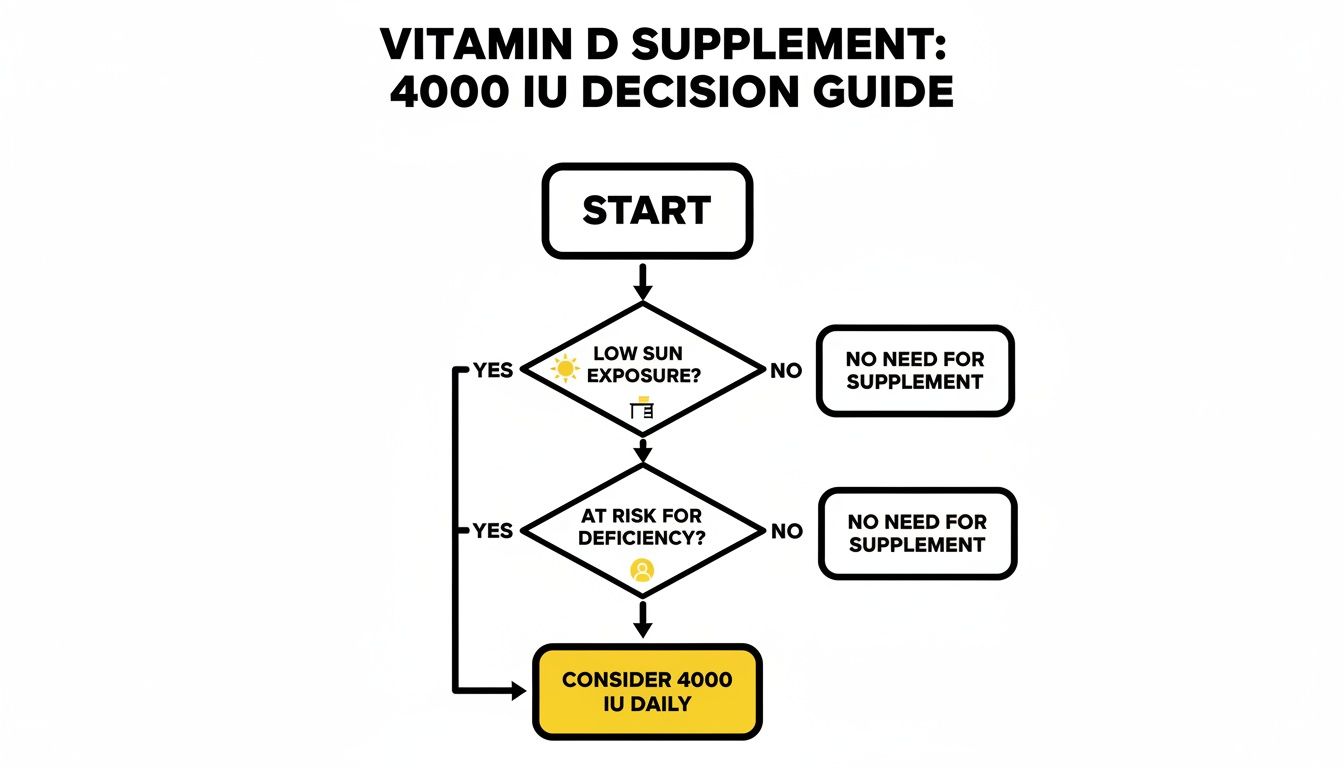
As the flowchart shows, common factors like an indoor job or just not getting out much during peak sunlight hours are big clues that you might need a bit of extra support.
The Importance of Testing Your Levels
While lifestyle factors give us strong hints, the only way to know for sure is a blood test. Guessing your dose is a shot in the dark; you might take too little to make a difference or more than you actually need.
To be certain if 4000 IU is the right move for you, it’s a great idea to consider dedicated Vitamin D deficiency testing. A simple test takes all the guesswork out of the equation, giving you a clear, data-driven starting point for your supplement plan.
A blood test measures your levels of 25-hydroxyvitamin D, which you'll often see written as 25(OH)D. This is the storage form of vitamin D in your body and the most reliable indicator of your overall status.
Knowing your 25(OH)D number is empowering. Instead of just trying to avoid a clinical deficiency (often defined as anything below 30 nmol/L), many people now work with a health professional to aim for an optimal range, which is typically between 75-125 nmol/L for overall wellbeing.
If your test results come back below this optimal range, that's a strong sign that a higher dose, like a vitamin D3 4000 IU supplement, could be just what you need to bring your levels up effectively. Chatting through your results with a qualified health professional is the best way forward to create a plan that’s perfectly tailored to your body's needs. This personalised approach ensures you're supplementing safely and turning your efforts into real health benefits.
This article is for informational purposes only and is not medical advice. Always consult a qualified health professional before starting any new supplement or major lifestyle change.
How to Take Vitamin D3 4000 IU Safely and Effectively
Getting your hands on the right supplement is only half the job. Knowing how to take it properly is what really turns potential into tangible results. When it comes to a vitamin D3 4000 IU supplement, understanding the ins and outs of using it safely and effectively is what unlocks its true power.
First off, let’s talk safety. In the UK, 4000 IU a day is the recognised Tolerable Upper Intake Level (UL) for adults. This simply means it’s generally considered safe for most people to take daily over the long term, without needing medical supervision.
But "safe" doesn’t always mean "optimal." To make your supplement work smarter, you need to think about the company it keeps and the way you take it.
Partner Nutrients for Better Results
Vitamin D3 is not a solo artist. Think of it as the star player on a team; it’s at its best when the supporting players are on the field with it. For vitamin D, two of the most critical teammates are Vitamin K2 and magnesium.
Flying solo without these partners can mean you’re not getting the full value from your supplement. Let’s break down exactly why they’re so important.
Nutrient Partners for Your Vitamin D3 Supplement
Taking a higher dose of Vitamin D3 is a great start, but to truly get the most out of it, you need to ensure its key partners are on board. The table below shows why Vitamin K2 and magnesium are so crucial for making your D3 work effectively and safely.
| Nutrient | Role with Vitamin D3 | Why It's Important |
|---|---|---|
| Vitamin K2 | The "calcium traffic cop" | Vitamin D3 boosts how much calcium you absorb. K2 steps in to direct that calcium into your bones and teeth, keeping it from building up in arteries and soft tissues where you don't want it. |
| Magnesium | The "activation key" | Your body can't convert vitamin D into its active, usable form without magnesium. If you're low on magnesium, your vitamin D supplement can't do its job properly. |
Essentially, without K2, you risk calcium ending up in the wrong places. And without magnesium, your body can’t even flip the switch to turn your vitamin D on. Understanding this teamwork is vital.
The Essential Role of Vitamin K2
Picture this: you've just had a massive delivery of building supplies (calcium) dropped at a construction site. Vitamin D3 is the forklift driver that unloads it all from the truck. But Vitamin K2 is the site foreman who points and says, "Put those bricks over there in the foundation (your bones), not blocking the doorways (your arteries)."
This synergy is exactly why many people choose a combined D3 and K2 supplement. It's a smart way to ensure the extra calcium you're absorbing gets put to good use, supporting your long-term bone and cardiovascular health. For a deeper look at this power pairing, our guide on high-strength vitamin D3 has more detail.
Magnesium: The Activation Key
Magnesium is another non-negotiable partner in this process. Every single enzyme in your liver and kidneys responsible for metabolising vitamin D depends on magnesium to function. If your magnesium stores are running low, your body simply cannot produce the active form of vitamin D, no matter how much you're taking.
It's like having a car with a full tank of petrol (Vitamin D3) but no key to start the engine (magnesium). You've got all the potential, but you’re not going anywhere.
Since our modern diets often lack sufficient magnesium, this is a very common reason why some people don't feel the benefits of their vitamin D3 4000 IU supplement. Making sure you have enough magnesium, either from your diet or a separate supplement, is a simple but powerful move.
Maximising Absorption with Smart Timing
Finally, let’s get practical about timing. Vitamin D is a fat-soluble vitamin. In plain English, that means it doesn't dissolve in water; it needs fat to be properly absorbed by your digestive system.
To get the most bang for your buck, just follow this simple rule:
- Take it with a meal: Never take your vitamin D3 on an empty stomach. Always have it with food.
- Make sure there's some fat: The meal doesn’t have to be heavy or greasy, but it should contain a source of healthy fat.
Even small amounts of fat can make a huge difference. Good examples include:
- Avocado on toast
- A handful of nuts or seeds
- Full-fat yoghurt
- Eggs
- A salad with an olive oil dressing
By pairing your supplement with a meal containing fat, you give your body the exact tools it needs to absorb the vitamin efficiently. This ensures less of it goes to waste and more of it gets to work where you need it.
This article is for informational purposes only and is not medical advice. Always consult a qualified health professional before starting any new supplement or major lifestyle change.
How a 4000 IU Supplement Fits into Your Personal Plan
Taking a vitamin D3 supplement isn't about just grabbing a bottle off the shelf. Think of a 4000 IU dose as a key building block in a much bigger, more personalised health strategy. The real magic happens when you understand how this specific dose works alongside other nutrients to get you closer to your own health goals. It's a shift away from generic advice and towards smart, targeted support.
After all, a one-size-fits-all approach rarely gets anyone very far. The needs of a 25-year-old athlete are worlds apart from those of a 50-year-old woman focused on her long-term vitality. By customising your supplement routine, you can create powerful synergies that actually match up with your lifestyle.
Building Your Personalised Stack
Thinking in terms of "stacks," or combinations, is a great way to tailor your intake. You can use vitamin D3 4000 IU as the foundation, then add other supplements to dial in the results for specific aims.
Here’s what that looks like in the real world:
- For Fitness and Performance: If you’re serious about your gym performance, you might pair 4000 IU of Vitamin D3 with creatine for strength and magnesium for muscle recovery. This combination is brilliant for supporting both your skeletal and muscular systems when they're under physical stress.
- For Busy Professionals: For someone navigating a demanding career, especially during the darker winter months, stacking D3 with an adaptogen like ashwagandha can be a game-changer. This pairing is designed to support mood, energy levels, and your resilience against daily pressures.
- For Women Over 40: A woman looking to prioritise bone health and stay vibrant might combine her daily D3 with Vitamin K2 and a quality, chelated form of magnesium. This trio works together to help guide calcium to the bones where it's needed most, supporting skeletal density.
While Vitamin D3 is a fantastic starting point, it’s worth remembering how other supplements can round out your routine, like Biotin Gummies as part of a varied vitamin intake which can offer targeted support for hair, skin, and nails.
The Role of Modern Health Platforms
This idea of building a personal stack is getting much easier thanks to modern health platforms. Instead of you having to play scientist and piece everything together yourself, these tools use your data to build a smart, cohesive plan for you.
A truly personalised plan considers your unique data—like your location, goals, diet, and age—to recommend intelligent supplement combinations. This takes the guesswork out of complex health decisions and helps you avoid nutrient overlaps or buying products you don't need.
This data-driven approach is really catching on. The UK is quickly becoming one of Europe’s fastest-growing markets for dietary supplements, with a clear move towards proactive, daily health management. This growth is being led by health-conscious people who are more than happy to bundle a vitamin D3 4000 IU supplement with other performance, beauty, or longevity products into a single, personalised order. You can discover more insights about European dietary supplement trends to see how the market is changing.
By using a system that understands your personal context, you can feel confident that your supplement routine isn't just a random collection of bottles, but a well-thought-out strategy designed for your body and your ambitions. It makes hitting your health goals feel simpler and a whole lot more effective.
This article is for informational purposes only and is not medical advice. Always consult a qualified health professional before starting any new supplement or major lifestyle change.
Choosing a High-Quality Vitamin D3 Supplement
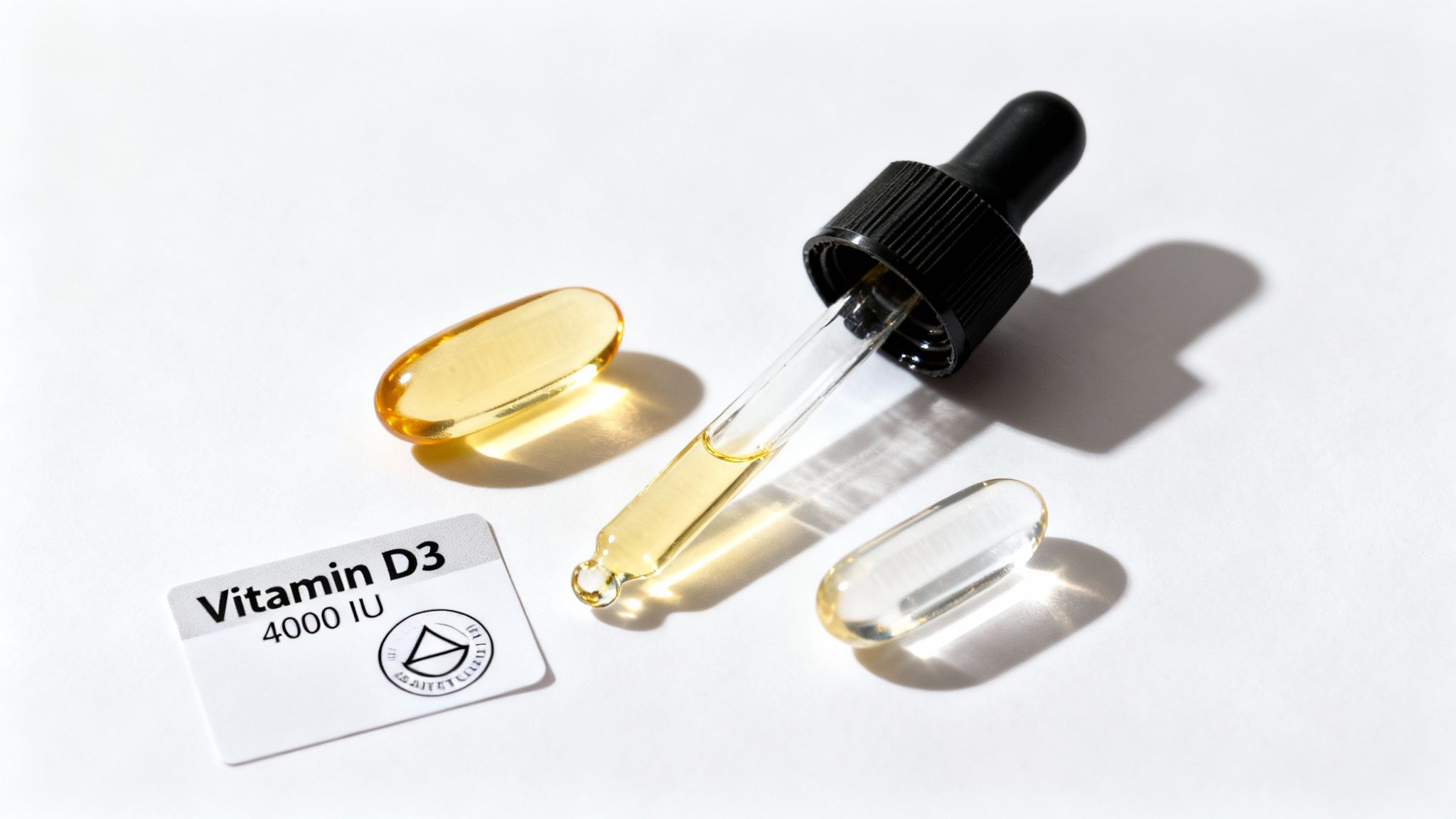
The supplement aisle can feel like a minefield, but picking a quality product is actually pretty straightforward once you know what to look for. Choosing a great vitamin D3 4000 IU supplement is about more than just the dose on the front; it's about what's inside, where it comes from, and how transparent the brand is.
Becoming a savvy shopper starts with one simple habit: reading the label carefully. Look beyond the big, bold numbers and get into the details that truly matter for safety and effectiveness. This small step can make a huge difference in the results you see.
Decoding the Supplement Label
A good supplement label tells you a story. One of the first things to check is the source of the vitamin D3, as this often comes down to personal and dietary preferences.
- Lanolin-Derived D3: This is the most common form you'll find, sourced from the wool of sheep. It's highly effective and bioavailable but isn't suitable for vegans.
- Lichen-Derived D3: This plant-based source is a fantastic, equally effective alternative for anyone following a vegan lifestyle.
The demand for ethical, plant-based options is a significant trend, and high-dose vitamin D3 is closely linked to the growing interest in vegan and personalised nutrition in the UK. The UK's vegan vitamin D3 market is projected to grow from around USD 86.3 million in 2025 to USD 126.5 million by 2035. This shows that millions more people will be integrating supplements like a vitamin D3 4000 IU supplement into their health routines. If you're curious about this shift, you can explore more on the UK's vegan vitamin D3 market growth.
Third-party testing is your non-negotiable seal of quality. Always look for certifications from independent labs (like NSF or Informed-Sport). This verifies that the product actually contains what the label claims and is free from any unwanted contaminants.
Form Matters for Absorption
Vitamin D3 comes in a few different forms, and each has its own advantages. Since it’s a fat-soluble vitamin, the way it’s delivered can directly influence how well your body absorbs it.
- Oil-Based Softgels: These are incredibly popular for a good reason. The D3 is pre-dissolved in a carrier oil (like olive or coconut oil), which gives absorption a helping hand.
- Liquid Drops: Drops offer brilliant dosage flexibility and are a great shout if you dislike swallowing pills. They're also typically suspended in a carrier oil for better uptake.
- Capsules (Dry Powder): While still effective, these might be absorbed a little less efficiently unless you remember to take them with a meal that contains some healthy fats.
Finally, always have a quick scan of the "other ingredients" list. A top-quality product will have a clean, minimal list, steering clear of unnecessary fillers, binders, artificial colours, or common allergens. Your supplement should be about giving you what you need, not a bunch of extras you don't.
And don't forget, pairing D3 with its key partner, K2, is often a smart move. You can dive deeper into the powerful synergy in our detailed guide on the benefits of vitamin D3 and K2.
This article is for informational purposes only and is not medical advice. Always consult a qualified health professional before starting any new supplement or major lifestyle change.
Got Questions About Vitamin D3 4000 IU?
Navigating the world of supplements can throw up a lot of questions. Let's clear up some of the most common queries about taking a vitamin D3 4000 IU supplement so you can feel confident and well-informed.
Is It Safe to Take 4000 IU of Vitamin D3 Every Day?
For most adults in the UK, the short answer is yes. Health bodies like the NHS recognise 4000 IU (which is 100 micrograms) as the safe upper limit for daily intake. Think of it as the maximum amount considered safe for long-term use without needing a doctor's supervision.
But "most adults" is the key phrase. If you have any underlying health issues, especially anything affecting your kidneys or calcium levels, or if you're on certain medications, it's absolutely vital to have a chat with your doctor before starting this dose.
What Are the Signs of Vitamin D Toxicity?
Vitamin D toxicity, also known as hypercalcaemia, is incredibly rare but can happen with extremely high, prolonged doses—way beyond the 4000 IU we're talking about. It’s a situation where too much vitamin D causes a harmful build-up of calcium in your blood.
Early warning signs can be quite subtle, but might include things like:
- Nausea and vomiting
- A poor appetite and weight loss
- Needing to urinate more often
- General weakness and fatigue
- Constipation
Because a 4000 IU dose sits comfortably within the established safe upper limit, the risk of this happening is extremely low for the average person. Sticking to the recommended dose is your best bet for supplementing safely.
While it's smart to be aware of toxicity, a far more common issue, especially here in the UK, is deficiency. A daily 4000 IU dose is a sensible tool for getting your levels up to a healthy range, not something that typically puts you at risk.
How Long Does It Take to Feel the Benefits?
That’s a great question, but the truth is, it's different for everyone. It really depends on your starting point. Someone who is severely deficient will probably notice a difference much faster than someone who is just topping up already decent levels.
In general, it can take anywhere from a few weeks to a couple of months to get your blood levels into the optimal zone. The benefits you're looking for—like a brighter mood, more energy, or a stronger immune system—tend to creep in gradually as your levels become stable.
Consistency is everything. Taking your vitamin D3 4000 IU supplement daily is what delivers real, lasting results. It’s best to see it as a long-term investment in your wellbeing, not a quick fix.
Ready to build a smarter supplement routine? The VitzAI platform uses your unique health data to recommend the right vitamins for your goals.
Take the free quiz and get your personalised plan today at VitzAI.com
This article is for informational purposes only and is not medical advice. Always consult a qualified health professional before starting any new supplement or major lifestyle change.