

The Ultimate Guide to Vitamin D3 and K2 Synergy
Taking vitamin D3 and K2 together is becoming a non-negotiable for anyone serious about their health. Why? Because they’re a team, working together to manage calcium in your body. Vitamin D3 is the star player for absorbing calcium, but K2 is the crucial director that tells that calcium where to go—your bones and teeth, not your arteries.
Think of them as the dynamic duo for your skeleton and heart.
The Power Duo Your Body Is Missing

Ever wondered why some supplements just work better in pairs? The relationship between vitamin D3 and K2 is a perfect example of synergy. Together, their combined effect is far greater than what either could achieve alone.
Let's break it down with a simple analogy. Imagine your body is a major construction project, and the goal is to build strong bones.
-
Vitamin D3 is the Supply Manager. Its main job is to get calcium—the essential building block for bones—absorbed from your food and into your bloodstream. Without enough D3, you can’t get the materials to the site, no matter how much calcium-rich food you eat.
-
Vitamin K2 is the Foreman. Once the calcium arrives, K2 steps in. It activates special proteins that act like a traffic management system, skillfully guiding the calcium exactly where it needs to go: your bones and teeth.
This partnership is what makes them so effective. Taking vitamin D3 on its own is like having piles of bricks delivered to a building site with no one to actually build the walls. K2 is the expert that ensures those raw materials are used to strengthen your skeleton, not left scattered where they could cause issues in soft tissues like your arteries.
To give you a clearer picture, here’s a quick comparison of their roles.
Vitamin D3 vs K2 At a Glance
| Feature | Vitamin D3 "The Calcium Absorber" | Vitamin K2 "The Calcium Director" |
|---|---|---|
| Primary Role | Increases calcium absorption from the intestines into the bloodstream. | Activates proteins that guide calcium to bones and teeth. |
| Main Target | Gut & Bloodstream | Bones, Teeth & Arteries |
| Key Action | Boosts blood calcium levels. | Prevents calcium build-up in soft tissues like arteries. |
| Analogy | The Supply Manager | The Foreman |
As you can see, D3 gets the job done, but K2 ensures it's the right job. They are truly two sides of the same coin when it comes to bone and cardiovascular health.
Why This Matters in the UK
This dynamic duo is especially important here in the UK, where vitamin D deficiency is a genuine public health concern. The NHS wisely recommends everyone takes a daily vitamin D supplement during the autumn and winter months, simply because we don't get enough sunlight.
This lack of vitamin D can seriously weaken calcium absorption, increasing the risk of conditions like osteoporosis. The research backs this up, showing that combining D3 with K2 is a powerful strategy. One study found that individuals taking a mix of vitamin D, calcium, and K2 were 25% less likely to suffer from fractures. You can find more details on these findings over at FutureYou Health.
Understanding Vitamin D3: Your Sunshine Vitamin

There’s a good reason we call Vitamin D3 the ‘sunshine vitamin’. It’s a unique, fat-soluble vitamin your body cleverly produces when sunlight hits your skin. In a perfect world, that would be all we need, but let's be honest—especially in the UK, getting enough sun all year round is a tall order.
While its sunny reputation is well-earned, what Vitamin D3 actually does in the body is far more important than just lifting your mood. Think of it as the gatekeeper for calcium. It’s the key that unlocks calcium absorption in your gut, making sure the calcium from your food can actually be put to work. Without it, your bones simply can't get what they need to stay strong and dense.
But its job doesn't end there. D3 is also a major player in keeping your immune system in fighting shape. It helps regulate your body's natural defences, which is a big reason why having healthy levels is so crucial, particularly during those colder months when we're all trying to fend off sniffles.
How D3 Fuels Your Health Goals
The real magic of Vitamin D3 is how its benefits ripple out across so many areas of your health, making it a cornerstone nutrient for both men and women. Its influence is felt everywhere from your muscles to your hormones.
For men, solid D3 levels are often linked to better muscle function and physical performance. It’s involved in the life cycle of muscle cells, which is vital for building strength, recovering after a workout, and holding onto lean mass—whether you're a gym regular or just trying to stay active.
For women, it’s a bedrock for hormonal balance and keeping energy levels steady. Your body has D3 receptors in all sorts of tissues, including those tied to reproductive health. Maintaining healthy levels helps create a more stable internal environment, supporting your overall vitality and sense of well-being.
In short, Vitamin D3 is far more than just a 'bone vitamin'. It's a fundamental regulator that helps your immune system, muscles, and hormones function at their best.
By making sure you have enough D3, you’re giving your body an essential tool it needs for countless daily processes. This is the first, non-negotiable step in the powerful partnership of vitamin d3 and k2, setting the stage for calcium to be managed properly. Without enough D3, the whole system starts to stumble.
Decoding Vitamin K2: The Missing Link for D3's Success
So, Vitamin D3 gets calcium into your bloodstream, which is a fantastic start. But there's another crucial player that ensures it ends up in the right place. Meet Vitamin K2, the often-overlooked but essential partner in the vitamin D3 and K2 team. Think of it as your body’s built-in GPS for calcium management.
Most of us have heard of Vitamin K1, the one found in leafy greens like kale and spinach that’s mainly involved in blood clotting. Vitamin K2, however, plays a completely different—and equally vital—role. Found in things like fermented foods (natto is a classic example) and certain animal products like cheese and egg yolks, K2 is the superior form for telling calcium where to go.
This clever vitamin is the key that activates specific proteins responsible for how your body handles minerals. Without enough K2 on board, these proteins remain dormant. This means all that calcium D3 worked so hard to absorb can't be put to good use.
Your Body’s Calcium GPS
At its core, Vitamin K2 acts as a traffic controller for calcium. It switches on two key proteins that are absolute game-changers for your health:
- Osteocalcin: This protein's job is to grab calcium and deposit it directly into your bone matrix, making your skeleton stronger and denser. K2 essentially "wakes up" osteocalcin so it can do its job properly.
- Matrix Gla Protein (MGP): This protein works its magic in your soft tissues, especially your arteries. When activated by K2, it actively prevents calcium from building up on arterial walls—a process known as calcification.
This dual action is what makes K2 so special. It skilfully guides calcium towards your bones and teeth while simultaneously steering it away from places it shouldn't be, like your cardiovascular system. This is a huge deal for supporting long-term heart and bone health. You can take a deeper dive into the benefits of Vitamin K2 in our guide.
By ensuring calcium strengthens your skeleton instead of hardening your arteries, Vitamin K2 acts as the missing link between calcium intake and healthy bones.
Sadly, K2 deficiency is a real issue here in the UK, particularly among children and adults over 40. This shortfall is linked to the rising number of osteoporosis cases, where around 3 million Brits suffer. The cost of hip fractures alone to the NHS is estimated at a staggering £6 billion annually.
K2’s ability to shuttle calcium into bones is so effective that it's actually mandated for osteoporosis patients in Japan, a move that has dramatically cut fracture risks. This really drives home why pairing it with D3 is so important for tackling widespread deficiencies and shoring up our skeletal strength.
Why Combining D3 and K2 Is a Game Changer
While Vitamin D3 is fantastic at getting calcium into your bloodstream, taking it on its own can be a bit like delivering a package without a specific address. The calcium circulates, but without clear directions, it might end up in all the wrong places. This is where the powerful partnership of vitamin d3 and k2 truly shines.
Taking high doses of Vitamin D3 by itself can raise your blood calcium levels. Without Vitamin K2 acting as a traffic controller, this free-floating calcium could potentially get deposited in soft tissues like your arteries and kidneys. Over time, this process, known as arterial calcification, can contribute to stiffening blood vessels—a major concern for long-term heart health.
That’s why thinking of them as a team is so crucial. D3 boosts the availability of calcium, but K2 is the intelligent director ensuring this vital mineral is used to strengthen your skeleton, not harm your arteries. K2 essentially switches on the proteins that bind calcium to your bones and teeth, making them stronger and more resilient.
The Teamwork That Protects Your Body
The combination of vitamin D3 and K2 isn’t just a minor tweak—it's a fundamental strategy for supporting two of your body's most critical systems. By working together, they provide real, tangible benefits for anyone focused on vitality and longevity.
Here’s what that teamwork means for you:
- Stronger, Denser Bones: By making sure calcium is deposited correctly, the duo helps build a robust skeletal framework. This is crucial for staying active and can lower the risk of fractures.
- Enhanced Cardiovascular Health: Vitamin K2’s ability to keep calcium out of your arteries is a massive plus for maintaining a healthy heart and flexible blood vessels.
- Optimal Mineral Balance: Together, they create a beautifully balanced system where calcium is absorbed efficiently and used effectively, sidestepping the potential downsides of taking one without the other.
The synergy between D3 and K2 is more than just complementary; it's a protective mechanism. D3 unlocks calcium's potential, while K2 provides the essential guidance to ensure that potential is realised safely and effectively in your bones.
The diagram below gives you a great visual of how Vitamin K2 acts like a GPS, guiding calcium from your food to your bones and steering it well clear of your arteries.
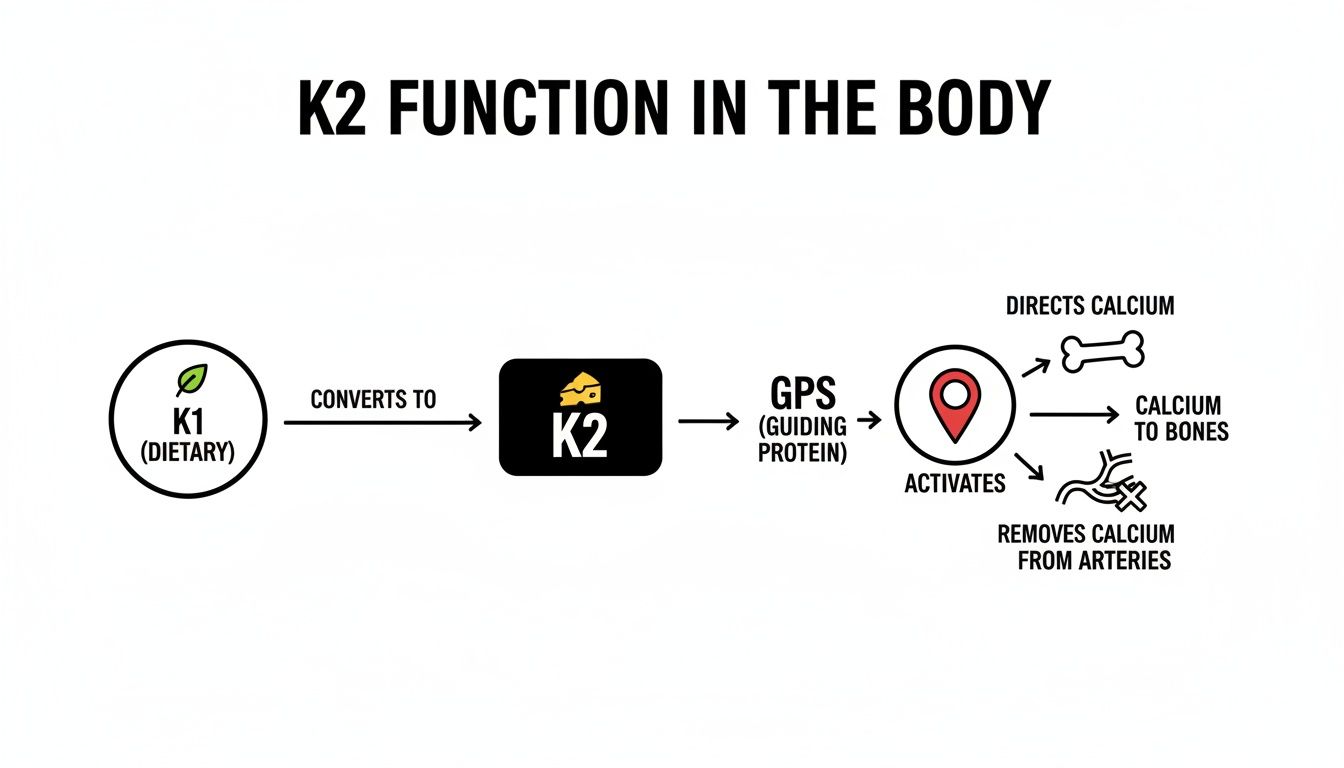
This highlights K2's crucial job in activating proteins that manage where calcium ends up, safeguarding both your skeletal strength and your arteries. If you’re keen to learn more, you can read our guide on other important vitamins for bone and joint health.
This powerful partnership is transforming how we think about supplements in the UK, especially as 1 in 5 adults have low vitamin D levels. Strikingly, studies have shown that a high K2 intake can slash deaths from heart disease by 57%. That’s a vital statistic when you consider over 7 million people in the UK are affected by cardiovascular conditions. The market reflects this growing awareness, with the UK's K2 sector projected to skyrocket, showing just how important this duo has become.
Getting the Right Dose and Form for You
Navigating the world of supplements can sometimes feel a bit overwhelming, but figuring out the right combination of vitamin D3 and K2 is actually quite straightforward once you know what you’re looking for. While there isn't a single "perfect ratio" set in stone, some solid guidelines can help you make a smart choice that you can then fine-tune to your own needs.
For most adults in the UK, a daily Vitamin D3 dose of 1,000 to 4,000 IU (International Units) is a great range to aim for. This is generally enough to keep your blood levels healthy, which is especially important during our notoriously grey and dark winter months. If you want to dive deeper into dosages, our guide to high-strength Vitamin D3 has all the details.
When it comes to Vitamin K2, a daily dose of around 90-120 mcg (micrograms) is a fantastic starting point. This amount gives D3 the support it needs and is often the dosage used in studies that show real benefits for bone and heart health. It's the ideal amount to ensure all that calcium D3 helps you absorb gets put to good use.
Choosing Your K2 Form: MK-4 vs MK-7
It turns out not all Vitamin K2 is created equal. When you look at supplement labels, you'll mainly spot two forms: MK-4 and MK-7. Getting to grips with the difference is the key to picking a product that will actually work for you.
Here's a simple comparison to help you choose wisely.
Choosing Your K2 Form MK-4 vs MK-7
| Feature | MK-4 | MK-7 |
|---|---|---|
| Source | Usually found in animal products like butter and egg yolks. | Sourced mainly from fermented foods like the Japanese dish, natto. |
| Half-Life | Very short – it’s flushed from your body in just a few hours. | Much longer, staying active in your bloodstream for several days. |
| Effectiveness | You’d need to take multiple, higher doses all day to keep levels up. | Far more bioavailable and works efficiently with just one daily dose. |
For sheer convenience and proven results, MK-7 is the clear winner for a daily supplement. Its long half-life means it can build up to stable, effective levels in your body, giving you consistent support for activating those all-important calcium-directing proteins. It's this sustained action that makes it the superior choice for long-term bone and heart health.
Key Takeaway: For a powerful and practical supplement, look for a formula that combines a sensible dose of Vitamin D3 with Vitamin K2 in the long-lasting MK-7 form.
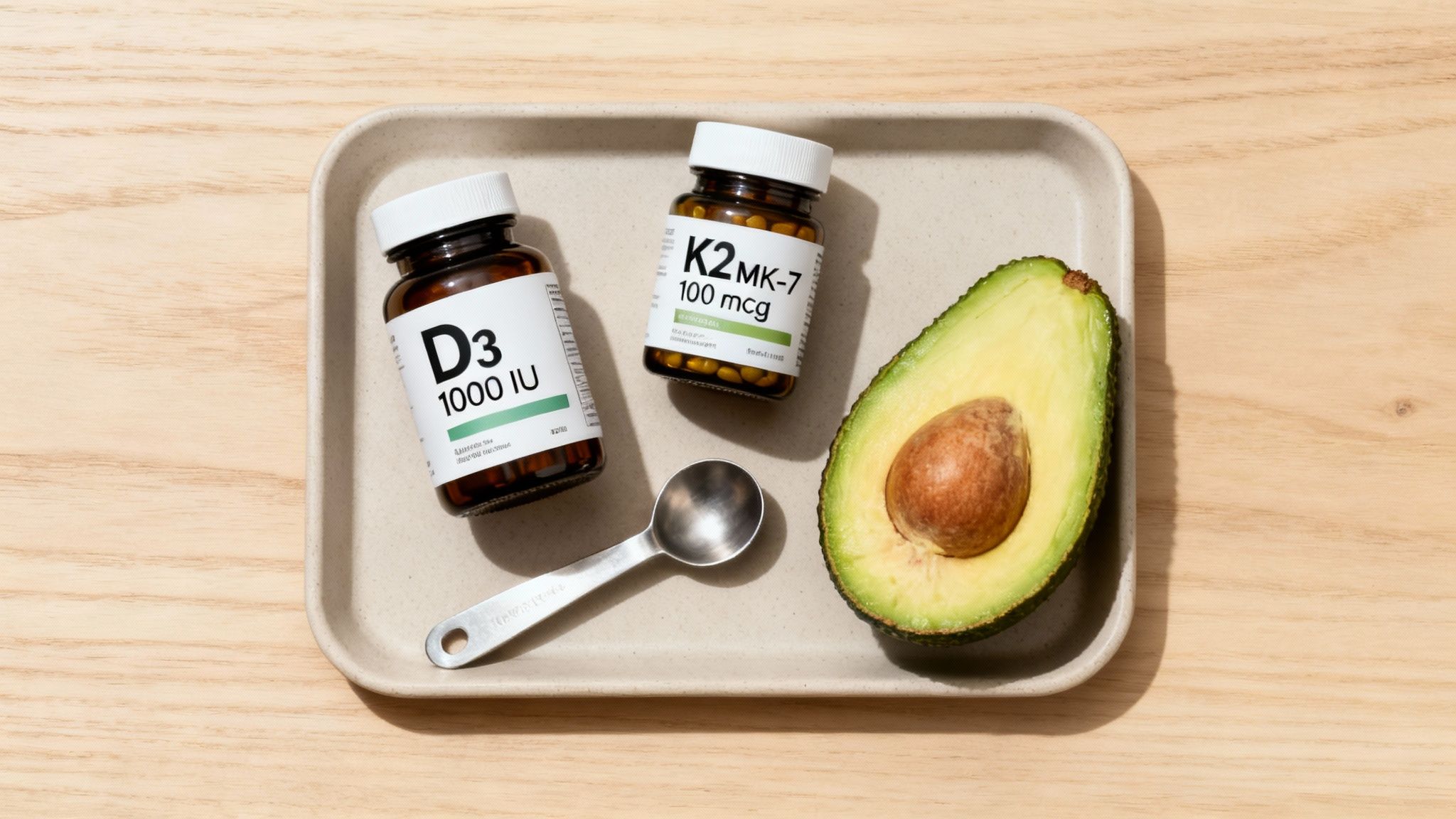
One final tip to get the most out of your supplement: always take it with a meal that contains some healthy fats. Think avocado, nuts, or a drizzle of olive oil. Both D3 and K2 are fat-soluble, which means they need a little fat to be absorbed properly by your body. It's a simple habit that makes a huge difference.
Frequently Asked Questions
It's completely normal to have a few lingering questions when you're figuring out the details of a new supplement. We've pulled together some of the most common ones we hear about vitamin D3 and K2 to give you the confidence you need to get started.
Can I Get Enough Vitamin D3 and K2 From My Diet Alone?
While a healthy, balanced diet is always the best place to start, hitting optimal levels of D3 and K2 through food alone is a real challenge for most of us. Think about it: Vitamin D3 is the ‘sunshine vitamin’, something we’re famously short on here in the UK, especially between October and March.
Food-wise, you can find a bit of D3 in fatty fish and egg yolks, but rarely in the amounts needed to make a real difference. Vitamin K2 is even trickier, found mainly in niche foods like natto (a fermented soybean dish) or certain hard cheeses, which aren’t exactly everyday staples in the average British kitchen. Realistically, supplementation is a much more dependable way to make sure you’re consistently getting effective doses of this dynamic duo.
Are There Any Side Effects When Combining D3 and K2?
When you stick to the recommended amounts, the vitamin D3 and K2 combination is considered very safe for most people. The main thing to watch out for with Vitamin D is taking excessively high doses, which can cause too much calcium to build up in your blood – a condition called hypercalcemia.
This is exactly where Vitamin K2 comes in to help. It works to reduce this risk by making sure that calcium goes where it’s needed—your bones. Still, it’s vital to stick to sensible doses. If you have certain health conditions, like hyperparathyroidism, or you’re on blood-thinning medication like warfarin, you must speak to your doctor before starting, as Vitamin K can interfere with these treatments.
How Long Does It Take to Feel the Benefits?
This is a great question, and the honest answer is: it varies. If you're starting out with a significant Vitamin D deficiency, it could take several weeks or even a couple of months of consistent use to bring your levels back up to a healthy range.
Some people report a noticeable lift in their mood and energy levels fairly quickly, which is a fantastic early win. But the biggest benefits—like stronger bones and a healthier cardiovascular system—are more of a long-term investment. Think of it as a quiet, protective strategy that works behind the scenes for years to come. With this pairing, consistency really is the key to unlocking lasting results.
This article is for informational purposes only and is not medical advice. Always consult a qualified health professional before starting any new supplement or major lifestyle change.