

Unlocking the Benefits of Vitamin K2 for Your Health
When you hear "Vitamin K," you probably think of blood clotting. That's true, but it's only half the story. That role belongs to Vitamin K1, found in leafy greens like kale and spinach.
But there's another, often-overlooked member of the family: Vitamin K2. And its job is completely different.
What Is Vitamin K2 and Why Is It So Important?
Think of Vitamin K2 as a highly intelligent traffic controller for calcium in your body. Its main job is to activate specific proteins that tell calcium exactly where to go.
It directs calcium into your bones and teeth, where it's needed to build strength and density. Just as importantly, it keeps calcium out of places it shouldn't be, like your arteries and soft tissues, where it can build up and cause serious problems down the line.
This simple diagram perfectly captures the concept:
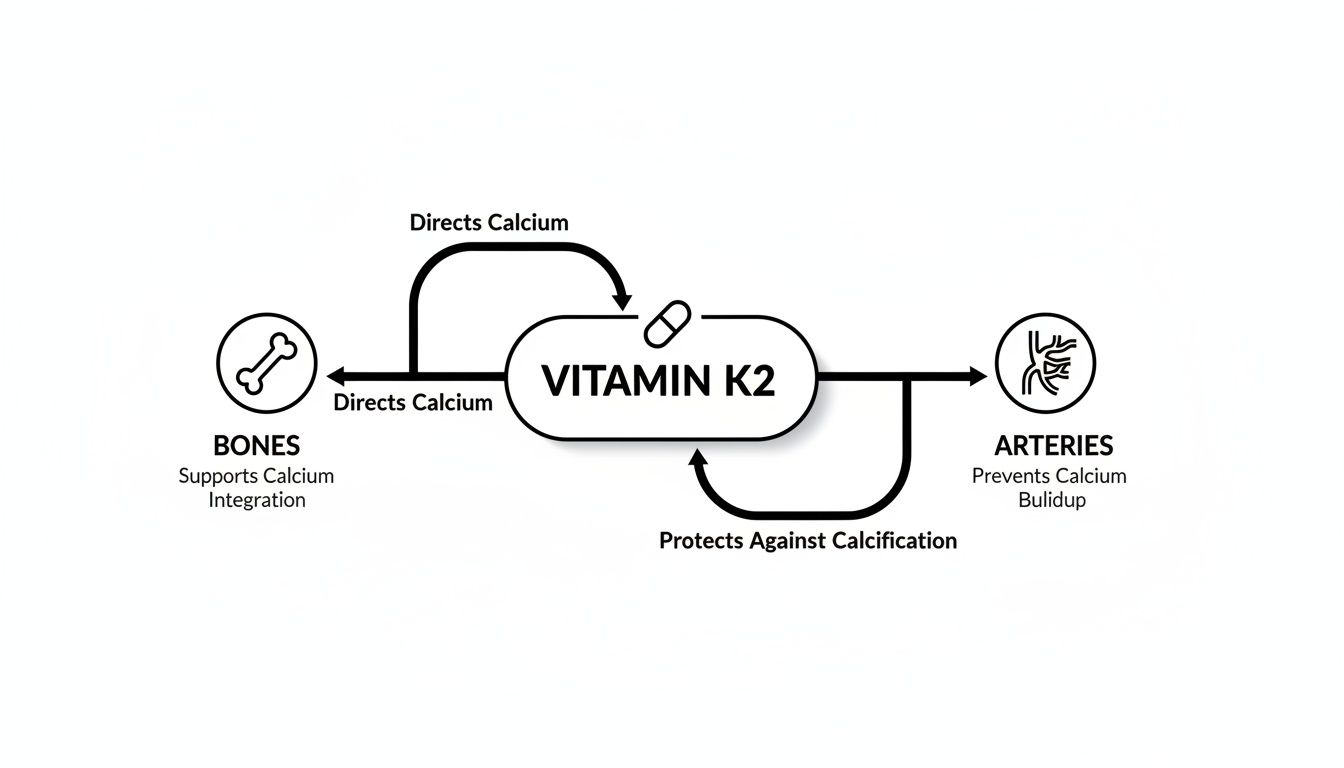
This dual-action benefit—strengthening your skeleton while protecting your cardiovascular system—is what makes K2 so critical for long-term health.
Let's quickly compare the two main forms of Vitamin K to make the distinction crystal clear.
Vitamin K1 vs Vitamin K2 At a Glance
This table breaks down the key differences between the two, helping you see why K2 deserves its own spotlight.
| Feature | Vitamin K1 (Phylloquinone) | Vitamin K2 (Menaquinones) |
|---|---|---|
| Primary Role | Blood clotting | Calcium metabolism and direction |
| Common Sources | Leafy green vegetables (kale, spinach) | Fermented foods, grass-fed animal products |
| Main Benefit | Prevents excessive bleeding | Supports bone density and heart health |
While both are essential, their functions are worlds apart. You can eat a mountain of spinach and still be lacking in the unique benefits that only K2 can provide.
The Overlooked Nutrient
So, why haven't we heard more about this powerhouse nutrient? Unlike K1, Vitamin K2 is much harder to find in a typical Western diet.
It’s most abundant in fermented foods like natto (a traditional Japanese dish made from fermented soybeans) and certain hard cheeses. You can also find smaller amounts in grass-fed animal products, including butter, egg yolks, and liver. For a deeper understanding of how traditional diets incorporated these nutrients, it's interesting to look at the natural nutrient profiles found in beef organ supplements, which provide a wider context for K2's role.
Because most of us aren't eating natto for breakfast, getting enough K2 from food alone is a real challenge. In fact, a 2003 report from the UK's Expert Group on Vitamins and Minerals (EVM) estimated the average daily intake of all vitamin K forms was just 68 micrograms—likely falling short of optimal levels for many.
By ensuring calcium is deposited in your bones instead of your arteries, Vitamin K2 serves a dual purpose: it strengthens your skeleton and protects your heart simultaneously. This unique function is why it’s gaining attention as a key player in long-term health and vitality.
This calcium-directing ability is also what makes Vitamin K2 the perfect partner for Vitamin D3. Vitamin D is fantastic for helping you absorb calcium from your food, but it doesn't tell that calcium where to go. That's K2's job.
Without enough K2, the extra calcium mobilised by Vitamin D could end up in your arteries instead of your bones. This synergy is why understanding the specific vitamin K2 benefits is crucial for anyone building a smart supplement strategy. You can learn more about this powerful duo in our guide to the benefits of Vitamin D3 and K2.
How Vitamin K2 Builds Stronger Bones
When we think about bone health, calcium and vitamin D usually steal the spotlight. But there's another crucial player, Vitamin K2, that acts as the director, making sure those minerals end up exactly where they need to be. Without K2, a lot of your efforts to build strong bones could fall flat.
So, how does it work? Deep inside your bones, there's a special protein called osteocalcin. You can picture it as a kind of structural scaffold, waiting for instructions. Its job is to pull calcium out of your bloodstream and physically bind it to your bone matrix, which is what makes your skeleton dense and resilient.
The catch is, when your body first makes osteocalcin, it's inactive, or "dormant." It can’t do anything until it gets a very specific signal to wake up.
The Activation Switch for Bone Mineralisation
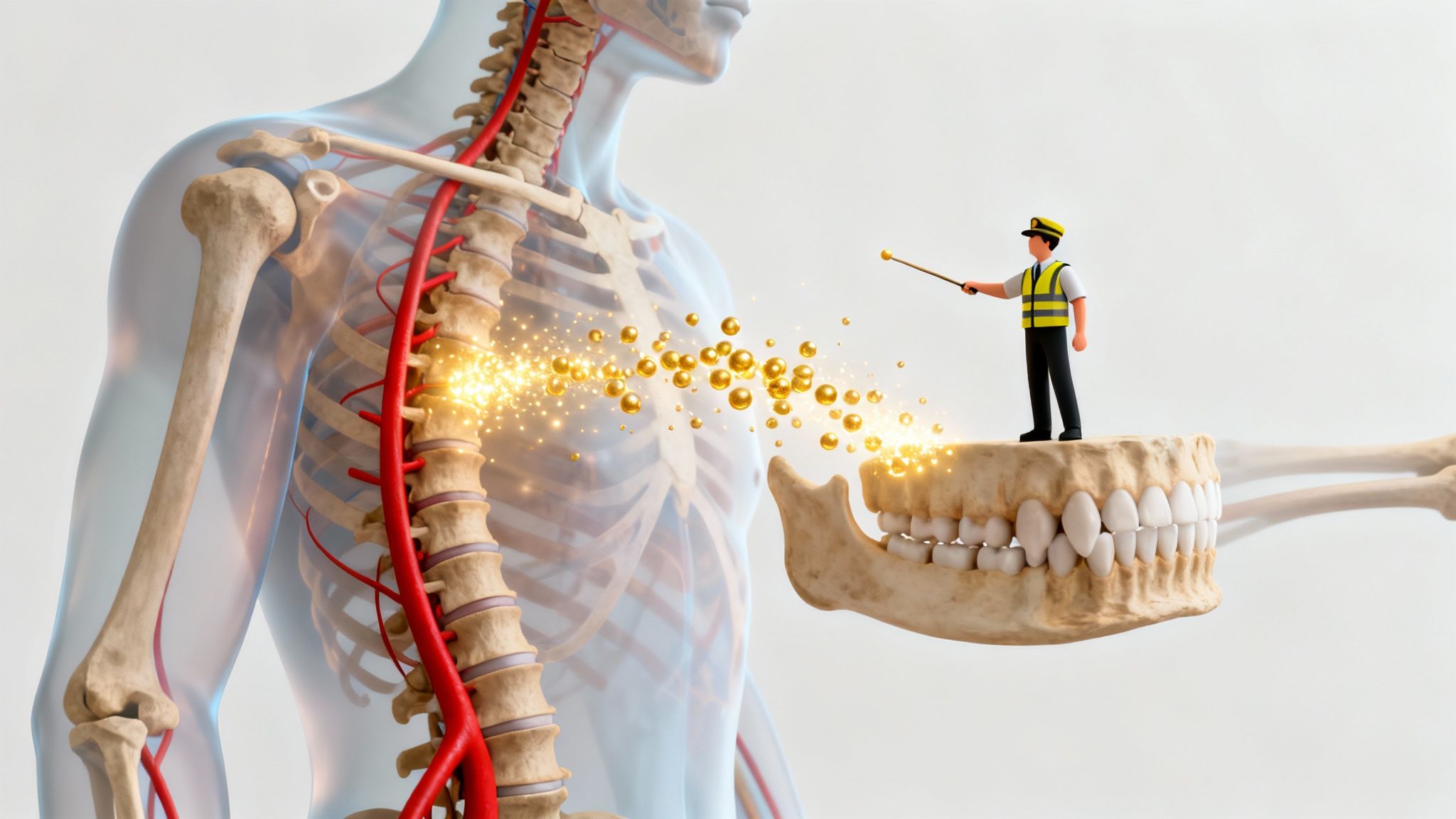
This is where Vitamin K2 makes its grand entrance. It is the "activation switch" for osteocalcin. By flipping this switch, K2 gives osteocalcin the power to bind with calcium and properly integrate it into your bone tissue.
Let's break it down with a simple construction analogy:
- Calcium is the pile of bricks needed to build a strong wall.
- Osteocalcin is the skilled bricklayer, ready and waiting to work.
- Vitamin K2 is the foreman who shouts, "Right, let's start building!"
Without the foreman's command (K2), the bricklayer (osteocalcin) just stands around, and the bricks (calcium) sit in a useless pile. This explains why you can have plenty of calcium in your system, but if it isn't being actively directed into your bones, your skeleton simply won't get any stronger.
This entire process is essential for maintaining healthy bone mineral density (BMD), which is the primary measure of how strong your bones are. Low BMD is a major red flag for fracture risk, especially as we get older.
Clinical Evidence Supporting Bone Health
The link between Vitamin K2 and stronger bones isn't just a neat theory—it's backed by some pretty solid scientific research. Time and again, studies show that a consistent, adequate intake of K2 is tied to better bone health outcomes.
One landmark three-year study on 244 postmenopausal women was particularly revealing. It found that a daily dose of just 180 mcg of Vitamin K2 (as MK-7) significantly slowed down the age-related decline in bone density in the spine and hip. The group taking K2 also showed measurable improvements in bone strength compared to the placebo group.
This is a game-changer for postmenopausal women, who are at a much higher risk of bone loss due to hormonal shifts. For this group, making sure there's enough K2 in their diet or supplement routine becomes a critical strategy for preventing fractures.
On top of that, scientific reviews consistently find that combining Vitamin K2 with Vitamin D3 is a powerful duo for supporting bone metabolism. This pairing is especially helpful for people who don't get much vitamin K from their food, helping them preserve precious bone mass for the long haul.
Beyond Nutrition: The Role of Movement
While nutrients like Vitamin K2 lay the essential groundwork, we can't forget about physical activity. Movement provides the stimulus your body needs to actually build and maintain bone. Weight-bearing exercises send a clear signal to your body: "We need to deposit more minerals here!" This makes the bones being used stronger and more robust.
Alongside getting enough K2, things like strength training and balance work are crucial for preventing conditions like osteoporosis. For instance, exploring how Pilates can boost bone health shows how targeted movements can improve both strength and stability, reducing the risk of falls.
Ultimately, the best defence against age-related bone decline is a smart combination of nutrition—with Vitamin K2 playing a starring role—and regular, bone-strengthening exercise.
Protecting Your Heart with Vitamin K2
While Vitamin K2 is a champion for bone health, its benefits run much deeper, right into your cardiovascular system. In fact, one of its most crucial jobs is to act as a guardian for your heart and arteries, silently preventing a dangerous process known as arterial calcification.
This is essentially the build-up of calcium in your blood vessels. Over time, it can make them stiff and inflexible, which is a major contributor to high blood pressure and a higher risk of serious heart problems.
The Calcium Cleanup Crew for Your Arteries
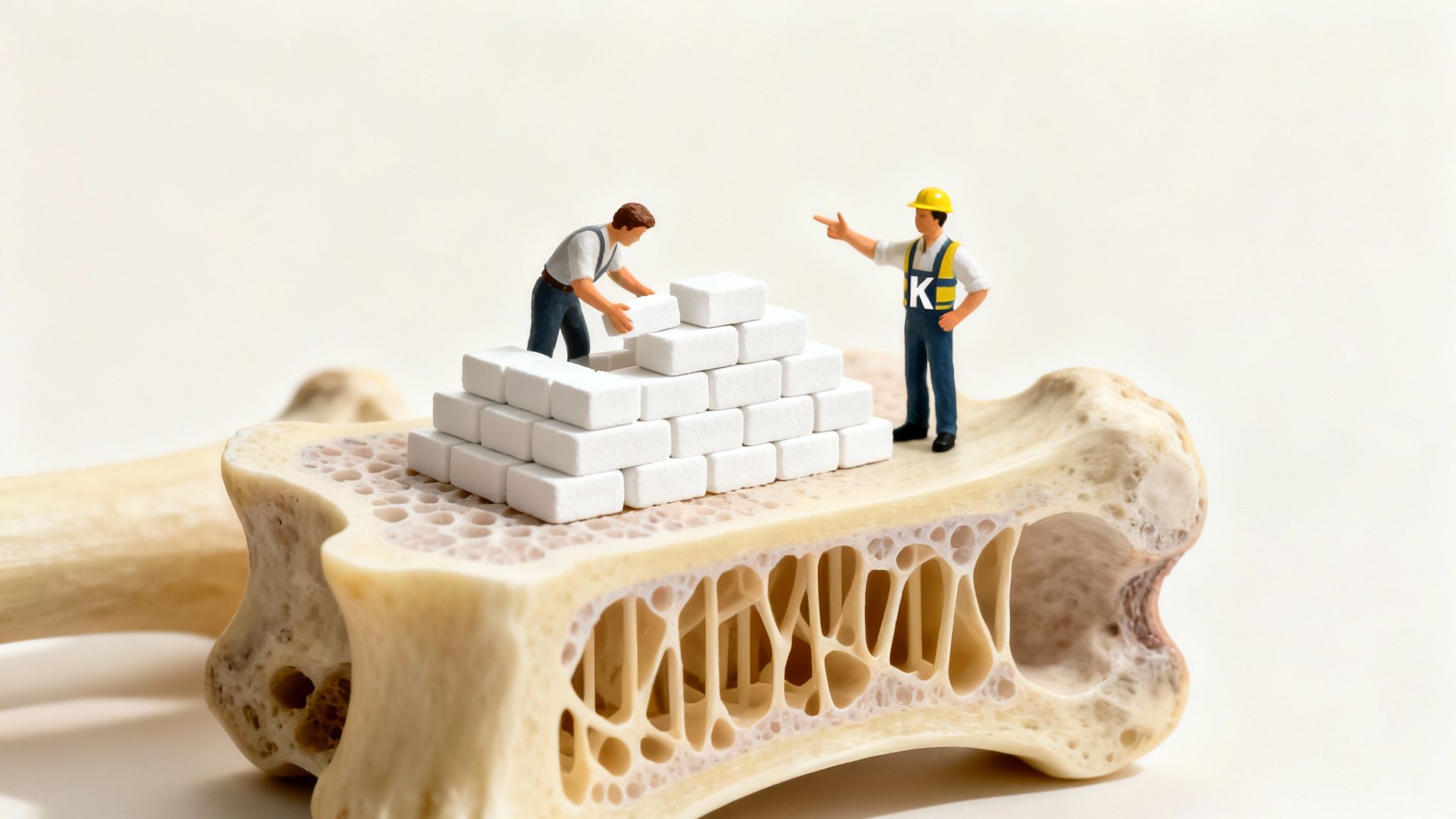
Remember how K2 activates osteocalcin to manage calcium for your bones? Well, it does something similar for your arteries by activating another critical protein called Matrix Gla Protein (MGP). You can think of MGP's main job as patrolling your arteries to stop calcium from sticking to the vessel walls.
It’s like a dedicated 'calcium cleanup crew' for your entire circulatory system. And Vitamin K2 is the manager who gives them their assignments, dispatching them to keep all the pathways clear and flexible.
Without enough K2, MGP can't get to work. As a result, calcium that should be strengthening your bones can start to build up in your arteries instead, leading to that dangerous calcification. This makes Vitamin K2 absolutely vital for keeping your cardiovascular system healthy and youthful.
Landmark Evidence from the Rotterdam Study
This link between Vitamin K2 and heart health isn't just a theory; it's backed by some serious long-term research. One of the most famous examples is the Rotterdam Study, a huge population-based study that followed thousands of older adults for a decade.
The findings were pretty remarkable. The study showed that people with the highest intake of Vitamin K2 from their diet were 57% less likely to die from heart disease and had 52% lower rates of severe aortic calcification compared to those with the lowest intake.
This compelling evidence from a major human trial paints a clear, data-driven picture of Vitamin K2's heart-protective power. It highlights that getting enough K2 is directly linked to keeping arteries flexible and significantly reducing cardiovascular risks.
These results sparked a wave of further research, and it all seems to point to the same conclusion: Vitamin K2 is a key player in directing calcium away from arteries and supporting long-term heart wellness.
The Growing Awareness of K2's Power
This emerging science hasn't gone unnoticed. People are increasingly catching on to the dual benefits of Vitamin K2 for both bones and heart, which has led to a sharp rise in its popularity as a supplement.
This growing awareness is clearly reflected in what people are buying. A 2022 consumer survey across the UK, US, China, Germany, and Italy found that up to 62% of UK dietary supplement users now take vitamin K2, ranking it among their top 10 choices. That's a huge jump from 2020, signalling just how much awareness has boomed. You can read the full survey findings on nutritionaloutlook.com.
This surge in interest really underscores K2's importance. It’s not just another vitamin; it’s a specialised nutrient that solves a critical problem in the body—making sure calcium strengthens you without accidentally harming you. By activating proteins like MGP, Vitamin K2 helps maintain that delicate balance needed for a strong skeleton and a healthy heart.
Where Else Might Vitamin K2 Lend a Hand?
Beyond its headline roles in bone and heart health, the story of Vitamin K2 is still being written. Researchers are digging into its influence across a whole host of other areas, and the early findings suggest its benefits are far more widespread than we first thought. This emerging science is starting to paint a picture of K2 as a crucial player in whole-body wellness and healthy ageing.
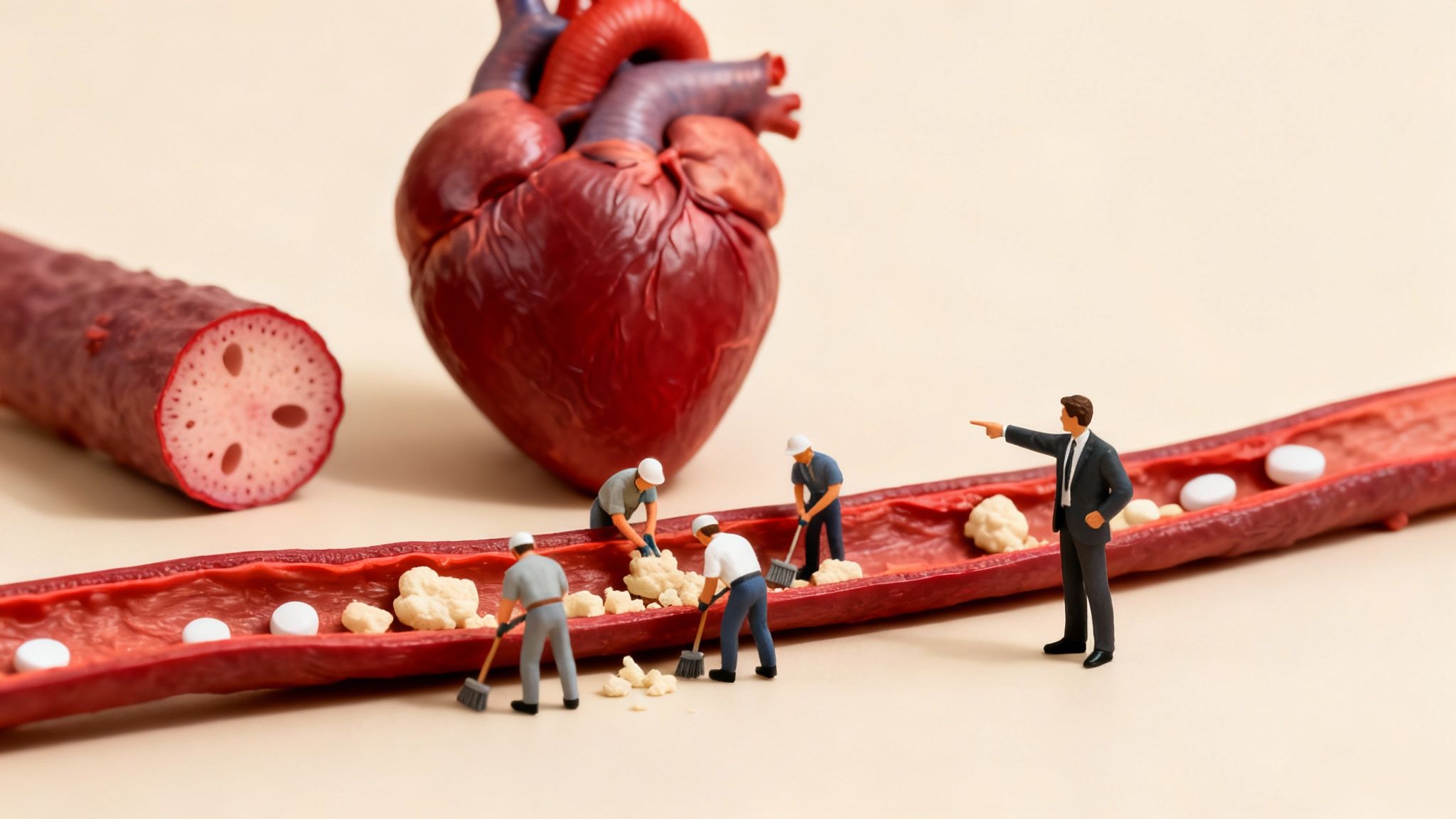
This new chapter in the K2 story shows its potential to support everything from your smile to your brain, making it a hot topic for anyone interested in the future of preventive health.
Supporting Dental Health from Within
One of the most exciting new frontiers for K2 is dental health. It turns out that the very same protein that helps build strong bones—osteocalcin—is also essential for maintaining your teeth. And just like in your skeleton, K2 is the one that flips the 'on' switch for osteocalcin in your teeth.
Once activated, this protein helps form dentin, the hard, dense tissue sitting just underneath your tooth enamel. You can think of dentin as the main structural support of your tooth; strong dentin means a tougher tooth that's better protected against decay.
This process ensures the calcium you eat is put to good use, maintaining and repairing this vital dental tissue. It offers a fresh perspective on how nutrition directly impacts our oral health from the inside out.
A Potential Role in Metabolic Wellness
Another fascinating area of research is K2's connection to our metabolic health, especially how our bodies handle blood sugar. A number of studies have pointed to a link between higher vitamin K2 levels and better insulin sensitivity.
Insulin sensitivity is all about how well your cells respond to the hormone insulin, which ferries glucose (sugar) from your blood into your cells to be used for energy. When sensitivity is poor, it can lead to higher blood sugar levels and is a key factor in metabolic problems.
Early research suggests that K2 might help improve how the body manages glucose by influencing osteocalcin, which also seems to play a role in how the pancreas functions and regulates insulin. While we need more research, this link positions K2 as a nutrient of interest for supporting a healthy metabolism.
This potential influence on insulin sensitivity shows how K2’s reach may go far beyond just managing calcium, touching on some of the most fundamental processes that govern our energy and long-term health.
Brain Health and Healthy Ageing
The cutting edge of K2 research also extends to the brain and even the appearance of our skin. While this science is still in its early days, the findings are compelling and hint at K2's wider role in promoting longevity.
Exploring K2's Influence:
- Cognitive Function: Scientists are looking into how K2’s ability to activate certain proteins might protect brain cells. Its anti-inflammatory properties are also being explored for their potential to support long-term brain health and keep us sharp.
- Skin Health: K2 may help maintain youthful-looking skin by preventing the calcification of elastin, the very protein that gives skin its elasticity. By stopping calcium from being deposited in the skin's soft tissues, K2 could help preserve its suppleness and structure.
These emerging benefits are truly exciting. They suggest that this one nutrient, once seen as a simple supporting act, may actually be a central character in maintaining the health and vitality of multiple body systems. As the science continues to grow, K2 is cementing its reputation as an essential for anyone focused on proactive, long-term wellness.
Choosing the Right Vitamin K2 for You
Stepping into the supplement aisle can feel overwhelming, but when it comes to vitamin K2, picking the right one is simpler than you might think. Flip over a bottle, and you'll almost certainly see one of two forms listed: MK-4 or MK-7.
While they’re both technically vitamin K2, they behave very differently in the body. The best choice really boils down to understanding how each one works, how long it sticks around, and which one fits more seamlessly into a daily routine.
Getting to Know MK-4 and MK-7
The biggest difference between these two is their half-life—that’s the time it takes for half of the vitamin to be cleared out of your bloodstream. This one factor changes everything about how you should take them.
MK-4 has a really short half-life, just a few hours. This means it’s in and out of your system quickly. To keep your levels stable, you’d need to pop a pill multiple times throughout the day, which isn't exactly practical for most people.
MK-7, on the other hand, is the long-distance runner. It has a much longer half-life, staying active in your blood for over 72 hours. This allows for nice, steady levels with a simple once-a-day dose, which is precisely why it’s become the go-to form for most top-quality supplements.
Because MK-7 lasts so much longer, it has more time to get to work activating the crucial proteins that shuttle calcium into your bones and teeth—and importantly, keep it out of your arteries. For consistent, around-the-clock support, MK-7 is the clear winner for both convenience and effectiveness.
A Quick Comparison: MK-4 vs MK-7
To really see the difference, it helps to put them side-by-side. This table breaks down the key distinctions and shows why MK-7 is usually the recommended form for anyone looking to tap into the full range of K2’s benefits.
Comparing MK-4 and MK-7 Forms of Vitamin K2
| Characteristic | MK-4 (Menaquinone-4) | MK-7 (Menaquinone-7) |
|---|---|---|
| Common Source | Primarily from animal products; also synthesised from K1 in the body. | Derived from fermentation, famously from natto (fermented soybeans). |
| Half-Life | Very short (a few hours). | Very long (2–3 days). |
| Dosing | Requires multiple daily doses to maintain blood levels. | Effective with a convenient once-daily dose. |
| Research Focus | Often studied at very high, pharmacological doses. | Widely studied for bone and heart health at nutritional doses. |
This growing understanding is fuelling some serious interest. The UK vitamin K2 market is seeing explosive growth, jumping from USD 13.8 million in 2024 to a projected USD 31.6 million by 2030. This surge shows a major shift in public awareness towards proactive health. You can learn more about these market insights on EFSA.
Always Look for the ‘Trans’ Form
When you’re picking out an MK-7 supplement, there's one last crucial detail to check for on the label: the word "trans." Vitamin K2 can come in two molecular shapes, known as 'cis' and 'trans' isomers.
Think of it like a key for a lock. Only the all-trans form is the right shape to be biologically active and recognised by your body. The 'cis' form is essentially inactive and won't give you the benefits you're looking for. Any reputable brand will always use an all-trans source of MK-7 to make sure you're getting a potent product that actually works. Always check the label or the manufacturer's website to confirm you're buying the active, all-trans form.
Getting Vitamin K2 Into Your Daily Life
Alright, let's turn all this science into something you can actually use. Making K2 a part of your daily routine is pretty simple.
For most adults who are just looking for general bone and heart support, a daily dose of 100–200 micrograms (mcg) of the MK-7 form is a solid, evidence-backed starting point. This is the range where studies have shown real, tangible benefits for both the cardiovascular system and the skeleton.
Of course, a supplement gives you a precise, reliable dose, but don't forget about food! Weaving more K2-rich foods into your diet is a brilliant way to top up your levels and get a whole host of other nutrients at the same time.
The Power Trio for Smarter Calcium
Vitamin K2 is a team player. Its effects are seriously amplified when it works alongside two other key nutrients: Vitamin D3 and magnesium. Think of them as a coordinated unit, working together to manage calcium in your body and put it where it belongs.
- Vitamin D3: This is your 'calcium usher.' It's the one that unlocks your body's ability to absorb calcium from your food and get it into your bloodstream.
- Vitamin K2: This is the 'calcium traffic cop.' It activates the proteins that tell that calcium exactly where to go—directing it into your bones and teeth, and away from your arteries.
- Magnesium: This is the 'master regulator.' It's essential for converting Vitamin D into its active form and helps the proteins that K2 switches on to do their job properly.
If you're short on any one of them, the whole system falters. This incredible synergy is why you'll often see high-quality supplements combining all three, making sure you get the full benefit.
The D3, K2, and magnesium trio is your body's built-in GPS for calcium. It ensures calcium is not just absorbed, but delivered precisely where you need it—fortifying your bones while keeping your arteries clear and flexible.
Foods That Pack a K2 Punch
Bringing more K2 onto your plate can make a noticeable difference. While the typical Western diet is often lacking, a few standout foods are loaded with this vitamin.
Top Food Sources:
- Natto: This Japanese dish of fermented soybeans is the undisputed champion, absolutely packed with MK-7.
- Hard Cheeses: Think Gouda and Brie. These aged cheeses are fantastic sources.
- Egg Yolks: Especially from hens that have been pasture-raised.
- Grass-Fed Butter and Organ Meats: Liver, in particular, contains a good amount.
A Quick Word on Safety
For the vast majority of people, Vitamin K2 is incredibly safe, and there's no established upper limit for how much you can take. That said, there is one very important exception to be aware of.
If you're taking blood-thinning medications like warfarin, you absolutely must speak with your doctor before adding a K2 supplement to your routine. Because vitamin K has a role in blood clotting, taking extra can interfere with how these drugs work. Your doctor can give you personalised advice on how to proceed safely.
And for general tips on supplement timing, our guide on the best time of day to take vitamins has you covered.
Your Vitamin K2 Questions Answered
As you start to look into vitamin K2, you're bound to have some questions. It's only natural. Below, I’ve broken down the most common ones I hear, with simple, direct answers to help you feel confident about adding this fantastic nutrient to your daily routine.
Can I Get Enough Vitamin K2 from Diet Alone?
Honestly, for most of us eating a modern Western diet, it's a real challenge. The richest food sources of K2 just aren't on our daily menus. Think natto (fermented soybeans) or specific types of aged, hard cheeses.
While you can find some K2 in grass-fed animal products like butter, egg yolks, and liver, you'd need to eat them in pretty huge quantities to get near the doses used in clinical studies. This common dietary gap is precisely why a good K2 supplement is often the most practical and reliable way to get the full range of vitamin K2 benefits.
How Long Does It Take to Notice Vitamin K2 Benefits?
Vitamin K2 is a long-game nutrient. It works quietly behind the scenes, so don't expect an immediate jolt of energy like you might get from other supplements. Its real magic is in prevention, building up its effects over months and even years. Its main job is to support the slow, steady work of building strong bones and keeping arteries clear.
Think of Vitamin K2 as a long-term investment in your structural and cardiovascular health. You won't "feel" it working day-to-day, but consistent intake helps build a stronger, more resilient body for the future.
Most of the solid research on bone health runs for several years to show a measurable difference in bone density. The key takeaway? Patience. The real payoff is in preserving your health and vitality for the long run.
Are There Any Side Effects of Taking Vitamin K2?
Vitamin K2 has a fantastic safety record and is incredibly well-tolerated. In fact, there's no established upper limit for how much you can take because side effects are virtually unheard of at typical supplement doses. It's considered one of the safest fat-soluble vitamins you can find.
There is one very important exception, though. If you're on anticoagulant (blood-thinning) medications like warfarin, you must consult your doctor before you even think about starting a K2 supplement. Because vitamin K has a role in blood clotting, taking extra can interfere with how your medication works. For everyone else, K2 is a remarkably safe addition to a daily wellness routine.
At VitzAi.com, we use AI-driven insights to help you build a smarter, personalised supplement plan that aligns with your unique health goals. Discover the ideal stack for your age and lifestyle.
Find Your Personalised Supplement Plan at VitzAi.com
This article is for informational purposes only and is not medical advice. Always consult a qualified health professional before starting any new supplement or major lifestyle change.