

Vitamin D3 K2 Benefits for Men Explained Simply
You've been working long hours indoors, training when you can, and rarely getting meaningful sunlight. Lately, you're wondering whether low energy, slower recovery, or concern about ageing might have something to do with vitamin D. Then you see vitamin D3 and K2 sold together and hear that the combination can support bones, arteries, testosterone, and male vitality.
The biology is more specific than the marketing. Vitamin D3 helps your body absorb calcium, while vitamin K2 is involved in activating proteins that help manage where calcium is used. That makes the pairing interesting for men, but it doesn't make D3 plus K2 a guaranteed heart protector, testosterone booster, or substitute for medical care.
This guide separates the most credible vitamin D3 K2 benefits for men from claims that remain uncertain. You'll learn how the nutrients work together, why bone health has the clearest rationale, what clinical trials say about calcification, how priorities may differ under and over 40, and how to approach supplements safely. For a broader introduction, see this guide to vitamin D3 and K2.
Introduction to Vitamin D3 and K2 for Men's Health
A man can eat reasonably well, train regularly, and still spend most of his day indoors. An office, car, gym, and evening at home may provide little sunlight. If energy or recovery then feels off, a supplement promising support for bones, hormones, performance, and long-term health can seem appealing.
The clearer explanation is narrower. Vitamin D3 helps the gut absorb calcium, giving the body access to a mineral used in normal bone structure and remodelling. Vitamin K2 helps activate vitamin-K-dependent proteins involved in calcium handling. D3 helps bring calcium into circulation, while K2 is part of the system that helps route it toward tissues such as bone. This idea is often called the calcium paradox.
That partnership gives D3 and K2 a reasonable biological basis for bone support. It does not prove that taking both prevents cardiovascular disease, raises testosterone, or improves every aspect of male vitality. Heart and hormone claims need to be judged separately from the calcium-routing explanation.
Vitamin D status can be relevant for men, particularly with limited sun exposure or other risk factors. An older-men study reported deficiency in 26% of participants and insufficiency in 72%, using 25(OH)D thresholds below 20 ng/mL and below 30 ng/mL, respectively, as reported in the PubMed study. In a South Korean cohort of adults aged 50 and older, deficiency affected 64.5% of men and 35.2% of women, using a cutoff below 20 ng/mL, according to this Nutrition study.
The useful question is not whether D3 and K2 can do everything. Ask which problem, if any, they suit in this person.
Age, outdoor time, diet, training, medications, and baseline vitamin D levels matter more than a label promising male vitality. Men under 40 may focus on confirmed deficiency and everyday bone support, while men over 40 may need closer attention to bone health and medical context.
How Vitamin D3 and K2 Work Together in the Body
Calcium moves through the body like building material in a delivery network. Vitamin D3 helps open the loading dock, increasing calcium absorption from food through the gut. Vitamin K2 acts as part of the routing system, activating proteins involved in using calcium in tissues such as bone.
That explains why these nutrients are often paired. Vitamin D supports calcium absorption and normal bone remodelling, while inadequate vitamin D can contribute to osteomalacia and osteoporosis in adults, as summarised in this vitamin D3 and K2 overview. K2 is commonly discussed in relation to proteins involved in bone mineralisation and calcium regulation in soft tissues, as outlined in this men's bone health explanation.
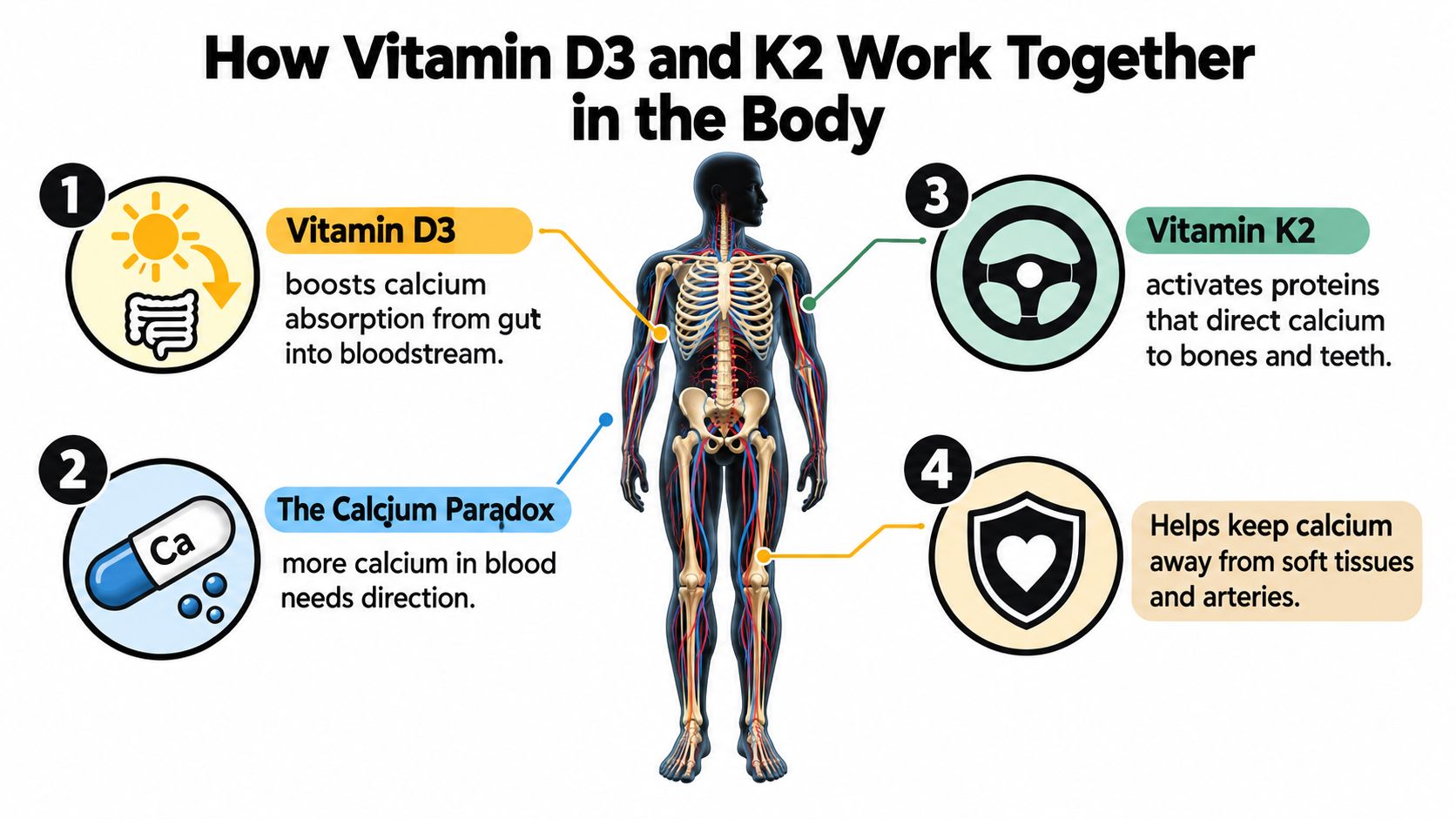
The calcium paradox in plain language
Absorbing more calcium does not automatically mean using it well. The body must absorb calcium, incorporate it into the skeleton, and regulate its movement through the bloodstream. D3 helps make calcium available, while K2 participates in systems that help manage where it is used.
This is the basic calcium paradox: availability and placement are related, but they are not identical. The pairing has a plausible role in calcium-related biology, particularly when vitamin D status is low. It is not proof that supplements clear arteries, prevent heart events, or raise testosterone.
A video can make the relationship easier to visualise:
For men under 40, this framework usually points first toward correcting confirmed deficiency and supporting bone maintenance. Men over 40 may need closer attention to bone health, medications, diet, and medical history. In every age group, the practical result depends on baseline nutrient status and the person's wider clinical context.
Key Benefits of Vitamin D3 and K2 for Men
A man may take D3 and K2 hoping for stronger bones, better energy, or higher testosterone. Those outcomes do not have equal support. The clearest case concerns bone-related measures, while claims about testosterone and protection from arterial calcification remain limited.
Bone strength has the clearest case
A 2020 meta-analysis of randomised controlled trials found that combining vitamin K with vitamin D significantly increased total bone mineral density. The pooled effect size was 0.316, with a 95% confidence interval of 0.031 to 0.601. It also found a significant reduction in undercarboxylated osteocalcin of -0.945, with a 95% confidence interval of -1.113 to -0.778, in the published meta-analysis. Benefits were stronger in the analysis when vitamin K2 doses were below 500 micrograms per day.
These findings support a role in bone density and bone-related biomarkers. They do not guarantee that every man will feel stronger after taking a capsule. The potential relevance is greater when vitamin D is low, dietary vitamin K is limited, age-related bone risk is present, or physical activity places high demands on the skeleton.
Cardiovascular relevance needs caution
D3 and K2 are often described as a calcium-routing partnership. That biological explanation is plausible, but it has not translated into consistent improvements in clinical cardiovascular outcomes.
In older men with high coronary artery calcium, a 2-year randomised, double-blind trial found that vitamin K2 plus vitamin D3 did not significantly slow progression of coronary, aortic-valve, or aortic calcification compared with placebo, according to the Journal of the American College of Cardiology trial.
A separate 2022 randomised, double-blind clinical trial in elderly men with aortic valve calcification found that two years of MK-7 plus vitamin D did not significantly slow calcification progression. The mean difference was 17 AU, with a 95% confidence interval of -86 to 53 AU. The authors concluded that the combination was not effective for reducing progression of aortic stenosis in men, as reported in the European Heart Journal report.
| Benefit Area | What the Evidence Suggests | Relevance for Men |
|---|---|---|
| Bone density | Combined vitamin K and D may improve bone-related outcomes | Relevant to men concerned with bone strength, ageing, or injury resilience |
| Arterial and valve calcification | Trials in older, high-risk men found no significant slowing | A reason for caution, not proof of heart protection |
| Energy and vitality | Benefits are more plausible when vitamin D is low | Men with deficiency may have more to gain than men already sufficient |
| Testosterone | Vitamin D evidence is strongest in deficient men, while direct K2 effects are not established | K2 is not a standalone testosterone strategy |
Testosterone claims run ahead of the evidence
Men may look to D3 and K2 for energy, muscle, libido, or testosterone. Current coverage indicates that vitamin D's strongest human signal is mainly seen in men who are deficient. There is no direct clinical evidence that vitamin K2 raises testosterone in humans, as discussed in this 2026 review of the research.
Correcting a deficiency may support normal physiology. That is different from promising a hormone boost to men whose vitamin D levels are already adequate.
Age-Specific Considerations for Men Under and Over 40
A man under 40 might spend most of his day indoors, train hard, and assume his bones need little attention. A man over 40 may be more concerned with maintaining strength, staying active, and understanding whether age, weight, season, or health conditions have changed his vitamin D status. The same D3 and K2 partnership can matter to both groups, but the reason for using it may differ.
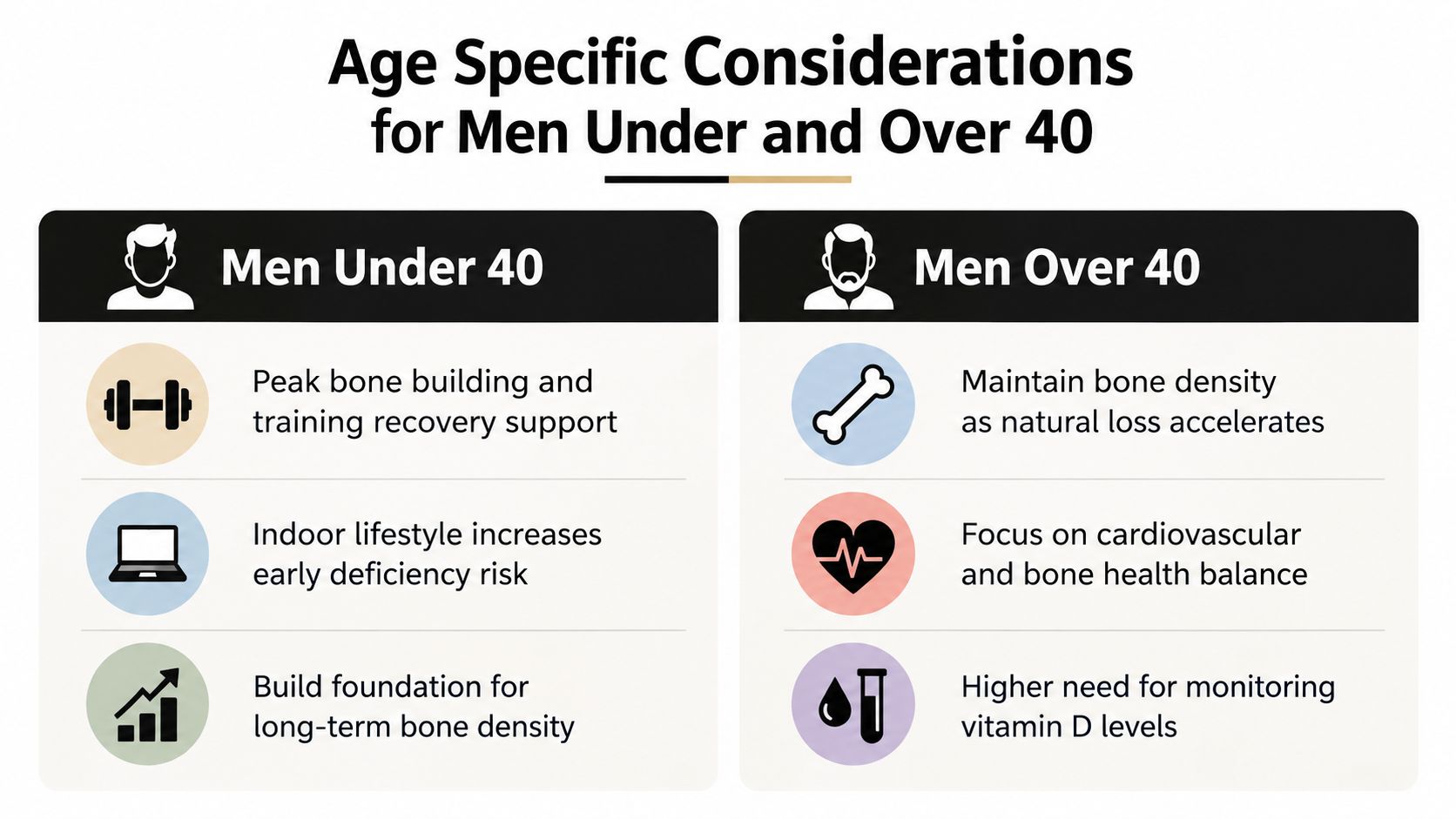
Men under 40
Younger men may treat bone health as automatic, especially if they lift weights or play sports. Training gives bones useful mechanical stimulus, yet nutrition, calcium handling, and recovery still support the process. Limited sunlight, office-based routines, restrictive eating, or frequent indoor training can make vitamin D status relevant.
The practical goal is building a durable foundation. D3 helps the body absorb calcium, while K2 supports proteins involved in directing calcium toward bone. This is a routing partnership, not a guaranteed performance boost. A man who eats a varied diet, sleeps adequately, trains sensibly, and already has sufficient vitamin D may notice little from adding a supplement. Deficiency or limited dietary intake gives him a clearer reason to seek personalised advice.
Men over 40
After 40, the focus often shifts from building peak bone strength to maintaining it while preserving activity. Less outdoor time, sedentary work, higher body weight, and dietary changes can all affect vitamin D status. Older men with several of these factors may warrant closer attention than age alone would suggest.
Research in older men found that deficiency was especially common among a specific subgroup with obesity, low outdoor activity, higher-latitude living, and low intake. That result does not describe every man over 40, and it should not be used to promise heart or testosterone benefits from D3 and K2. It does show why personal circumstances matter. Men seeking a broader overview can read this guide to vitamins for men over 40.
| Men under 40 | Men over 40 |
|---|---|
| Build bone and support training demands | Maintain bone strength and active function |
| Review indoor routines and limited sunlight | Consider age, weight, season, and outdoor activity |
| Use D3 and K2 to address a plausible need, not as a performance shortcut | Discuss testing and supplement choices when risk factors exist |
Dosage Guidance and How to Choose a Supplement
A sensible D3 and K2 plan starts with the label and the man taking it. These nutrients may support calcium handling, but a higher-dose stack is not automatically better for bone or general health. Vitamin D's adult tolerable upper intake level is 100 micrograms per day, as summarised in this D3 and K2 supplement guide. That limit is a safety boundary, not a target. Men with medical conditions or a suspected deficiency should get individual advice before using higher amounts.
Start with the label
Choose a product that states the amount of vitamin D3 and the amount and form of K2. MK-7 is commonly discussed in supplement guidance because it may remain available in the body longer than some other forms. Clear labelling still matters more than a complicated formula.
Use this checklist before buying:
- Transparent amounts: Check that D3 appears in IU or micrograms and K2 in micrograms.
- Appropriate formulation: Check other supplements so several products do not supply vitamin D at the same time.
- Testing information: Look for credible third-party quality testing and clear manufacturing details.
- No megadoses: A larger serving does not guarantee a larger benefit.
- Simple ingredients: Prefer a formula that lists the active nutrients rather than hiding them in a proprietary blend.
Timing and food
D3 and K2 are fat-soluble. Taking them with a meal that contains some fat may support absorption and makes the routine easier to remember. Eggs at breakfast, olive oil at lunch, or fish at dinner can all provide practical meal options.
Food supplies some vitamin D and vitamin K. Fatty fish and egg yolk provide vitamin D, while fermented foods can provide forms of vitamin K. Sun exposure and diet differ between men, so food alone may not correct low vitamin D in every case.
The right choice depends on age, diet, exercise, sleep, stress, and health goals. Men under 40 may have little reason to supplement if their diet, outdoor time, and vitamin D status are already adequate. Men over 40 may need closer review when outdoor activity is limited or other health factors affect vitamin D status. A clinician can use medical history and a blood test to assess whether supplementation fits, particularly before higher intake.
Safety Interactions and Common Misconceptions
A plausible mechanism is not a promise. D3 helps the body absorb calcium, while K2 supports the activation of proteins involved in calcium handling. That partnership may make sense for bone health, but it does not prove that the supplements reverse existing calcification, prevent heart disease, or raise testosterone.
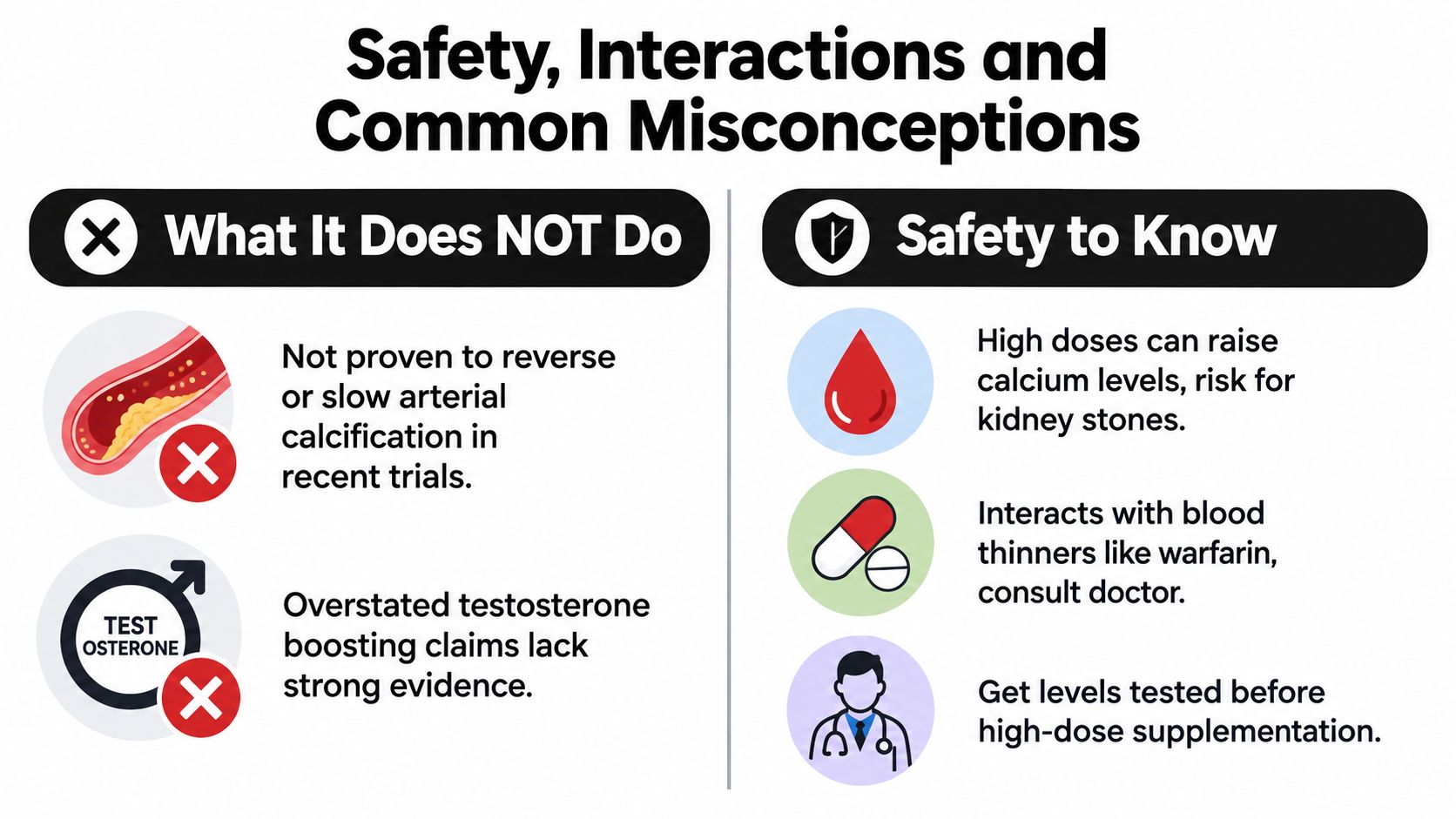
Myth versus reality
Myth: D3 plus K2 is proven to protect men's arteries.
Reality: The two trials described earlier found no significant slowing of coronary, aortic-valve, or aortic calcification in older, high-risk men. Those findings do not answer every possible use, but they do not support marketing the combination as guaranteed arterial protection.
Myth: K2 is a testosterone booster.
Reality: Direct human clinical evidence that K2 raises testosterone is lacking. Vitamin D may matter more when a man has low vitamin D, while men with sufficient levels should not expect a dependable hormone effect.
Myth: High-dose vitamin D is harmless because it is a vitamin.
Reality: Too much supplementation can disturb calcium balance. The adult upper intake level is 100 micrograms per day. Men with kidney, parathyroid, cardiovascular, or calcium-related conditions should seek professional guidance before using higher-dose products.
Medication and health checks
Vitamin K can interact with anticoagulant treatment, especially warfarin. Anyone taking a blood thinner should coordinate with the prescribing clinician before adding or stopping K2, because keeping vitamin K intake consistent can matter for medication management.
Medical advice is also appropriate with kidney disease, a history of kidney stones, abnormal calcium levels, or regular medication review. Supplements should not replace evaluation or treatment for fatigue, low testosterone, bone pain, or cardiovascular symptoms.
Safety rule: Test and personalise when risk is high. A supplement label cannot replace a medication review or clinical assessment.
Practical Next Steps and Personalised Guidance for Men
Start with the basic question: Do you have a reason to suspect low vitamin D or poor dietary coverage? Limited sunlight, indoor work, older age, higher body weight, low outdoor activity, and a restricted diet can all make a conversation with a healthcare professional more useful.
Then build the foundation around habits rather than capsules alone:
- Eat for bone support: Include calcium-containing foods, varied protein sources, fatty fish, eggs, and fermented foods where they suit your diet.
- Train consistently: Resistance exercise and other weight-bearing activity help provide the mechanical signal bones need.
- Respect recovery: Sleep, sufficient food, and manageable training loads support energy more reliably than chasing a “vitality” claim.
- Review the full stack: Check multivitamins, sports products, and fortified foods so you don't unintentionally duplicate vitamin D.
- Use testing when appropriate: Ask a qualified professional whether a 25(OH)D test makes sense for your symptoms, risk factors, or planned supplementation.
The central idea is simple. D3 helps calcium enter the system, while K2 helps support the body's calcium-management machinery. Bone-related benefits have the strongest rationale, cardiovascular claims need restraint, and testosterone promises remain unproven for K2. Your age and baseline status determine whether the pairing is relevant, especially when comparing a younger indoor athlete with an older man managing low activity and limited sun.
This article is for informational purposes only and is not medical advice. Always consult a qualified health professional before starting any new supplement or major lifestyle change
VitzAi.com offers a personalised supplement quiz that considers factors such as age, goals, diet, exercise, sleep, stress, and digestion to help narrow relevant options. Visit VitzAi.com to explore supplement suggestions and review a simpler plan instead of sorting through dozens of products yourself.