

A Guide to Zinc and Magnesium Supplement Benefits
A top-notch zinc and magnesium supplement can be a real game-changer for your health. Think of it as a fundamental support system for everything from getting deep, restorative sleep to keeping your immune system fighting fit. This powerful combination works to fill very common nutritional gaps that most of us don't even realise we have.
The Power Duo Your Body Has Been Crying Out For
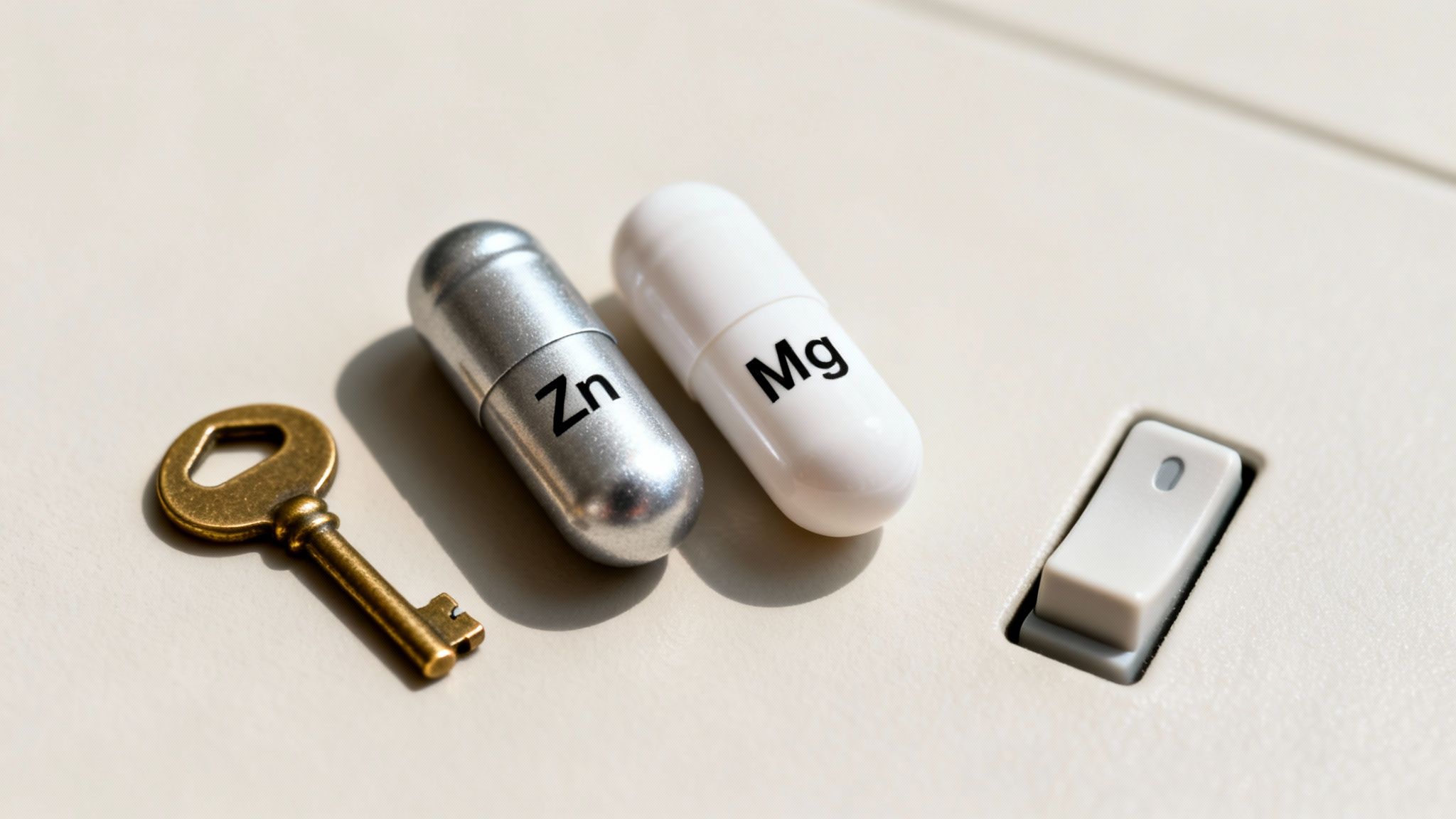
It helps to see zinc and magnesium not just as separate minerals, but as a coordinated team working behind the scenes to keep your body running like a well-oiled machine. They’re involved in hundreds of critical biochemical reactions, yet a surprising number of us simply don't get enough through diet alone.
Let's break it down with a simple analogy. Imagine your body is a highly complex electrical grid.
- Magnesium is the 'power switch'. It's needed to activate over 300 enzymes and is essential for turning food into cellular energy, relaxing your muscles, and calming the nervous system. Without enough magnesium, the whole grid can feel sluggish and overworked.
- Zinc is the 'master key'. It unlocks countless cellular functions, including your immune defences, hormone production, and DNA repair. Zinc makes sure your body's most vital processes can happen efficiently.
When you have optimal amounts of both, they work in harmony to ensure your internal systems are firing on all cylinders, from the moment you fall asleep to the peak of your workout.
The Modern Dilemma of Mineral Gaps
Despite being so important, modern diets and lifestyles often leave us running low on these key minerals. Soil depletion means there’s less mineral content in many of our fruits and vegetables, and processed foods offer very little in the way of real nutritional value.
On top of that, things like chronic stress and intense exercise can burn through your body's mineral stores even faster. This creates a gap between what your body needs and what it's actually getting.
National dietary surveys in the UK have found that a significant portion of adults, especially women and younger people, have intakes below the recommended levels. Magnesium shortfalls are particularly common in younger adults, while zinc deficits are more noticeable in some men. You can dig into more of these dietary patterns from the national survey analyses.
This common shortfall is exactly why a well-formulated zinc and magnesium supplement has become such a valuable tool for anyone looking to support their health and performance goals today.
"Viewing zinc and magnesium as foundational support is key. They aren't quick fixes but rather the essential building blocks that enable better sleep, faster recovery, and a more resilient immune system."
This guide will walk you through everything you need to know about this dynamic duo. We’ll cover how they work, the benefits you can realistically expect, and how to choose the right product for your specific needs.
How Zinc and Magnesium Work in Harmony
While zinc and magnesium are impressive minerals on their own, their real magic happens when they work together. Their relationship is deeply synergistic, which is just a scientific way of saying their combined effect is far greater than the sum of their parts.
Think of them as a perfectly coordinated duo in your body’s orchestra. One’s performance enhances the other’s, creating a biological harmony that supports some of your body's most critical functions—especially those governing rest, recovery, and regulation. Taking a combined zinc and magnesium supplement simply leans into this natural partnership.
A Partnership for Sleep and Relaxation
One of the most celebrated benefits of this mineral team is their impact on sleep. If you've ever struggled to switch off at night, this is where they shine. Magnesium is famous for its ability to calm the nervous system. It does this by boosting a neurotransmitter called GABA (gamma-aminobutyric acid), which essentially acts as your brain's 'off switch', quieting down nerve activity.
Zinc then steps in to back it up. It plays a crucial role in the journey from the amino acid tryptophan to serotonin, and then finally to melatonin—the body’s main sleep hormone. So, while magnesium helps you wind down, zinc makes sure the hormonal signals for sleep are firing on all cylinders.
- Magnesium: Activates the parasympathetic nervous system, helping you feel calm and relaxed.
- Zinc: Supports the production of melatonin, the hormone that governs your sleep-wake cycles.
This one-two punch helps you not only drift off faster but also sink into the deeper, more restorative stages of sleep that are so vital for physical and mental recovery.
The Lock and Key for Hormone Balance
The synergy between zinc and magnesium also runs deep into your endocrine system, which is responsible for regulating hormones like testosterone. A simple 'lock and key' analogy is a great way to understand how they interact here. Imagine a hormone receptor is a lock, and the hormone itself is the key.
For the key to work, the lock needs to be in perfect shape. Magnesium helps maintain the sensitivity of these receptors, making sure they're primed and ready to receive hormonal signals. Meanwhile, zinc is a fundamental building block for actually producing hormones like testosterone in the first place.
Without enough zinc, your body can't produce enough 'keys'. Without enough magnesium, the 'locks' don't work properly. A shortfall in either can throw this delicate balance off kilter.
This is exactly why a zinc and magnesium supplement is so popular among people looking to support healthy hormone levels, particularly for fitness and vitality. The two minerals ensure both the production and the utilisation of key hormones are optimised.
Supporting Muscle Repair and Immunity
After a tough workout or even just a stressful day, your body needs to get to work repairing itself at a cellular level. Both minerals are absolutely critical for this. Zinc is essential for protein synthesis—the process of building new proteins to repair damaged muscle tissue. It also plays a starring role in immune function, helping to manage inflammation.
Magnesium chips in by regulating muscle function, helping to prevent cramps, and aiding in the transport of energy to your cells. When taken together, they create the ideal internal environment for recovery, helping you bounce back quicker from physical exertion and keeping your body’s natural defences strong.
The Science-Backed Benefits of This Mineral Team
Okay, so we've seen how zinc and magnesium work together. Now for the good bit: what can you actually feel when you get your levels right? This isn't just about ticking boxes on a nutrient chart. A well-thought-out zinc and magnesium supplement can be the key to unlocking better performance, faster recovery, and just an overall sense of feeling... well, better.
These aren't abstract ideas. We're talking about waking up feeling properly rested, bouncing back from a tough workout instead of crawling through the next day, and feeling more resilient when life throws its usual curveballs at you.
Deeper Sleep and Faster Recovery
One of the first things people often notice is a real shift in their sleep quality. Think of magnesium as your body's off-switch. It has a calming effect on your entire central nervous system, mainly by interacting with GABA receptors in your brain, which are essential for quieting things down and letting you drift off.
Zinc then steps in to support this process. It's heavily involved in producing and regulating melatonin, the hormone that dictates your natural sleep-wake cycle. When you combine them, you’re not just encouraging your body to relax; you're also giving it the raw materials it needs to build a solid foundation for a great night's sleep. This translates to more time in those deep, restorative sleep stages where all the important repair work happens.
And better sleep means faster recovery—it's that simple. During deep sleep, your body is busy repairing tissues and building muscle. By optimising this natural process, you'll find you're less sore after a workout and ready to go again sooner. To dive deeper into this, check out our guide on the best supplements for muscle recovery.
Enhanced Athletic Performance
For anyone who's active, whether you're a serious athlete or just love your gym sessions, this duo is a bit of a game-changer. Magnesium is fundamental to how your body produces energy; it helps your cells turn the food you eat into fuel (ATP). It's also a key player in muscle contraction and relaxation, which is why it's so good at helping prevent those dreaded cramps and fatigue during a tough session.
Zinc complements this by supporting healthy testosterone levels. This is a critical hormone for building muscle and strength, for both men and women. On top of that, it helps manage the inflammation that naturally occurs after exercise—the kind that can slow down your recovery if it gets out of hand.
Together, they help create an internal environment that’s primed for performance.
- Optimal energy production: Magnesium makes sure your muscles have the fuel they need to fire on all cylinders.
- Improved muscle function: It helps regulate contractions, which can mean fewer cramps and better endurance.
- Hormonal support: Zinc is essential for the hormones that drive both muscle growth and repair.
This means you can push a bit harder in your training and bounce back more effectively, leading to more consistent progress over the long haul.
A Stronger Immune System
Your immune system is a seriously complex network that relies on a handful of key nutrients to run smoothly. Zinc is right at the top of that list. It’s absolutely essential for the development and function of your immune cells, particularly T-cells, which are like the special forces of your immune system, tasked with hunting down and neutralising threats.
If your zinc levels are running low, your body's first line of defence can be weakened, leaving you more open to whatever bug is going around. Magnesium plays a supporting role here by helping to regulate inflammation. While a bit of inflammation is a normal and healthy part of an immune response, chronic, low-grade inflammation can wear your defences down over time.
By making sure you’ve got enough of both minerals, you’re essentially giving your immune system the basic tools it needs to stay balanced, responsive, and ready for action.
Support for Hormonal Balance
Finally, this mineral team provides some powerful backup for keeping your hormones in check. As we've touched on, zinc is a fundamental building block for producing key hormones like testosterone and thyroid hormones. But it's not enough to just produce them; your body needs to be able to use them. That's where magnesium comes in—it helps ensure the receptors for these hormones are sensitive and working as they should, allowing them to deliver their messages effectively.
This isn't just important for hitting goals in the gym; it's crucial for your overall energy levels, mood, and general vitality. For women, this duo can also be particularly helpful for balancing hormones throughout the menstrual cycle. At the end of the day, a stable hormonal environment is the bedrock of feeling consistently energetic, mentally sharp, and positive.
Choosing the Right Zinc and Magnesium for You
Stepping into the supplement aisle can feel like navigating a maze. You're faced with dozens of bottles, all promising amazing results. But when it comes to a zinc and magnesium supplement, not all are created equal. The real key to unlocking their benefits comes down to a simple but crucial concept: bioavailability.
So, what is it? Think of your body’s cells like houses with locked doors. Minerals need the right key to get inside and do their jobs. Some forms of minerals are like perfectly cut keys that slide in effortlessly. Others are clunky and don't fit the lock at all. Bioavailability is simply a measure of how well that key works.
A highly bioavailable supplement means your body can actually absorb and use the mineral, leading to real results. A poorly absorbed form, on the other hand, might just pass right through your system, no matter what the dose on the bottle says.
Understanding Chelated vs Non-Chelated Minerals
To make minerals more bioavailable, scientists often use a process called "chelation". This basically involves attaching the mineral to an amino acid, which acts as a kind of escort. This clever disguise helps the mineral survive the harsh journey through your digestive system and get absorbed much more easily, like a VIP being whisked past the queue at an exclusive club.
- Chelated forms (the VIPs): Think Magnesium Glycinate or Zinc Picolinate. These are bound to amino acids, making them gentle on the stomach and super easy for your body to absorb.
- Non-chelated forms (standard entry): This is where you find minerals like Magnesium Oxide. The magnesium is technically there, but it's not bound to an amino acid, so your body really struggles to absorb it. This often leads to little benefit and a good chance of digestive upset.
The infographic below shows exactly what you're trying to achieve when picking a quality zinc and magnesium supplement.
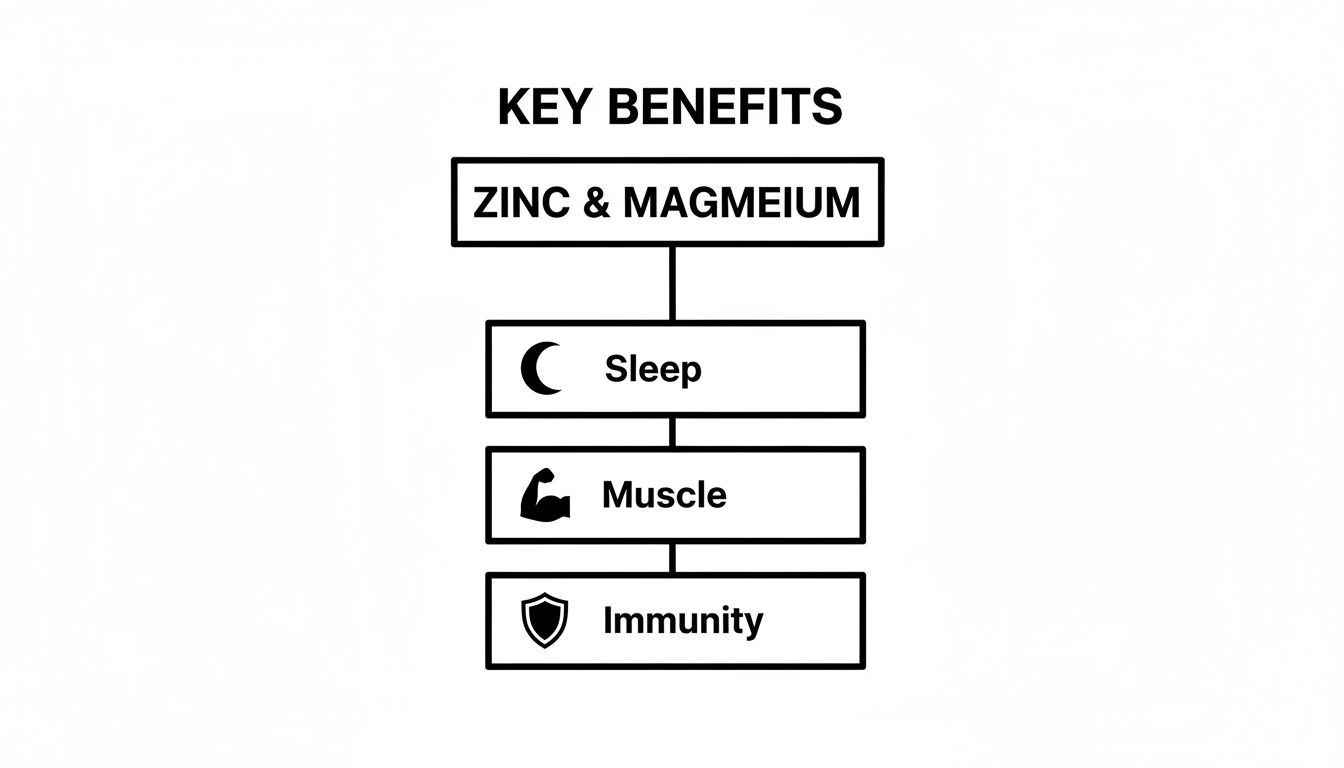
It really brings home how important it is to match the mineral form to your goal, whether that’s better sleep, faster muscle recovery, or a stronger immune system.
Comparing Common Forms of Zinc and Magnesium
This table compares different forms of zinc and magnesium based on their bioavailability (how well the body absorbs them) and their primary uses, helping you choose the best type for your needs.
| Mineral Form | Bioavailability | Best For | Potential Side Effects |
|---|---|---|---|
| Zinc Picolinate | Very High | General immune support and overall health | Minimal when taken with food |
| Zinc Glycinate | Very High | Gentle on the stomach, good for absorption | Rare, but can occur at high doses |
| Zinc Gluconate | Moderate | Common in lozenges for immune support | Can cause nausea on an empty stomach |
| Magnesium Glycinate | Very High | Sleep, relaxation, and calming the mind | Very rare, extremely well-tolerated |
| Magnesium L-Threonate | High | Cognitive function and brain health | Minimal |
| Magnesium Citrate | Moderate-High | Muscle relaxation and occasional constipation | Can have a laxative effect at high doses |
| Magnesium Oxide | Low | Often used as a laxative; poor for absorption | High risk of digestive upset |
As you can see, forms like Magnesium Glycinate are standouts because of their top-tier absorption and gentle nature, making them an excellent choice for consistent, daily use. If better sleep is your main priority, you might want to dive deeper into our guide on what type of magnesium is best for sleep for more specific advice.
Choosing the right form really depends on what you're trying to achieve. A form that’s brilliant for relaxation might not be the top pick for muscle support. Understanding these little details is vital. For instance, knowing which magnesium is best for muscle cramps can help you fine-tune your supplement routine for your fitness goals.
By understanding these differences, you can read supplement labels with confidence and choose a high-quality product that actually aligns with what your body needs. It’s the best way to make sure you get the most out of this powerful mineral duo.
How to Take Your Supplement for the Best Results
So, you've picked out a quality zinc and magnesium supplement. That's the first step, but getting the best results isn't just about what you take—it's also about how and when you take it. A bit of strategic timing and a few simple rules can make a massive difference in how well your body absorbs and uses these powerhouse minerals.
The most common and effective strategy? Take your supplement 30-60 minutes before bed. This timing isn't random; it lines up perfectly with the minerals' top benefits for sleep and recovery. Taking magnesium before you hit the hay helps calm your nervous system, while zinc gets to work supporting the natural production of sleep-regulating hormones like melatonin.
This simple habit helps you tap into magnesium's calming properties just as you're winding down, paving the way for a smoother transition into deeper, more restorative sleep.
Finding Your Ideal Dosage
Dose isn't a one-size-fits-all deal. It really depends on your diet, lifestyle, and individual needs, but there are some sensible guidelines to follow. The key is to find a balance that gives you the benefits without overdoing it, especially with zinc.
A good starting point for most adults is:
- Magnesium: Around 200-400 mg per day. If you’re particularly active or under a lot of stress, you might find the higher end of this range works best for you.
- Zinc: Generally, 10-20 mg per day is plenty. It's crucial not to go over the safe upper limit of 40 mg per day from all sources (food included!) unless a doctor tells you otherwise. Too much zinc can throw other minerals, like copper, out of balance.
It's always a good idea to start with a lower dose to see how your body gets on, then adjust if you need to. Listening to your body is just as important as reading the label on the bottle.
The growing interest in these minerals is even showing up in huge health studies. In the UK Biobank, for example, thousands of participants report their supplement use, which allows researchers to connect mineral intake to health outcomes on a massive scale. You can find out more about how this data is used in health research from the Health Supplements Information Service report.
What to Avoid for Maximum Absorption
To get the most out of your zinc and magnesium supplement, you need to know what can get in the way. Certain foods and other minerals are essentially competing for the same absorption pathways in your gut, which can seriously cut down on how much your body actually gets.
Think of it like a busy motorway; if too many cars try to get on at the same time, you end up with a traffic jam, and fewer get through.
To keep the road clear for your supplement, try to avoid taking it alongside:
- High-Calcium Foods: Dairy products like milk and cheese can interfere with both magnesium and zinc absorption. It’s best to leave at least a two-hour gap between your supplement and any calcium-heavy meals.
- Other Mineral Supplements: Iron and calcium are the main competitors here. If you're taking an iron supplement, have it in the morning and save your zinc and magnesium for the evening.
- Phytate-Rich Foods: Found in things like whole grains, legumes, and seeds, phytates can bind to minerals and stop them from being absorbed. While these foods are incredibly healthy, it’s wise not to have a big portion right when you take your supplement.
By keeping these interactions in mind, you're making sure your body can absorb these essential minerals efficiently, making your supplement far more effective. For a deeper dive into how they work together, check out our guide on whether you can take magnesium and zinc together.
Putting It All Together: Your Action Plan
Right, so knowing the science is one thing, but turning that knowledge into real-world results is what truly matters. You’ve got the lowdown on how zinc and magnesium supplements work, which types are worth your money, and the best time to take them. Let's pull all that together into a simple, effective plan you can actually stick to.
The core principle is dead simple: get yourself a high-quality, chelated supplement and take it 30-60 minutes before bed. This is your foundation for better sleep and recovery. From there, we can get a bit more specific based on what you’re trying to achieve.
Your Personalised Supplement Strategy
Think of this supplement as just one tool in your wellness toolkit. For it to really shine, it needs to be part of a bigger picture. That means pairing it with good nutrition and, of course, incorporating effective workout programs to give those minerals a job to do.
Here’s how you can tailor your approach depending on your goals:
- For the Athlete: Your world revolves around muscle repair and energy. A combo of Magnesium Glycinate and Zinc Picolinate is your best bet. It supports the protein synthesis needed for recovery, helps keep muscle contractions smooth to fend off cramps, and plays a role in optimising the hormones that are critical for strength gains.
- For Deeper Sleep: If getting truly restorative rest is your top priority, Magnesium Glycinate is the undisputed champion. Its ability to calm the nervous system, combined with zinc’s role in regulating melatonin, creates a powerful duo for deeper, more refreshing sleep.
- For Overall Wellbeing: For those just looking to top up their health, manage stress, and bolster their immune system, a balanced formula with both minerals in their glycinate or picolinate forms is a brilliant daily habit. It’s a straightforward way to fill common dietary gaps and give your body foundational support for its most vital functions.
Choosing a Trusted Brand
The last piece of the puzzle is picking a product you can trust. The supplement market can feel like the Wild West, but a few simple checks can help you find the good stuff.
Always lean towards brands that are transparent about where their ingredients come from and how their products are made. A company that’s confident in its quality will be happy to show you it’s pure, potent, and effective.
Look for supplements that are third-party tested. This means an independent lab has verified that what's on the label is actually in the bottle and that it's free from any nasty contaminants. It’s the closest thing you’ll get to a guarantee of quality and safety.
By following this plan—setting your goal, picking the right forms, and choosing a brand you trust—you're putting yourself in a great position. The right zinc and magnesium supplement can be a game-changer, helping you feel more rested, resilient, and ready to tackle whatever comes your way.
Got Questions About Zinc and Magnesium?
Even when you've got a good handle on a supplement, a few questions always seem to pop up. Let's tackle some of the most common ones about taking zinc and magnesium so you can feel completely confident about adding them to your routine.
Can I Take Zinc and Magnesium Every Day?
Yes, absolutely. For most of us, taking a zinc and magnesium supplement daily isn't just safe—it's the best way to keep your mineral levels where they need to be. Consistency really is key here.
Your body puts these minerals to work in countless ways every single day, so a regular top-up ensures it's never running on empty for critical jobs like sleep, recovery, and immune defence.
There’s generally no need to "cycle" this combination. Cycling is a strategy better suited to supplements that prod hormonal pathways in a way your body might adapt to over time. Zinc and magnesium are essential nutrients; think of it less like flipping a powerful switch and more like keeping your fuel tank full. As long as you stick to the right dose, daily use is the standard approach for long-term benefits.
What Are the Signs I Might Need More?
Your body is pretty good at sending out little signals when it’s running low on something important. While a blood test is the only way to be certain of a deficiency, several common signs might be your body's way of telling you it could use a zinc and magnesium supplement.
Listen to your body for clues like these:
- Poor Sleep Quality: You struggle to drift off, wake up all the time during the night, or just never feel properly rested when your alarm goes off.
- Muscle Cramps or Twitching: Those annoying, unexplained muscle spasms, especially in your legs or even your eyelids, can be a classic sign of low magnesium.
- Persistent Fatigue: You just feel drained and run-down, even after what should have been a solid night's sleep.
- Frequent Colds: It feels like your immune system is on holiday, and you’re catching every single bug that does the rounds.
If any of that sounds a bit too familiar, it might be a hint that your diet isn't quite keeping up with what your body needs.
Is This Combination Good for Women?
Definitely. Zinc and magnesium are often talked about for their role in supporting men's health, but this combination offers huge benefits for women's health, too. It's a real powerhouse for hormonal balance and general wellbeing through every stage of life.
For women, this mineral duo can be especially helpful for:
- Hormonal Balance: Both minerals play a crucial part in regulating the hormones that control the menstrual cycle. This can make a real difference in easing PMS symptoms like mood swings and cramping.
- Bone Health: Magnesium is absolutely vital for bone density, working as a team with calcium and vitamin D to keep your skeleton strong. This becomes even more important as we get older, helping to reduce the risk of osteoporosis.
- Stress Management and Mood: Magnesium has a wonderful calming effect on the nervous system, which can help take the edge off daily stress and support a more balanced mood.
By supporting these key areas, a quality zinc and magnesium supplement can be an invaluable part of a woman's wellness toolkit, from managing monthly cycles to looking after long-term bone health.
Ready to see how a personalised supplement plan can support your unique health goals? At VitzAI, we use smart technology to create tailored recommendations just for you.
Discover Your Personalised Stack at VitzAI.com
This article is for informational purposes only and is not medical advice. Always consult a qualified health professional before starting any new supplement or major lifestyle change.