

The Best Vitamins for Men Over 40 to Optimize Health
When men hit their 40s, the essentials change. You should be looking at Vitamin D for hormone support, Magnesium for muscle function and stress, Omega-3s for your heart and brain, and a solid complex of B-Vitamins for energy production. These become crucial as your body shifts gears, changing how it handles metabolism, hormones, and nutrient absorption.
Why Your Nutrient Needs Change After 40

Hitting 40 is a major milestone, but it's also a significant biological turning point. Your body's internal chemistry starts to shift in subtle but powerful ways, which calls for a new nutritional game plan.
Think of your body like a high-performance car that's given you years of reliable service. As it enters the next phase, it needs more specialized fuel and a bit more TLC to keep the engine running smoothly. This isn't about decline; it's about smart adaptation.
Your metabolism, which once burned through fuel like a furnace, begins to cool. Hormone levels, especially testosterone, naturally start to dip. To get a clearer picture of these physiological shifts, it helps to look at something like a Testosterone Levels by Age Chart.
Key Biological Shifts After 40
As your body matures, several key processes change, directly increasing your need for the right nutrients. A generic, off-the-shelf multivitamin just won't cut it anymore because it isn’t designed for these specific adjustments. Understanding these changes is the first step toward a smarter, more targeted nutrition strategy.
Here are the big ones:
- Slowing Metabolism: Your body becomes less efficient at turning food into energy. This makes managing your weight trickier and increases the demand for nutrients that keep your metabolic engine firing.
- Hormonal Adjustments: The gradual drop in testosterone can impact everything from your muscle mass and bone density to your energy and mood.
- Increased Oxidative Stress: Over the years, the wear and tear from free radicals—known as oxidative stress—starts to add up, accelerating the ageing process. Antioxidant vitamins become your frontline defence to protect your cells.
- Reduced Nutrient Absorption: Your digestive system can become less effective at pulling key vitamins and minerals from your food, creating potential gaps even if you're eating a healthy diet.
Your forties aren't the time to guess what your body needs. It's the time to listen, understand its new demands, and give it the precise fuel it requires to perform at its best for the decades to come.
This new reality demands a more intelligent approach. It means moving past generic advice and building a supplement plan that's laser-focused on maintaining your energy, protecting your long-term health, and fuelling your vitality. By meeting these changes head-on, you can ensure your body has everything it needs not just to get by, but to thrive.
The Core Four Nutrients Every Man Over 40 Needs

As your body’s internal rulebook starts to change, a generic, one-size-fits-all approach to nutrition is no longer effective. Forget the scattergun method; it’s far better to zero in on the key nutrients that become non-negotiable after the age of 40.
We call these the "Core Four." Think of them as the bedrock of a solid health plan, each one directly tackling the biological shifts we’ve been talking about. They’re like the senior management team for your body—each has a critical role, and when they work together, the whole system just runs better.
Let's break down why these four are so essential and how to spot the signs that you might be running a bit low.
To give you a quick overview, here's a table summarising these nutritional heavyweights.
| Essential Nutrients for Men Over 40 at a Glance | ||
|---|---|---|
| Nutrient | Key Role After 40 | Common Deficiency Signs |
| Vitamin D | Supports testosterone, bone density, and immune function. | Fatigue, frequent illness, low mood, aching bones. |
| Magnesium | Aids muscle relaxation, stress management, and sleep quality. | Muscle cramps or twitches, anxiety, poor sleep. |
| Omega-3 | Protects heart health, reduces inflammation, and supports brain function. | Dry skin, "brain fog," joint pain and stiffness. |
| Vitamin B12 | Crucial for energy production, nerve health, and red blood cell formation. | Fatigue, weakness, pins and needles, memory issues. |
This snapshot gives you a starting point, but let's explore why each of these deserves a spot in your daily routine.
Vitamin D: The Sunshine Vitamin
Often dubbed the "sunshine vitamin," Vitamin D actually behaves more like a hormone, orchestrating over a thousand different processes in the body. For men over 40, its job in supporting testosterone production is a big one. Healthy testosterone levels are tied directly to your energy, mood, muscle mass, and bone density—all areas that need more support as we age.
Living in the UK, with its famously unpredictable sunshine, puts a huge chunk of the population at risk of deficiency, especially during autumn and winter. The government even advises that everyone should consider taking a daily vitamin D supplement during these darker months.
The trouble is, the signs of low Vitamin D are subtle and easily dismissed as just getting older. You might notice:
- Persistent fatigue that lingers even after a full night's sleep.
- Catching every cold that goes around, as Vitamin D is vital for a robust immune system.
- A general low mood or even feelings of depression.
- Aching bones and a sore back, which can signal poor calcium absorption.
Magnesium: The Master Mineral
Magnesium is an unsung hero of men's health. It’s involved in over 300 enzymatic reactions in the body, making it the master mineral that keeps your muscles firing properly, your heart beating steadily, and your stress levels under control.
The catch? As you get older, your body's ability to absorb magnesium can decline. Add in stress and certain medications, and your stores can get depleted even faster.
This mineral is a game-changer for everything from recovering after a workout to getting a decent night's sleep. It helps relax muscles and quiet the nervous system, making it one of the best nutrients for men over 40 looking to manage stress and improve sleep—two cornerstones of long-term health.
Think of Magnesium as your body's internal circuit breaker. When stress levels are high or your muscles are overworked, magnesium steps in to calm things down, preventing overload and promoting recovery.
Deficiency is surprisingly common, and its symptoms can really disrupt your day-to-day life. Be on the lookout for muscle cramps or twitches (especially at night), feelings of anxiety, or just not being able to switch off. Poor sleep quality and constant fatigue are also classic signs.
Omega-3 Fatty Acids: The Brain and Heart Protector
Omega-3s are essential fats, which means your body can't make them from scratch—you have to get them from food or supplements. The two most beneficial types are EPA (eicosapentaenoic acid) and DHA (docosahexaenoic acid), found mainly in oily fish. They are absolute powerhouses for your heart and brain.
After 40, protecting your heart moves way up the priority list. Omega-3s help to keep inflammation in check, support healthy blood pressure, and maintain good cholesterol levels. For your brain, DHA is a primary structural component, crucial for preserving cognitive function, memory, and focus as you age.
If you're keen to go deeper, our guide on Omega-3 supplements in the UK offers a much more comprehensive look.
Spotting an Omega-3 shortfall can be tricky, but some tell-tale signs include:
- Dry, irritated skin or brittle hair and nails.
- Difficulty concentrating or a persistent feeling of "brain fog."
- Joint pain and stiffness, since Omega-3s have potent anti-inflammatory properties.
Vitamin B12: The Energy Igniter
Think of Vitamin B12 as the spark plug for your body's engine. It's essential for converting the food you eat into energy your cells can actually use. It also plays a vital part in nerve function and creating red blood cells.
Here's the problem: as we get older, our stomachs tend to produce less acid, which is needed to pry B12 away from food. This puts men over 40 at a much higher risk of coming up short.
A B12 deficiency can lead to a type of anaemia that leaves you feeling profoundly wiped out, no matter how much you rest. Keeping your levels topped up is key to staying sharp, energised, and mentally clear.
The first signs of low B12 are often neurological. You might notice odd sensations like pins and needles in your hands or feet, trouble with your balance, or a dip in memory and cognitive performance. Pale skin and a sore tongue can also be physical clues.
Focusing on these Core Four nutrients provides a powerful foundation for your health after 40, directly addressing energy, hormones, stress, and long-term vitality.
Unlocking Advanced Support with Key Minerals
While the Core Four nutrients lay a powerful foundation, hitting your peak after 40 often requires a more nuanced game plan. Think of it like tuning a classic car; once the engine oil and fuel are sorted, you get the best performance by fine-tuning the smaller, equally crucial components. This is where a select group of minerals and vitamins comes into play, providing advanced support that targets specific age-related challenges.
These supporting nutrients work behind the scenes to direct, protect, and regulate key bodily functions. They ensure other vitamins are used effectively, safeguard your cells from damage, and maintain the delicate hormonal balance that’s so vital at this stage of life. Overlooking them can mean leaving significant health benefits on the table.
Let’s explore three of these unsung heroes—Vitamin K2, Zinc, and Selenium—and see why they are essential for a truly effective supplement strategy for men over 40.
Vitamin K2: The Nutrient Chaperone
You’ve likely heard about calcium for bone health, but its story is incomplete without Vitamin K2. Think of Vitamin K2 as a traffic controller for calcium in your body. Its main job is to ensure calcium gets deposited where you need it—in your bones and teeth—and keeps it out of places where it can cause harm, like your arteries and soft tissues.
Without enough K2, calcium can build up in your arteries, leading to calcification or hardening, which is a major risk factor for heart disease. By activating proteins that bind calcium to the bone matrix, Vitamin K2 not only supports skeletal strength but also promotes cardiovascular flexibility and health—a critical two-for-one benefit for men over 40.
Zinc: The Hormone and Immunity Powerhouse
Zinc is a true workhorse mineral, involved in hundreds of bodily processes, but its roles in supporting testosterone levels and immune function are particularly important as you age. It is fundamental to the production of testosterone, and keeping your zinc levels topped up is a key piece of the puzzle for preserving energy, muscle mass, and libido.
On top of that, Zinc acts as a gatekeeper for your immune system. It’s essential for developing and activating T-cells, the white blood cells that are your frontline defence against infections. When zinc levels are low, your immune defences can weaken, leaving you more susceptible to illnesses. For a deeper dive into how this mineral works with others, our guide on the benefits of zinc and magnesium supplements offers more detailed insights.
Selenium: The Cellular Bodyguard
Selenium is a potent antioxidant that acts as a bodyguard for your cells, protecting them from the oxidative stress that accelerates ageing. It also plays a vital role in thyroid function, helping to regulate your metabolism—the very engine that governs your energy levels. A healthy thyroid is absolutely key to managing weight and maintaining vitality.
Consider Selenium your body's internal rust-proofer. It neutralises harmful free radicals before they can damage cells, preserving the integrity of everything from your DNA to your skin and helping to maintain long-term cellular health.
Unfortunately, selenium deficiency is a significant issue in the UK. Research from the National Diet and Nutrition Survey revealed that around 26% of all men have an inadequate intake. The situation is even more pronounced for men aged 40 to 49, where potential deficiency rates climb to a concerning 41.0%. This gap is critical, as selenium is linked to protection against certain cancers and cardiovascular conditions. You can read the full research about these findings to understand the scale of the issue.
Bringing these advanced support nutrients—K2, Zinc, and Selenium—into your strategy elevates it from a basic plan to a sophisticated, targeted approach. They address the nuanced needs of a man's body after 40, ensuring your health is supported from every angle.
How to Choose Supplements That Actually Work
Walking down the supplement aisle can feel like a guessing game. Countless bottles, all promising similar things. How do you sort the genuine game-changers from the expensive dust-collectors? The secret isn't just what nutrient you're taking, but how well your body can actually use it. This is what experts call bioavailability.
Think of it like this: a nutrient is a key, and your body's cells are the locks. A cheap, poorly made key might look the part, but it’ll just rattle around without ever turning the mechanism. It’s the same with a low-quality supplement. No matter how high the dose, if your body can't absorb and use the nutrient, it’s worthless. Nailing this concept is the first step to building a supplement plan that genuinely works.
It’s what separates a smart, effective strategy from just taking a shot in the dark. You can look past the marketing hype and pick formulations your body can actually put to work.
Unlocking Absorption with Superior Forms
The specific chemical form of a vitamin or mineral is everything when it comes to bioavailability. Some forms are essentially 'pre-packaged' in a way your body instantly recognises and absorbs, while others demand a lot of effort to convert or, worse, just get flushed straight through your system.
Here’s a quick rundown of what to look for on the label:
-
Chelated Minerals: Minerals like magnesium and zinc can be tricky for the body to absorb on their own. Chelation is a clever process that binds the mineral to an amino acid, essentially giving it a VIP pass for absorption. Keep an eye out for names like magnesium glycinate, magnesium citrate, or zinc picolinate. These are worlds apart from cheaper, less effective forms like magnesium oxide or zinc oxide.
-
Methylated B-Vitamins: B-vitamins, especially folate (B9) and B12, have to be converted into their 'active' forms before your body can use them. The catch is, a huge chunk of the population has common genetic variations that make this conversion process slow and inefficient. Choosing methylated forms—like methylfolate (B9) and methylcobalamin (B12)—completely bypasses this problem by delivering the nutrient in its ready-to-use state. You can read more about what makes a superior formulation in our guide to the best multivitamin for men.
Choosing a bioavailable supplement is like hiring a master craftsman instead of a DIY amateur. Both might show up, but only one has the right tools and expertise to get the job done properly and efficiently.
The Role of Vitamin A in Vision and Immunity
It’s not just minerals and B-vitamins where form matters. Take Vitamin A, which is absolutely vital for sharp vision, a resilient immune system, and healthy skin—all top priorities for men navigating their 40s and beyond.
Vitamin A comes in two main forms: preformed vitamin A (retinol), which you get from animal products, and provitamin A carotenoids (like beta-carotene), found in plants. While a good diet should cover your needs, a surprising number of men are falling short.
In fact, the UK's National Diet and Nutrition Survey found that over 10% of men aren't getting enough. A big reason for this is that the average man eats just 3.9 portions of fruit and vegetables a day, which are the main sources of provitamin A. You can discover more insights about these dietary patterns and see why this nutrient deserves more attention.
When choosing a supplement, make sure it provides a sensible dose. Too much preformed Vitamin A can be toxic. Making smart choices on form and bioavailability ensures you’re not just taking supplements, but actually absorbing them. And when you're looking at other types of supplements for things like gut health, it's just as important to know if they're doing their job. For instance, it's useful to learn how to tell if your probiotics are working to apply these same principles more broadly.
Building Your Personalised Supplement Stack
You've got the lowdown on the key nutrients for men over 40. Now, let's turn that knowledge into a real-world, actionable plan. Building a personalised supplement stack isn't about grabbing a random collection of bottles off the shelf; it’s about assembling a synergistic team of nutrients that work together to hit your specific health goals.
Think of it like putting together a specialised toolkit. You wouldn't use a hammer to turn a screw, and you shouldn't expect a generic multivitamin to fix specific issues like brain fog or flagging energy. A properly designed stack is built around your unique lifestyle, diet, and what your body is crying out for, giving it precisely what it needs to thrive.
The whole point is to ditch the one-size-fits-all mentality and create a smart, dynamic plan that matches your health ambitions. This strategic approach ensures you're investing in supplements that will actually deliver noticeable results.
This flowchart maps out the thought process behind choosing supplements that are genuinely effective and suited to you.
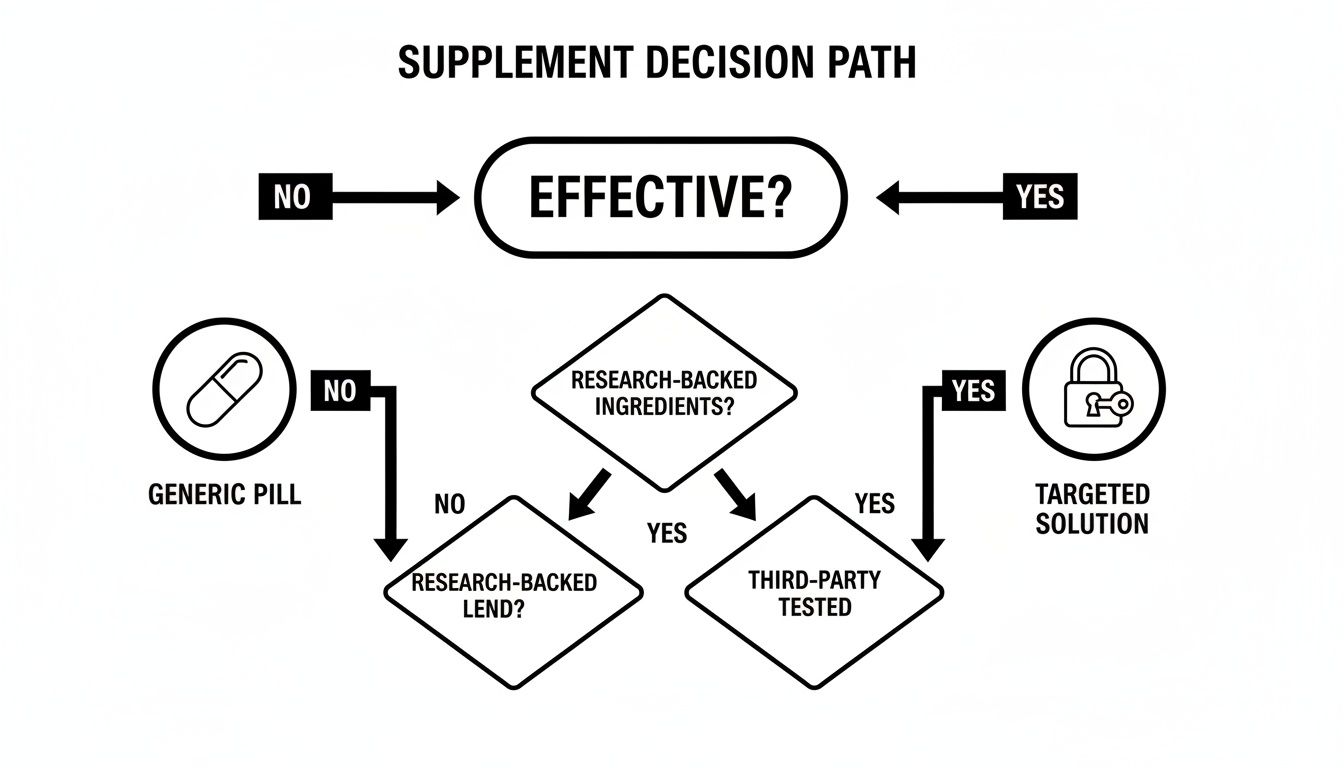
As you can see, an effective strategy is about more than just picking a popular nutrient. It's about selecting research-backed, bioavailable forms that directly address your personal health goals.
Example Stack: The Energy and Focus Architect
For the man juggling a demanding career, family life, and trying to stay fit, sustained energy and sharp mental focus are non-negotiable. This stack is designed to fuel your body and brain, helping you power through hectic days without the inevitable crash from too much caffeine or sugar.
The synergy here is what makes it work. B-Vitamins act as the spark plugs for your cellular energy production, while Magnesium helps manage the body's stress response, preventing that mental and physical drain that comes with high-pressure days.
Here’s how this combination comes together:
- A High-Quality B-Complex: Look for one with methylated forms of B12 (methylcobalamin) and Folate (methylfolate). This is crucial because it means your body can use these nutrients immediately to convert food into fuel, supporting all-day energy and keeping you switched on.
- Magnesium Glycinate: This is a highly absorbable form of magnesium bound to the amino acid glycine, which has a naturally calming effect on the nervous system. Taking it in the evening can seriously improve sleep quality, dial down feelings of anxiety, and help your muscles recover. You wake up feeling genuinely refreshed and ready to go.
This pairing doesn't just give you a temporary energy boost; it builds resilience, helping your system run efficiently even when life is throwing everything it has at you.
Example Stack: The Longevity and Heart Health Guardian
Once you hit 40, protecting your long-term health moves right to the top of the priority list. This stack is built to safeguard your cardiovascular system and support healthy ageing right down to the cellular level. Think of it as a proactive strategy for maintaining your vitality for decades to come.
This combination is all about controlling inflammation, making sure calcium goes where it's supposed to, and protecting your cells. Omega-3s bring powerful anti-inflammatory benefits for your heart and brain, while Vitamin K2 acts as the traffic controller for calcium, keeping your arteries clear and your bones strong.
Consider this powerful duo:
- High-Potency Omega-3s (EPA & DHA): These essential fatty acids, found in fish oil, are vital for maintaining healthy blood pressure, managing triglyceride levels, and cooling down systemic inflammation—a key driver of most age-related diseases. They're also the literal building blocks of brain cells, supporting your cognitive health as you age.
- Vitamin K2 (as MK-7): This is that "calcium traffic cop" we talked about. It works hand-in-glove with Vitamin D to direct calcium into your bones and teeth, and crucially, away from your arteries. This is a game-changer for men over 40, as arterial calcification is a major risk factor for heart issues.
Think of this stack as your body’s long-term insurance policy. It’s not about a quick fix but about laying a solid foundation for cardiovascular resilience and healthy, graceful ageing.
By combining targeted nutrients like these, you create a stack that does more than just fill a few nutritional gaps. It actively supports your body’s most critical systems, empowering you to stay strong, sharp, and healthy for the long haul.
Common Questions About Vitamins for Men Over 40
Jumping into the world of supplements can feel a bit like navigating a maze. With so much information out there, it’s easy to feel unsure about the right path to take. This section is all about giving you clear, direct answers to the most common questions we hear, so you can build your supplement plan with genuine confidence.
Think of this as your practical guide to getting the details right. We'll get straight to the point on the everyday questions that can mean the difference between a strategy that actually works and one that just falls flat.
Should I Take a Multivitamin or Individual Supplements?
This is the big one, and the honest answer is: it depends entirely on your goals. A high-quality multivitamin can be a brilliant safety net, covering your bases and filling in general nutritional gaps. But for men over 40, a more targeted approach often delivers far better results.
Going for individual supplements lets you tackle specific needs with doses that actually make a difference. For instance, a standard multi might have a token amount of magnesium, but a standalone magnesium glycinate supplement can deliver a dose high enough to genuinely improve your sleep and muscle recovery.
A multivitamin is like a general toolkit—handy for small, everyday jobs. Individual supplements are the specialised tools you bring in when you need to get a specific, important task done right.
For many guys, the smartest strategy is a hybrid one. Start with a solid multivitamin as your foundation, then layer on individual nutrients like Vitamin D, Omega-3s, or Zinc to build a personalised stack. It really gives you the best of both worlds.
How Long Until I Feel the Benefits?
Patience is a virtue here, but the timeline really depends on the nutrient and how deficient you were to begin with. Some things, like magnesium for better sleep or a B-complex for an energy lift, can make their presence felt within a few days or weeks.
For others, the benefits are more of a slow burn. Nutrients that play the long game, like Omega-3s for heart health or Vitamin D for bone density, work their magic subtly over months. Their impact is preventative, building a more resilient foundation for your future rather than delivering an instant buzz.
Remember, supplements are here to support your body's natural processes, not to hijack them. Consistency is always more powerful than hoping for an overnight miracle.
Is a Healthy Diet Enough After 40?
Let's be clear: a balanced, whole-food diet is the absolute cornerstone of good health. No supplement can ever replace that. However, even the most pristine diet can have gaps, especially as your body's demands change after 40.
A few factors make it tougher to get everything from food alone:
- Soil Depletion: Modern farming has, unfortunately, stripped many minerals from the soil, meaning our fruit and veg aren't as nutrient-dense as they once were.
- Reduced Absorption: As we get older, our digestive systems often become less efficient at pulling certain nutrients from food, with Vitamin B12 being a prime example.
- Increased Needs: Your body simply requires more of certain nutrients, like Vitamin D and Magnesium, to keep things running smoothly and counteract age-related shifts.
Supplements aren't a free pass to eat poorly; they're a strategic tool to fill those unavoidable gaps and give your body the optimal support it needs to thrive.
Can I Take All My Supplements Together?
Not always. While it would be convenient, it pays to be strategic about timing. Many supplements get along just fine, but some combinations can actually interfere with absorption, meaning you won't get the full benefit.
For example, minerals like calcium and zinc often compete for the same absorption pathways in your gut, so it's a good idea to take them a few hours apart. On the other hand, fat-soluble vitamins (A, D, E, and K) are best taken with a meal containing some healthy fats to help your body absorb them properly. A quick look at the label and understanding these simple interactions will ensure you get maximum value from everything you take.
This article is for informational purposes only and is not medical advice. Always consult a qualified health professional before starting any new supplement or major lifestyle change.