

A Guide to Capsules Omega 3-6-9 for Your Health Goals
Walk into any health food shop or browse online, and you'll likely see bottles of omega 3-6-9 capsules. These supplements bundle three different types of fats into one convenient pill, all with the goal of supporting everything from your brain to your heart.
Think of them as a well-rounded team of fats, each with a specific job, working together to keep your body running smoothly. This guide will walk you through what these capsules do, whether they're the right fit for you, and how to choose a high-quality product.
What's Inside the Omega 3-6-9 Trio?
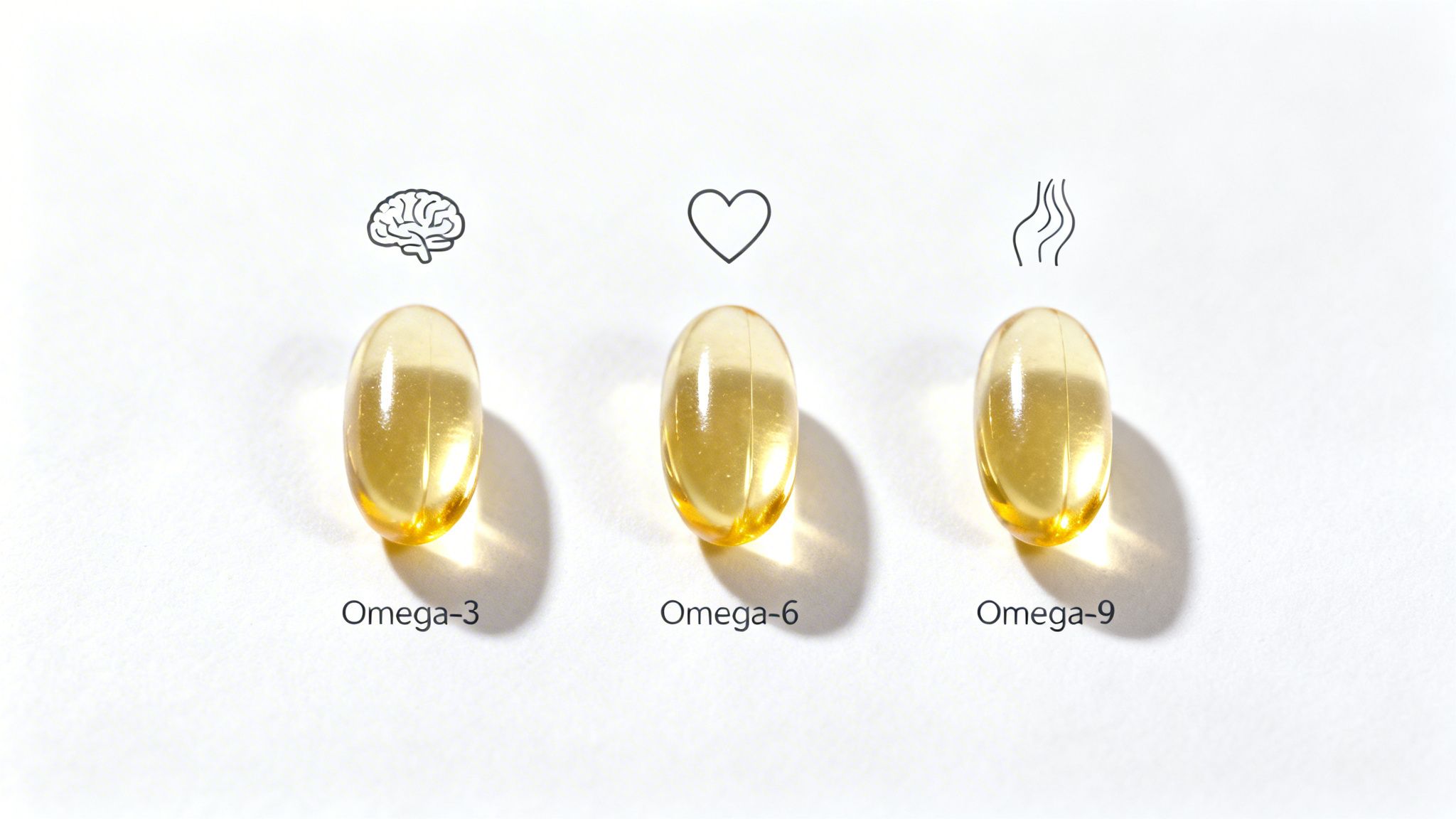
So, what exactly are you getting in that capsule? It’s a blend of fatty acids, each playing a distinct but vital role. Imagine you’re building something complex; you need different materials for different parts. Your body is the same—it needs this variety of fats for its own structural and functional tasks.
It’s no surprise these combined supplements are gaining traction. They fit right into the UK's booming interest in nutritional support, as more of us focus on preventative health. With studies suggesting a significant portion of the population doesn't get enough omega-3, it’s clear why people are looking for answers in supplement form.
Why "Essential" Isn't Just a Buzzword
You’ll often hear omega-3s and omega-6s called "essential fatty acids." This isn't just clever marketing; it’s a biological fact. It means your body literally cannot make them from scratch. You have to get them from food or supplements to function properly.
Your body is an incredible factory, able to synthesise many of the compounds it needs to survive. But omega-3 and omega-6 are two raw materials it just can't produce on its own. Omega-9, on the other hand, is considered "non-essential" because your body can create it if it needs to.
Omega 3-6-9 At a Glance
To figure out if these capsules are a good fit for you, it helps to know what each player brings to the team. Here’s a quick summary of what each fat does and where you can find it.
| Fatty Acid | Key Function | Common Sources |
|---|---|---|
| Omega-3 | Famous for its anti-inflammatory power, supporting the brain, heart, and eyes. | Oily fish (salmon, mackerel), algae, flaxseeds, walnuts, chia seeds. |
| Omega-6 | Plays a role in skin health, hormonal balance, and bone health. | Vegetable oils (sunflower, corn), nuts, seeds, meat, poultry. |
| Omega-9 | Supports cardiovascular health and a healthy immune response. | Olive oil, avocados, almonds, cashews, peanut oil. |
The main idea behind a combined omega 3-6-9 capsule is to deliver these fats in a balanced ratio. Modern diets are often flooded with omega-6s (think processed foods and vegetable oils) while being very low in omega-3s. The supplement aims to correct this common imbalance.
Throughout this guide, we'll dig deeper into whether this all-in-one approach is the best strategy for your personal health goals, or if focusing on just one might be more effective. For a closer look specifically at Omega-3s, check out our complete guide on Omega-3 supplements in the UK.
The Science of Omega Fatty Acids
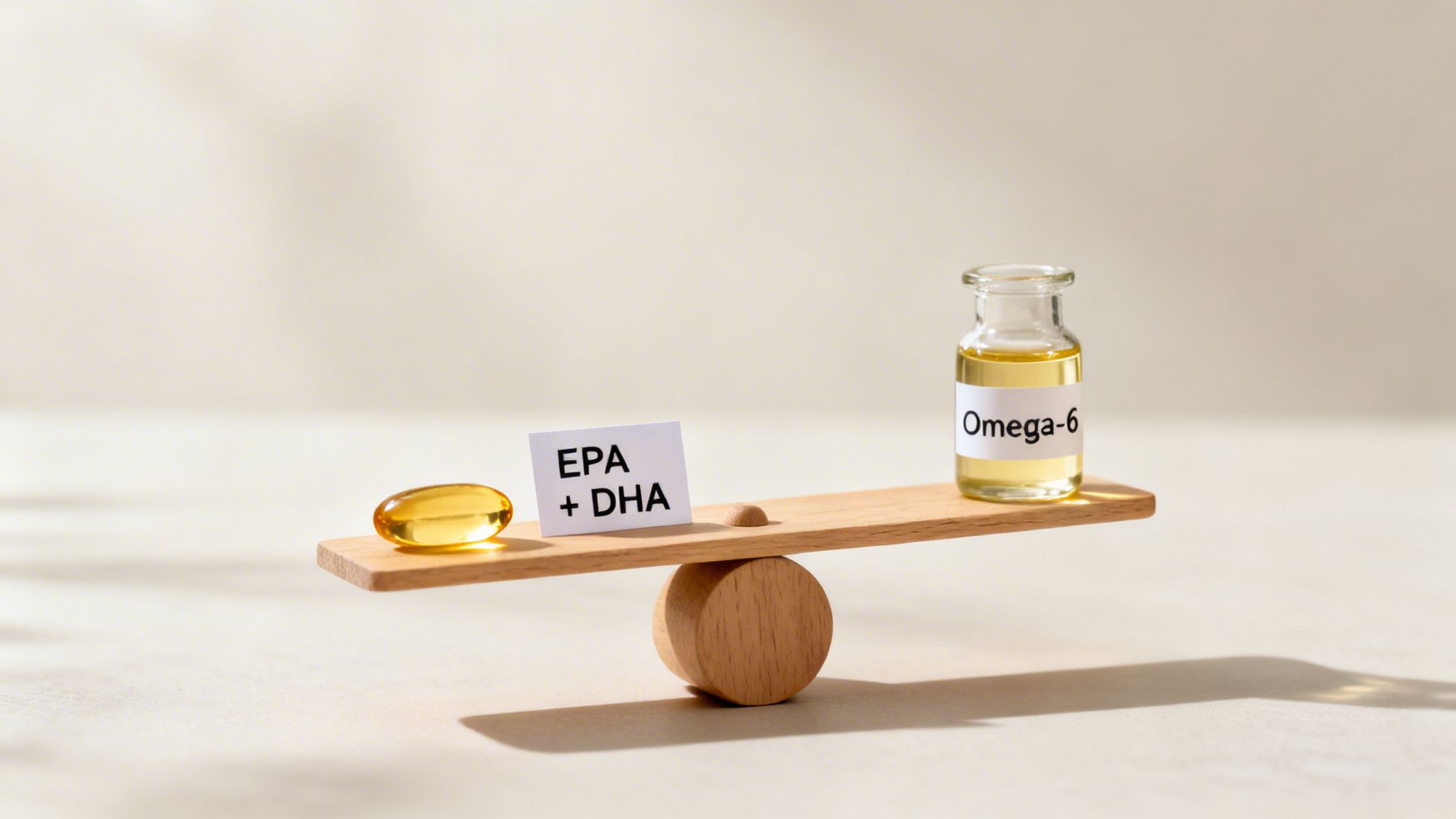
To figure out if capsules omega 3-6-9 are right for you, we need to look past the marketing hype and get into the science of each fatty acid. It turns out, not all omegas are created equal. Their real impact depends heavily on getting the balance right.
Think of it like a musical trio. For the music to sound harmonious, each instrument needs to play its part at just the right volume. Too much of one can drown out the others. It's the exact same story with fatty acids in your body.
Omega-3: The Anti-Inflammatory All-Star
Omega-3s are the true headliners in the fatty acid world, and for good reason. They’re celebrated for their powerful health benefits, with the two most potent forms being EPA (eicosapentaenoic acid) and DHA (docosahexaenoic acid). You’ll find these mainly in oily fish and algae.
These are the two heavy hitters linked to the most significant health outcomes:
- Heart Health: They’re brilliant for helping to manage triglyceride levels and supporting healthy blood pressure.
- Cognitive Function: DHA is a major structural piece of the brain, vital for keeping your memory and focus sharp.
- Inflammation Control: Omega-3s produce compounds that actively calm down inflammatory responses all over the body.
If you're curious about the different types of Omega-3, you can explore the differences between fish oil and cod liver oil in our detailed guide.
Omega-6: The Double-Edged Sword
Omega-6 fatty acids are absolutely essential, playing key roles in things like skin health and hormone regulation. But they have a bit of a dual nature. While some omega-6s have anti-inflammatory effects, the most common type in our diets—linoleic acid—can actually promote inflammation when we eat too much of it.
The problem isn't that omega-6 is "bad," but that our modern diets are absolutely swimming in it. It’s abundant in vegetable oils, processed snacks, and most conventionally farmed meats. Most of us get far more than we need without even trying.
For a bit of context, the ideal ratio of omega-6 to omega-3 is thought to be around 4:1 or even lower. In many Western diets, however, that ratio skyrockets to 15:1 or even 20:1, creating a state that constantly favours chronic inflammation.
Omega-9: The Helpful Non-Essential
Finally, we have omega-9 (oleic acid), which you probably know as the main fat in olive oil. It’s a fantastic monounsaturated fat that supports heart health and immune function.
But here’s the crucial difference: omega-9 is non-essential. Your body can actually make its own, so you don't strictly need to get it from your diet or a supplement. While it's certainly good for you, a deficiency is almost unheard of.
The main takeaway here is that the real imbalance for most people lies in that skewed ratio of omega-6 to omega-3. Adding even more omega-6 and omega-9 through a combined supplement is often unnecessary if your diet already provides plenty. If your goal is something specific, like reducing inflammation or boosting brain health, a targeted, high-quality omega-3 supplement is almost always the more effective strategy.
So, Who Actually Needs an Omega 3-6-9 Supplement?
While a combined omega supplement sounds like it ticks all the boxes, it’s definitely not a one-size-fits-all solution. The truth is, whether you should reach for capsules omega 3-6-9 really boils down to your diet, lifestyle, and what you’re hoping to achieve. For some people, it's a brilliant way to top up a broad range of healthy fats; for others, it's just not necessary.
So, who really stands to gain from this all-in-one formula? More often than not, it comes down to filling in dietary gaps.
The General Wellness Seeker
If your main goal is simply to support your overall vitality and you have a hunch your diet is a bit lacking in varied healthy fats, a 3-6-9 blend can be a great place to start. This is particularly true for anyone on a very restrictive diet, like an extremely low-fat plan, who might not be getting enough of any of these fatty acids.
Think of it as a nutritional safety net. It’s designed to give you a little bit of everything to make sure you’re not falling short anywhere.
Those Focusing on Skin and Hormonal Harmony
A balanced intake of all these fatty acids is absolutely vital for maintaining healthy skin and supporting hormonal balance. Many people find that getting a steady supply of omegas helps with skin hydration, elasticity, and even managing hormonal ebbs and flows.
This is where the inclusion of omega-6—specifically GLA (gamma-linolenic acid) from sources like evening primrose oil—can be a real game-changer for skin health and keeping inflammation in check.
The demand for combined fatty acid supplements is booming. With so many health-conscious individuals turning to these blends for everything from fitness recovery to general wellbeing, it's clear people are looking for convenient nutritional support. You can dive deeper into the market trends for Omega-3 and Omega-6.
When a Targeted Omega-3 Is the Smarter Choice
On the flip side, a combined 3-6-9 supplement often isn't the best pick for people with very specific, performance-driven goals. Given that most Western diets are already swimming in omega-6, adding even more can actually work against you if your primary aim is to lower inflammation.
Let's look at a few scenarios where a high-strength, omega-3-only supplement is almost certainly the better option:
- Athletes laser-focused on recovery: Pushing your body hard creates inflammation. A concentrated dose of EPA and DHA from a top-quality omega-3 supplement will be far more effective at managing this and speeding up muscle repair than a diluted 3-6-9 blend.
- Professionals wanting a cognitive edge: If you’re chasing sharper focus, better memory, and long-term brain health, DHA is the undisputed star. You'll need a supplement that delivers a hefty dose of DHA, which is something a general 3-6-9 formula rarely does.
- Anyone managing chronic inflammation: For those dealing with joint discomfort or other inflammatory issues, the name of the game is shifting your omega-6 to omega-3 ratio in favour of the good guys. Adding more omega-6 is completely counterproductive here.
At the end of the day, capsules omega 3-6-9 have their place for general health maintenance, but if you’re after targeted results, a more focused approach is usually the winning strategy.
How to Choose a High-Quality Omega Supplement
Walking down the supplement aisle can feel a bit like navigating a maze. Countless bottles all seem to promise the same thing, making it tough to figure out which one is actually worth your money. To make a smart choice and invest in high-quality capsules omega 3-6-9, you need to know what to look for on the label. A few key markers separate the potent, effective supplements from those full of empty promises.
First up, always look for third-party testing. This is your guarantee that an independent lab has verified the product is free from nasty contaminants like heavy metals (think mercury) and PCBs, which can build up in fish. A reputable brand will be proud to show off certifications that confirm its purity and potency.
Beyond safety, the real value is in the active ingredients. Don’t just glance at the total "fish oil" amount; dive deeper into the specific quantities of EPA (eicosapentaenoic acid) and DHA (docosahexaenoic acid). These are the specific omega-3s that pack the biggest health punch, so a higher concentration is a dead giveaway of a superior product.
Decoding the Label for Better Absorption
Next, let's talk about the form of the omega-3s. You'll usually find two main types listed on the bottle: triglyceride (TG) and ethyl ester (EE). Think of the triglyceride form as the fat's natural state—how you'd find it in a fish. The ethyl ester form, on the other hand, is processed to concentrate the EPA and DHA.
While both can do the job, a growing body of research suggests the triglyceride form is more bioavailable. In simple terms, this means your body can absorb and use it more efficiently. If the label is vague about the form, it’s often the less expensive ethyl ester version. For maximum impact, choosing a supplement in the triglyceride form is usually a better investment.
A supplement's effectiveness isn't just about what's inside the capsule; it's about what your body can actually use. Prioritising bioavailability by choosing triglyceride forms and looking for purity testing ensures you're not just buying a supplement, but investing in a tangible health outcome.
Sustainable and Vegan-Friendly Sources
Where the omega fatty acids come from is another crucial piece of the puzzle, especially if sustainability is on your mind. With millions of people following plant-based diets, the demand for sustainable options has skyrocketed.
This infographic highlights some of the groups who may benefit from an omega 3-6-9 supplement.
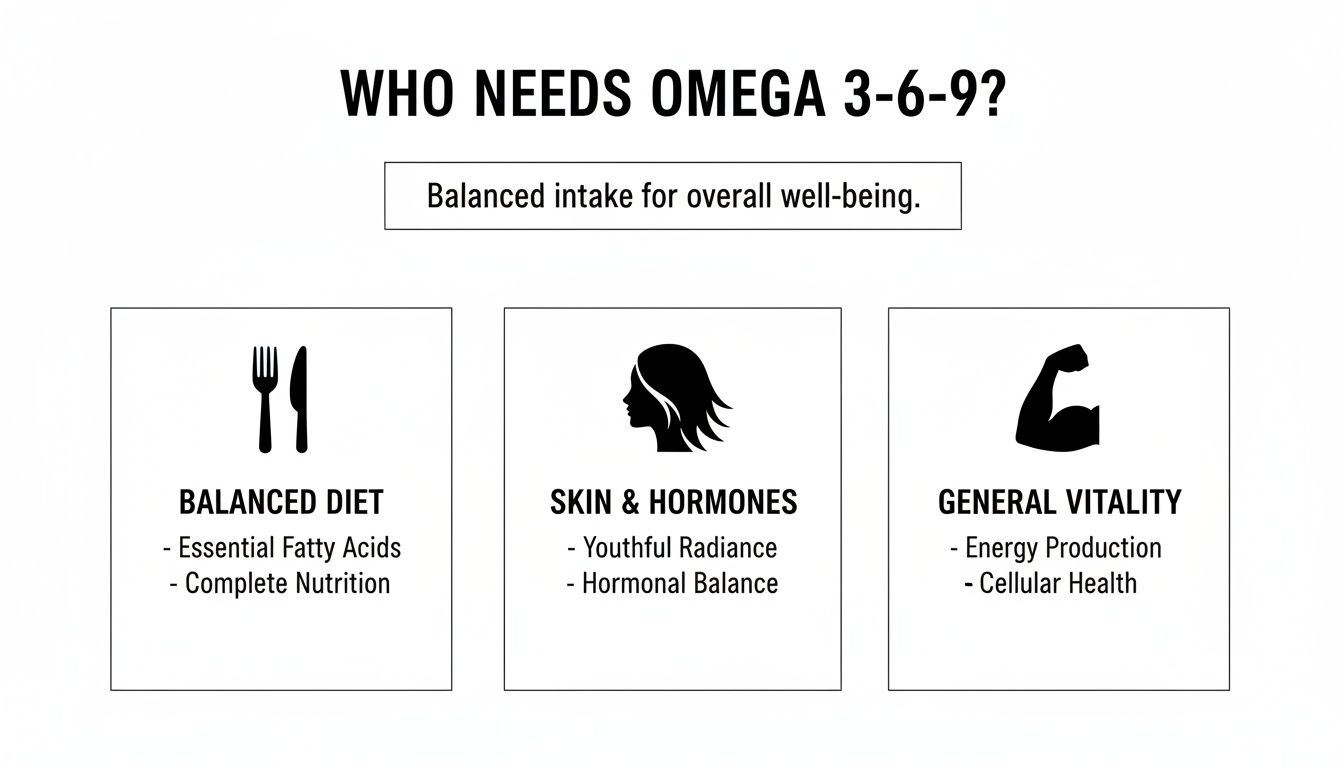 As you can see, these supplements are often chosen by people looking to fill dietary gaps, support their skin and hormonal health, or simply give their overall vitality a boost.
When choosing an omega-3 source, it's helpful to compare the most common options to see which best fits your needs.
Omega Source Comparison: Fish vs Krill vs Algal Oil
| Source | Key Benefit | Bioavailability | Vegan-Friendly? | Sustainability Note |
|---|---|---|---|---|
| Fish Oil | High in EPA & DHA, widely available | Good (especially TG form) | No | Sourcing is key; look for certifications like 'Friend of the Sea'. |
| Krill Oil | Contains astaxanthin (antioxidant) | Excellent (phospholipid form) | No | Harvest is regulated, but concerns about the Antarctic ecosystem persist. |
| Algal Oil | Direct source of EPA & DHA | Good | Yes | Highly sustainable, grown in controlled environments, avoids marine food chain. |
This table shows that while fish and krill oil are effective, algal oil stands out as the only option that's both vegan-friendly and highly sustainable, making it an excellent choice for many people.
For those following a plant-based lifestyle, algal oil is a game-changer. It provides both DHA and EPA straight from the algae—which is where the fish get it from in the first place! If you're curious about plant-based options, you can dive into our guide on the best sources of vegan omega-3.
Of course, omegas are just one part of the picture. Getting a handle on the broader landscape of various health supplements can help you make more informed choices for your overall well-being. By checking for purity, form, and sustainable sourcing, you can confidently pick a product that truly aligns with your health goals and your values.
Finding the Right Omega Balance for You
Off-the-shelf supplements are usually designed for the ‘average’ person, but let’s be honest—nobody is truly average. We’re all unique. That’s why a generic, one-size-fits-all approach to nutrition often misses the mark. A strategy built around your specific needs will always deliver better results than a standard product ever could.
This is where a smarter approach comes in. By looking at key parts of your life, like your diet, lifestyle, and what you’re trying to achieve with your health, it’s possible to figure out your exact nutritional gaps. This means you can get a recommendation for a supplement that actually works for you, rather than just grabbing a bottle and hoping for the best.
A Smart Recommendation Beats a Generic Guess
Think of your body as a high-performance engine. You wouldn't just fill it up with any old fuel; you'd use the precise type it needs to run at its best. Your supplement routine deserves that same level of care.
A personalised system cuts through all the noise online and gives you clear, straightforward guidance. It helps you invest in the exact nutrients your body is crying out for, so you can stop wasting money on supplements that don’t line up with your diet or goals.
The best supplement strategy isn’t about taking more of everything; it's about taking what's right for you. Personalisation shifts you from a broad-brush approach to a precise solution designed for your unique biology and lifestyle.
Let's look at a couple of real-world examples to see how this plays out:
-
Scenario 1: The Plant-Forward Eater Someone whose diet is already packed with nuts, seeds, and avocados is getting plenty of omega-6 and omega-9. For them, taking capsules omega 3-6-9 would be completely unnecessary. A personalised recommendation would likely point them towards a potent, omega-3-only supplement to help balance that all-important fatty acid ratio and keep inflammation in check.
-
Scenario 2: The Low-Fat Dieter On the flip side, someone following a very restrictive, low-fat diet might be missing out on all three key fatty acids. In their case, a high-quality, balanced omega 3-6-9 formula could be the perfect way to cover all bases and support everything from skin hydration to hormone balance.
This is the real power of a personalised plan. It looks at the whole picture—not just one isolated detail—to make a recommendation that is both efficient and effective. When you understand your specific needs, you can build a supplement routine that genuinely moves you closer to your health goals without you spending money on nutrients you simply don't need.
Got Questions About Omega 3-6-9? We Have Answers.
Stepping into the world of supplements can feel a bit overwhelming, and it’s natural to have questions. To help you feel confident about your choices, we’ve put together some straightforward answers to the queries we hear most often about omega 3-6-9 capsules.
Think of this as your practical guide to adding these fats into your daily routine.
When Is the Best Time to Take Omega 3-6-9 Capsules?
The golden rule here is to always take your omega 3-6-9 supplement with a meal that contains a bit of fat. The fats in your food help your body absorb the fatty acids in the capsule much more effectively.
It's a simple trick that boosts their bioavailability, meaning you get more of the good stuff you’re paying for. Most people find it easiest to get into a rhythm by taking them with breakfast or their evening meal.
Taking them with food also helps sidestep any potential digestive niggles. Some people notice a fishy aftertaste or a bit of indigestion, and having a meal acts as a nice buffer. At the end of the day, consistency is what truly matters, so pick a time that fits your life and stick with it.
Can I Get Enough Omega 3-6-9 from My Diet Alone?
While it’s technically possible to get all your omegas from food, it's a real stretch for most of us. The typical modern diet is often swimming in omega-6 fats, which you’ll find in everything from vegetable oils and processed snacks to many meats.
Omega-9 is also pretty easy to come by in foods like olive oil and avocados, plus your body can make its own. The real challenge for almost everyone is getting enough high-quality omega-3s—specifically the heavy hitters, EPA and DHA.
Unless you’re consistently eating oily fish like salmon, mackerel, or sardines at least twice a week, you're likely falling short. This is an even bigger hurdle for vegans and vegetarians, as the plant-based omega-3 (ALA) has a notoriously poor conversion rate to the EPA and DHA your brain and body are crying out for.
That’s why a supplement can be such a valuable insurance policy. It's not just about getting enough omega-3; it’s about restoring a healthier balance between all your fatty acids, which is crucial for your overall wellbeing.
Are There Any Side Effects or Interactions I Should Know About?
For the vast majority of people, omega 3-6-9 capsules are very safe when taken at the recommended dose. The most common side effects are minor and usually related to digestion—things like a fishy aftertaste, heartburn, or an upset stomach.
However, there’s one important thing to be aware of: high doses of omega-3s can have a mild blood-thinning effect. This is particularly important for certain people.
You should always have a chat with your doctor before starting if you:
- Are taking anticoagulant medications (like warfarin).
- Have a known bleeding disorder.
- Have surgery scheduled in the near future.
A healthcare professional can give you personalised advice on a safe dose and make sure there are no risky interactions with your current health status or medications. And, of course, always follow the dosage on the product label unless your doctor has told you otherwise.
Ready to stop guessing and start supporting your health with precision? The VitzAI personalised quiz analyses your unique diet, lifestyle, and health goals to recommend the exact nutrients your body needs. Find out if an omega supplement is right for you. Take the free VitzAI quiz today!
This article is for informational purposes only and is not medical advice. Always consult a qualified health professional before starting any new supplement or major lifestyle change.