

Cod Liver Oil Omega 3: Your Guide to This Potent Health Booster
When you think of omega-3s, your mind probably jumps straight to standard fish oil supplements. But cod liver oil is in a different league entirely. It's less of a single-instrument specialist and more of a multi-talented performer, blending the benefits of an age-old remedy with the backing of modern health science.
This unique profile explains why it's making a major comeback. The combination of omega-3s, alongside vitamins A and D, offers a more rounded approach to wellness. It's a smart, efficient way to target several key health goals at once, which is why so many people are using it to streamline their supplement routine.
The Power Trio: Omega-3, Vitamin A, and Vitamin D
What really sets cod liver oil apart is its natural composition. It’s not just delivering one nutrient; it’s providing a powerful trio that works in synergy.
- Omega-3 Fatty Acids (EPA & DHA): These are the famous fatty acids celebrated for their role in calming inflammation, supporting heart health, and keeping your brain sharp.
- Vitamin A: An absolute essential for maintaining sharp vision, a resilient immune system, and healthy skin.
- Vitamin D: Often called the "sunshine vitamin," it’s vital for helping your body absorb calcium, which is fundamental for strong bones and a stable mood.
This blend is what makes it such a nutritional powerhouse.
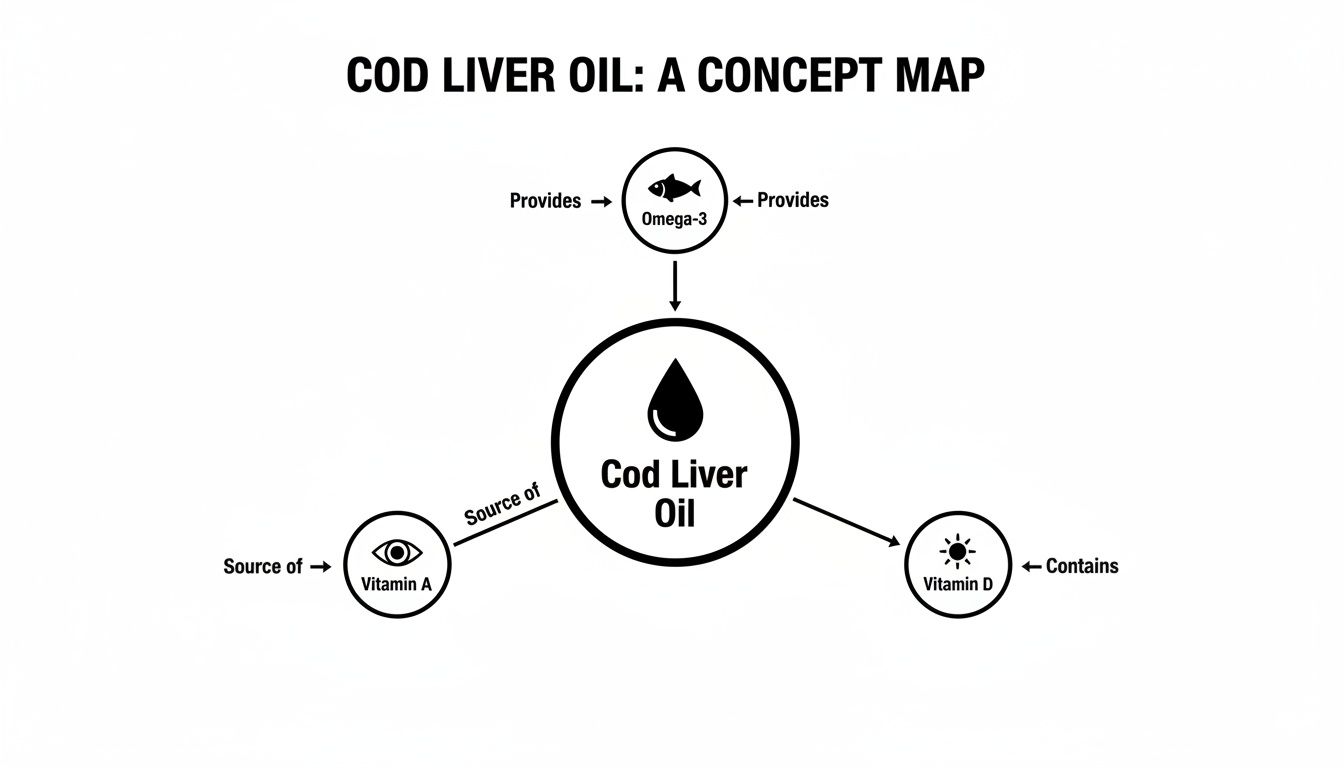
As you can see, cod liver oil acts as a single, convenient source for three distinct, yet interconnected, health-supporting nutrients.
Cod Liver Oil vs Standard Fish Oil at a Glance
To make the distinction crystal clear, here’s a quick rundown of how cod liver oil stacks up against a typical fish oil supplement.
| Feature | Cod Liver Oil | Standard Fish Oil |
|---|---|---|
| Primary Source | Derived specifically from the liver of codfish. | Sourced from the flesh of oily fish (e.g., salmon, anchovies, mackerel). |
| Nutrient Profile | Rich in EPA and DHA, plus naturally high levels of Vitamin A and Vitamin D. | Primarily a source of EPA and DHA omega-3 fatty acids only. |
| Main Benefits | Supports immunity, bone health, vision, and heart health. | Focused on cardiovascular health, brain function, and reducing inflammation. |
| Best For | Individuals seeking immune support and bone density benefits alongside their omega-3s. | Those looking for a concentrated, high-dose source of just EPA and DHA. |
While both are excellent sources of omega-3s, your choice really depends on what you're hoping to achieve with your health goals.
A Modern Resurgence in the UK
The renewed interest in cod liver oil isn't just a fleeting trend; it's a return to a trusted wellness staple in Great Britain. Its popularity has surged as people look for more targeted health solutions. Back in 2020, data showed that around 12 million people were using supplements like cod liver oil specifically to boost their immune system—a significant 20% increase from just two years prior. This shift aligns with a greater awareness of its anti-inflammatory properties, positioning it as a go-to for proactive health management.
If you're weighing your options, it's worth diving deeper into the nuances. For a more detailed breakdown, check out our guide on omega-3 fish oil vs cod liver oil. This comprehensive profile makes it an especially efficient choice for busy professionals needing cognitive support and active adults focused on protecting their joints and bones for the long haul.
The Science-Backed Benefits of Cod Liver Oil
The unique blend of omega-3 fatty acids, vitamin A, and vitamin D in cod liver oil isn't just about topping up your nutrient levels. It’s about giving your body a synergistic toolkit for optimal function, where each component enhances the effects of the others.
Think of it as a coordinated team. From your heart and brain to your joints and immune system, this powerful trio works together to support everything from daily performance to long-term health. The benefits are widespread and deeply interconnected.
Supports Heart and Cardiovascular Health
One of the most celebrated perks of cod liver oil comes from its omega-3s, especially EPA (eicosapentaenoic acid) and DHA (docosahexaenoic acid). These fatty acids are well-known for their profound impact on cardiovascular health, playing a key role in keeping your heart and circulatory system in good shape.
They get to work by helping manage triglycerides, a type of fat found in your blood. When these levels get too high, they can increase the risk of heart disease, but research consistently shows that omega-3s are brilliant at helping to keep them in a healthy range.
On top of that, these fatty acids help maintain healthy blood pressure and support the overall function of your arteries. This makes the cod liver oil omega 3 combination a real cornerstone for anyone prioritising their long-term heart health, particularly men over 40 who are often more focused on cardiovascular wellness.
Enhances Brain Function and Mood
Did you know your brain is made up of nearly 60% fat? A huge chunk of that is DHA, making it a critical building block for your brain cells. It’s absolutely essential for maintaining sharp cognitive function, memory, and focus.
Supplementing with a rich source of DHA like cod liver oil ensures your brain has the raw materials it needs to perform at its best. This is a massive plus for busy professionals under 40 who rely on peak mental performance to get through demanding workdays.
DHA's role extends beyond just the brain's mechanics; it’s also closely linked to mood regulation. A consistent intake of omega-3s has been associated with supporting emotional balance and mental well-being, offering a natural way to foster a more positive outlook.
Provides Crucial Joint and Bone Support
Chronic inflammation is often the main culprit behind stiff, uncomfortable joints, affecting everyone from dedicated athletes to adults noticing age-related aches. The EPA in cod liver oil is a potent anti-inflammatory agent that helps to calm this internal irritation.
By dialing down inflammation, EPA can improve joint mobility and ease the soreness that might otherwise slow you down. It’s an excellent supplement for boosting athletic recovery and helping you maintain an active lifestyle for years to come.
But the support doesn't stop at the joints. The naturally occurring vitamin D in cod liver oil is vital for your bones, as it’s needed to absorb calcium effectively. Strong bones are the foundation of a healthy body, making this benefit especially relevant for women over 40 who are focused on preserving bone density.
Boosts Immune Resilience and Skin Health
With its combination of vitamins A and D, cod liver oil is a formidable ally for your immune system. Vitamin A is crucial for maintaining the integrity of the mucosal barriers in your respiratory and digestive tracts—your body’s first line of defence against germs.
Meanwhile, Vitamin D plays a key part in modulating immune responses, making sure your system reacts effectively without going into overdrive. This dual-action support helps build a more resilient defence system. This isn't new, either; cod liver oil’s legacy in the UK is rooted in public health, where it was historically given to fend off illnesses.
That trust still holds strong today. 2020 data showed that 6.3 million people in Great Britain used supplements like cod liver oil to help with colds and flu, a real testament to its immune-supporting reputation, particularly in the UK's changeable climate. You can discover more insights about the cod liver oil market on Fortune Business Insights.
On top of that, Vitamin A is essential for skin cell turnover and repair. By supporting healthy skin regeneration and working alongside the anti-inflammatory properties of omega-3s, cod liver oil can contribute to a clearer, more vibrant complexion—a welcome benefit for women under 40 focused on skin vitality.
Navigating the Vitamin A and D in Cod Liver Oil
While the omega-3s often steal the spotlight, the naturally occurring vitamins A and D are what make cod liver oil a truly comprehensive supplement. This isn't just a bonus feature; it's a core part of its power. These two fat-soluble vitamins play essential roles in everything from your immune defences to the strength of your bones.
But, because they are so potent, it's vital to understand how to supplement with them responsibly. More isn't always better, and striking the right balance is the key to unlocking their benefits safely. This means being mindful of your total daily intake, especially if you take other supplements that contain them.

The Essential Roles of Vitamin A and D
First, let's take a moment to appreciate what these vitamins bring to the table. They are far more than just letters on a label; they are crucial players in maintaining your daily health and long-term vitality.
-
Vitamin A (Retinol): This vitamin is a real multitasker. It’s fundamental for maintaining sharp vision, particularly in low light, and supports a robust immune system by keeping the protective linings of your respiratory and digestive tracts healthy. Plus, it's a key ingredient for skin cell turnover, which helps to promote a healthy complexion.
-
Vitamin D (The Sunshine Vitamin): Its most famous role is helping the body absorb calcium, which is non-negotiable for building and maintaining strong bones. But its influence extends far beyond that, playing a critical part in regulating mood, supporting muscle function, and ensuring your immune system is firing on all cylinders.
The synergy between the cod liver oil omega 3 content and these vitamins creates a powerful formula for overall wellness.
Understanding Safe Supplementation Levels
Because vitamins A and D are fat-soluble, your body stores any excess rather than flushing it out like water-soluble vitamins (such as Vitamin C). This is exactly why it's so important to be aware of your total intake from all sources—including food and other supplements—to avoid getting too much of a good thing.
Health authorities establish a Tolerable Upper Intake Level (UL) for these nutrients. This isn't a target to aim for; it's the maximum daily amount considered safe for most people. Exceeding this consistently can lead to toxicity.
For a healthy adult, the NHS advises not to take more than 10,000 IU (3,000 mcg) of vitamin A per day from supplements. For vitamin D, the recommended daily amount is 400 IU (10 mcg), with a caution against taking more than 4,000 IU (100 mcg) daily.
This is where paying close attention to labels becomes crucial. A high-quality cod liver oil supplement will clearly state the amount of each vitamin per serving, allowing you to manage your intake effectively and stay well within safe limits. Understanding how specific nutrient levels can impact health is key, and it's a central part of broader health discussions, like the relationship between Vitamin A and Heart Health.
How to Supplement Safely
Integrating cod liver oil into your routine without overdoing the vitamins is pretty straightforward with a little awareness. The goal is to create a balanced stack that meets your needs without unnecessary overlap.
Here are three practical steps to ensure you're supplementing responsibly:
-
Check Your Multivitamin First: If you take a daily multivitamin, check its label for the amounts of Vitamin A (often listed as retinol or beta-carotene) and Vitamin D. Add this to the amount in your cod liver oil to work out your total daily supplemental intake.
-
Consider Your Diet: Foods like liver, dairy, eggs, and fortified cereals are also sources of Vitamin A. Similarly, oily fish, red meat, and fortified foods contribute to your Vitamin D levels. While you don't need to count every microgram, being generally aware of these sources helps you make smarter choices.
-
Stick to the Recommended Dose: Always follow the dosage instructions on your cod liver oil supplement. These have been formulated to provide a beneficial amount of nutrients without pushing you towards the upper safety limits. It can be tempting, but resist taking more in the hope of faster or better results.
By following these simple guidelines, you can confidently harness the combined power of cod liver oil omega 3 and its valuable vitamins, ensuring your supplement routine is both effective and safe.
Finding Your Ideal Cod Liver Oil Dosage
Working out the right amount of cod liver oil isn't a simple case of "one size fits all". The perfect dose really comes down to you: your personal health goals, whether you're looking to maintain general wellness, tackle a specific inflammatory issue, or give your brain a bit of a boost.
Instead of just thinking in terms of a spoonful, the real key is to get familiar with the EPA and DHA numbers on the supplement label. These are the active omega-3s doing all the heavy lifting, and understanding them means you can match your intake directly to what you're trying to achieve.
Decoding the Label and Setting Your Goal
First things first, what are you aiming for? Different goals call for different levels of omega-3s, so knowing your target helps you pick the right product and serving size right from the start.
Here’s a rough guide to get you on the right track:
-
For General Health and Wellness: A combined daily dose of 250–500 mg of EPA and DHA is a brilliant baseline. It’s enough to support your heart, keep your brain ticking over nicely, and maintain overall health. Think of it as a solid foundation for most healthy adults.
-
For Targeted Anti-inflammatory Support: If you're dealing with joint discomfort or want to speed up recovery after a workout, research points towards a higher intake. Aiming for 1,000–2,000 mg of combined EPA and DHA daily can deliver more powerful anti-inflammatory effects.
-
For Cognitive and Mood Support: To really zero in on brain health and emotional balance, a dose richer in DHA is often the way to go. Many studies in this area look at dosages around 1,000 mg or more of combined EPA and DHA per day.
The main takeaway? Always check the "Supplement Facts" panel. The amount of EPA and DHA can vary massively between brands, so you need to know exactly what you’re getting in each serving to match it to your needs.
Liquid vs Capsules: Which Is Best for You?
Once you’ve got your target dosage in mind, it’s time to choose a format that fits into your life. Cod liver oil generally comes in two forms: the traditional liquid or handy capsules. Each has its own pros and cons.
This often just boils down to personal preference. In the UK, there's a long-standing tradition of taking cod liver oil, and many still favour the liquid form. It's expected to make up nearly 30% of the market by 2025, partly because it feels more authentic and is easy to use. Back in 2020, data showed that 15 million people in Great Britain were taking supplements like cod liver oil for their general health. You can dig deeper into the market trends over on Coherent Market Insights.
To help you choose, let’s quickly compare them:
Liquid Cod Liver Oil:
- Pros: It’s often cheaper per serving and gives you the flexibility to easily tweak your dose. Some also find it absorbs a little quicker.
- Cons: Let’s be honest, the taste can be a major hurdle for many. It also needs to be kept in the fridge once opened and isn’t the easiest thing to travel with.
Cod Liver Oil Capsules:
- Pros: They are completely tasteless and odourless, which makes them a much more pleasant experience. Capsules are also super convenient, easy to pack for a trip, and have a longer shelf life without needing refrigeration.
- Cons: You might need to swallow a few capsules to hit a higher therapeutic dose, which can work out as more expensive than the liquid version.
At the end of the day, the best option is the one you’ll actually stick with. Whether you prefer the classic spoonful of liquid or the fuss-free convenience of a capsule, consistency is what unlocks the powerful benefits of cod liver oil omega 3.
Is Cod Liver Oil the Right Supplement for You?
Deciding whether to add a new supplement to your routine always comes down to a careful look at your personal health needs and goals. Cod liver oil is a potent, multi-faceted supplement, but its unique composition means it’s a much better fit for some than for others.
It’s all about understanding who stands to gain the most from its powerhouse blend of omega-3s and vitamins A and D, and who might need to steer clear. By weighing up both the benefits and the precautions, you can make a smart choice that genuinely supports your wellness journey.
Who Benefits Most from Cod Liver Oil?
Some people are almost perfectly positioned to feel the positive effects of cod liver oil. Its nutrient profile aligns incredibly well with the needs of specific lifestyles and health goals.
Here’s a look at who often sees the greatest advantages:
- Active Adults and Athletes: If you’re pushing your body with regular exercise, the anti-inflammatory properties of EPA can be a game-changer for muscle recovery and keeping your joints comfortable.
- Professionals Needing Cognitive Support: The high DHA content is fantastic for supporting brain health, making it ideal for busy professionals who need to stay sharp and maintain mental clarity through demanding days.
- Those Focused on Bone Health: The natural combination of vitamin D and omega-3s offers powerful support for bone density. This is a key concern for women over 40 and anyone looking to invest in their long-term structural health.
- People Seeking Immune Resilience: The synergy between vitamins A and D makes it a brilliant choice for fortifying your immune defences, especially during those seasons when sunshine is a rare commodity.
In essence, cod liver oil bundles solutions for your heart, brain, joints, and immune system into one convenient source. This efficiency is a huge plus for health-conscious but time-poor adults who want to streamline their supplement stack.
Who Should Be Cautious or Avoid It?
Just as important as knowing who should take it is understanding who shouldn’t. The very things that make cod liver oil so effective—its high vitamin A and omega-3 content—are also the reasons some people need to be careful or avoid it altogether.
A balanced approach is crucial, and certain groups should always have a chat with a healthcare professional before starting.
Key Groups Requiring Caution
- Pregnant Women: High doses of vitamin A (retinol) have been linked to birth defects, so cod liver oil is generally not recommended during pregnancy. For those looking for omega-3s without the added vitamins, there are safer alternatives. If you're interested in plant-based options, you can learn more in our guide on vegan omega-3 supplements.
- Individuals on Blood-Thinning Medications: The omega-3s in cod liver oil can have a mild blood-thinning effect. If you’re taking medications like warfarin or other anticoagulants, this could increase the risk of bleeding.
- People with Pre-existing Liver Conditions: Since the liver has to process vitamin A, anyone with compromised liver function should avoid high-dose supplements to prevent putting extra strain on the organ.
- Those Already Taking High-Dose Vitamin Supplements: If your current routine already includes a multivitamin with high levels of A and D, adding cod liver oil could easily push your total intake over the safe upper limits.
Ultimately, personalisation is everything. Taking a moment to assess your own health profile is the best way to ensure your supplement choices are both safe and effective.
Choosing a High-Quality Cod Liver Oil Supplement
Navigating the supplement aisle can feel a bit like guesswork, but picking a genuinely good cod liver oil doesn’t have to be complicated. Once you know a few key things to look for, you can easily spot the high-quality products and leave the rest on the shelf.
Being a savvy buyer is all about knowing what to look for on the label. It’s not about flashy branding; it’s about transparency, purity, and how the nutrients are presented.
What to Look for on the Label
A quality supplement will proudly show its credentials. Think of the label as the product's CV—it should give you clear, reassuring information about exactly what’s inside.
Here are the non-negotiables to check for:
-
Purity and Third-Party Testing: This is the big one. Always look for supplements that are third-party tested. This independent check confirms the product is free from nasty contaminants like heavy metals (think mercury and lead) and PCBs.
-
Freshness (Low Oxidation): Omega-3 oils are delicate. If they aren't processed and stored properly, they can go rancid. Reputable brands go to great lengths to minimise oxidation, often shown by certifications or low TOTOX (Total Oxidation) values. A strong, unpleasant fishy smell is a definite red flag.
-
Sustainable Sourcing: Responsible brands are open about where their cod comes from. Keep an eye out for certifications like the Marine Stewardship Council (MSC), which ensures the fish are from sustainable, well-managed fisheries.
-
Form (Triglyceride vs Ethyl Ester): How the omega-3 is delivered matters for absorption. Cod liver oil in its natural triglyceride (TG) form is far more bioavailable. This means your body can absorb and use it much more easily than the highly processed ethyl ester (EE) form you often find in cheaper options.
Smart Stacking for Personalised Health
Taking cod liver oil omega 3 is a great start, but making it work in synergy with your other supplements is where the magic happens. This idea, known as 'smart stacking', is all about creating a routine where your supplements complement each other, boosting the benefits without causing any nutrient overload.
For example, pairing cod liver oil with magnesium is a fantastic move for bone health. The vitamin D in the oil helps your body absorb calcium, and the magnesium helps direct that calcium right where it needs to go—your bones.
Smart stacking isn't just about what you add; it's also about what you manage. Always be mindful of the total vitamin A and D you're consuming across all supplements to avoid exceeding safe upper limits.
Another powerful pairing is with adaptogens like ashwagandha. The omega-3s help manage inflammation and support brain health, while the adaptogen helps your body handle its stress response. Together, they create a brilliant duo for mental clarity and resilience. You can discover more about the best omega-3 supplements in our comprehensive guide on omega-3 supplements in the UK.
By carefully choosing a high-purity product and thoughtfully weaving it into your existing routine, you can confidently make cod liver oil a cornerstone of your personalised health strategy.
Common Questions About Cod Liver Oil Omega 3
Even after seeing all the potential benefits, it’s natural to have a few practical questions before adding something new to your routine. Let's tackle some of the most common queries about taking cod liver oil omega 3 supplements, so you can start with confidence.
How Can I Avoid Fishy Burps?
Ah, the infamous "fishy burp." It’s the most common concern with any fish oil, and it happens when the oil floats on top of your stomach contents. The good news is, it's usually avoidable.
The single best trick is to take your cod liver oil with a meal, especially one that contains a bit of healthy fat. Food helps the oil blend in and digest properly, dramatically cutting the chances of that unpleasant aftertaste.
You can also try a few other things:
- Start low and go slow: Give your body time to adjust by starting with a smaller dose and gradually working your way up to the recommended amount.
- Keep it cool: Storing liquid cod liver oil in the fridge can really help to dull the flavour and any odour.
- Quality is key: A high-quality, fresh oil is far less likely to cause this issue. Rancid oil is the number one culprit behind fishy burps, so purity matters.
When Is the Best Time to Take It?
Honestly, there isn't one perfect time of day that works for everyone. The most important thing is consistency and taking it with food. Omega-3s are fats, which means they are absorbed much more efficiently when you have them with other dietary fats.
Because of this, most people find it easiest to just build it into their existing routine, like with breakfast or dinner. Tying it to a meal you already have every day makes it a simple habit and ensures you get the most out of every dose.
The ideal time is simply the time you’ll remember to take it every day alongside a meal. Whether that’s with your morning porridge or your evening meal, consistency is what will deliver the best long-term results.
Cod Liver Oil vs Plant-Based Omega 3
This is a big one. It's really important to know that not all omega-3s are the same. The cod liver oil omega 3 combination delivers EPA and DHA – the two specific forms your body can put to work immediately for your brain, heart, and joints.
Plant-based sources like flaxseed, chia seeds, and walnuts contain a different type of omega-3 called ALA (alpha-linolenic acid). While ALA is still good for you, your body has to convert it into EPA and DHA before it can be used for those specific jobs. That conversion process is famously inefficient.
So, while plant-based omega-3s are a fantastic part of a healthy diet, they aren't a direct replacement for the potent, ready-to-use EPA and DHA you get from sources like cod liver oil.
Ready to create a supplement stack that’s perfectly aligned with your health goals? The VitzAI questionnaire analyses your unique needs to provide personalised recommendations, helping you take the guesswork out of wellness. Discover your ideal routine at https://vitzai.com.
This article is for informational purposes only and is not medical advice. Always consult a qualified health professional before starting any new supplement or major lifestyle change.