

A Complete Guide to Omega 3 Fish Oil Benefits and Dosing
Omega-3 fish oil isn't just another supplement on the shelf. It's a source of two incredibly important fatty acids, eicosapentaenoic acid (EPA) and docosahexaenoic acid (DHA), which are fundamental to your brain, heart, and joint health. The reality is, most of us simply don't get enough of these from our diet alone, making a high-quality supplement a smart move for overall wellbeing.
Your Body's Essential Maintenance Crew

Think of your body as a high-performance machine that needs constant, expert upkeep. In this analogy, omega-3 fatty acids are the essential maintenance crew, working tirelessly behind the scenes to keep every system structurally sound and running like a dream.
These aren't just any old fats. They're a special type called polyunsaturated fatty acids (PUFAs), which your body can't make in any meaningful amount. That's why they're dubbed "essential" – you have to get them from what you eat or supplement with.
The two most crucial members of this crew, found in omega-3 fish oil, are EPA and DHA. Each has a distinct, yet complementary, job to do in keeping you healthy.
Before we dive deeper, here's a quick look at the main omega-3s you'll hear about.
Key Omega-3 Fatty Acids at a Glance
| Fatty Acid | Primary Role | Common Source |
|---|---|---|
| EPA (Eicosapentaenoic Acid) | Manages inflammation, supports heart and mood. | Oily fish (salmon, mackerel), fish oil. |
| DHA (Docosahexaenoic Acid) | Structural component of the brain and eyes. | Oily fish, fish oil, algae. |
| ALA (Alpha-Linolenic Acid) | Converted into EPA & DHA (inefficiently). | Flaxseeds, chia seeds, walnuts. |
While ALA is useful, the body's conversion process to the all-important EPA and DHA is quite poor. That's why getting EPA and DHA directly from fish or a quality supplement is the most effective strategy.
The Dynamic Duo: EPA and DHA
Let’s get a bit more specific. Think of EPA and DHA as the foundational building materials for your body's most critical systems. Just like a house needs solid bricks and mortar, your cells need EPA and DHA for their very structure and function.
-
EPA (Eicosapentaenoic Acid) is your body's inflammation manager. It helps keep the body's inflammatory responses in check, which is vital for protecting your joints, supporting your cardiovascular system, and even promoting a balanced mood.
-
DHA (Docosahexaenoic Acid) is all about structure. It's a major building block of your brain, the retina in your eyes, and other key parts of your nervous system. Getting enough DHA is absolutely essential for sharp thinking, memory, and clear vision.
Together, these two fatty acids ensure your cellular structures are strong and the communication lines between them are clear. Without enough of them, the integrity of your brain, heart, and joints can weaken over time—much like a house with a crumbling foundation.
Bridging the Modern Dietary Gap
Unfortunately, today's typical diet often leaves us falling short. Foods packed with EPA and DHA, like oily fish such as salmon, mackerel, and sardines, just aren't a regular feature on most people's plates.
This creates a huge nutritional gap, leaving many people deficient without even realising it. Research paints a concerning picture in the UK, where omega-3 levels in the blood often miss the mark. A large-scale analysis found that people who regularly take omega-3 fish oil supplements and eat oily fish have a mean Omega-3 Index of 7.3%, a massive improvement over the 4.1% seen in those who don't.
But here’s the kicker: even in that top group, only 36% actually hit the desirable 8% target linked to better heart health. You can read more about these UK-specific findings from the research.
This data really drives home why smart supplementation isn't just a wellness trend. For anyone looking to support their long-term health, performance, and longevity, a high-quality omega-3 fish oil is a practical, effective way to ensure your body gets the essential maintenance it needs to thrive.
What Omega-3 Fish Oil Actually Does For You (Backed by Science)
Forget the marketing buzz for a moment. Let's talk about what omega-3 fish oil really does. Think of it less like a trendy supplement and more like a fundamental nutrient that helps fine-tune your body’s most important systems—your brain, your heart, and even your joints. The benefits aren't some far-off, abstract concept; they're directly tied to how you feel, think, and move every single day.
This is especially true for those of us juggling busy, demanding lives. A global survey revealed that the UK has some of the lowest omega-3 blood levels among healthy adults, which isn't surprising given that modern Western diets are often light on oily fish. While public health advice suggests we eat two servings of fish a week, one major study found that only about a quarter of people eat any oily fish at all. Of that small group, a mere 25.5% actually hit the recommended target. This gap is a massive opportunity to optimise your health with smart supplementation. You can see how global omega-3 levels stack up and understand the risks of low intake on Metagenics.co.uk.
Sharpen Your Cognitive Edge
In a world buzzing with distractions, being able to maintain focus and mental clarity is a genuine superpower. This is where DHA, a key component of omega-3, comes in. It’s one of the primary structural fats in your brain, making up a huge chunk of its grey matter. You can think of it as the high-quality wiring in a complex computer, absolutely essential for fast, efficient communication between your brain cells.
Getting enough DHA helps support:
- Memory and Learning: By keeping brain cell membranes fluid and flexible, DHA helps the signalling processes needed to form and recall memories.
- Mental Clarity: It helps protect the brain from the daily grind of oxidative stress and inflammation, two culprits that can lead to mental fog and a dip in cognitive sharpness over time.
- Mood Balance: Let's not forget EPA, the other star player. It has a role in managing neurotransmitters like serotonin, which contributes to a more stable, positive outlook.
A regular intake of omega-3s ensures your brain has the raw materials it needs to perform under pressure, whether you’re deep in a complex project at work or staying sharp during a workout.
Support Joint Health and Accelerate Recovery
For anyone leading an active life—from dedicated gym-goers to weekend warriors—inflammation and sore joints can be a serious roadblock. This is where the powerful anti-inflammatory properties of EPA really shine. Intense exercise creates tiny micro-tears in muscle fibres, which triggers an inflammatory response. That's what causes that all-too-familiar delayed onset muscle soreness (DOMS).
EPA acts like your body's internal moderator for this inflammation. It doesn't block it completely (after all, some inflammation is a necessary part of healing), but it makes sure the process doesn't become excessive or chronic.
This moderation translates into real-world benefits for your fitness journey. By helping to manage exercise-induced inflammation, omega-3s can lessen muscle soreness and support the health of your cartilage and joints. The result? You can recover faster and train more consistently. For anyone serious about strength training, understanding how nutrition supports recovery is key. You can find more on this in a practical guide to building muscle.
Promote Cardiovascular Longevity and Healthy Skin
The benefits of omega-3 fish oil run deep, right down to your cellular health, promoting longevity from the inside out. Its most celebrated role is, without a doubt, in supporting the cardiovascular system.
Omega-3s contribute to heart health by:
- Maintaining Healthy Triglyceride Levels: High triglycerides are a well-known risk factor for heart disease, and omega-3s are proven to help keep them in a healthy range.
- Supporting Healthy Blood Pressure: They help promote the flexibility and proper function of your blood vessels.
- Reducing Inflammation: Chronic, low-grade inflammation is a key driver of cardiovascular issues, and EPA is incredibly effective at helping manage it.
But it doesn't stop there. These healthy fats are also integral to your skin's structure. They help fortify the skin’s natural lipid barrier, which locks in moisture and protects it from environmental irritants. The pay-off is skin that's more hydrated, supple, and resilient. By looking after your health at a cellular level, omega-3s provide a holistic foundation for both feeling good and looking vibrant.
How to Choose a High-Quality Omega 3 Supplement
Walking down the supplement aisle can feel overwhelming. Countless bottles of omega-3 fish oil scream for your attention, all claiming to be the best. So, how do you cut through the noise?
To make a smart choice, you need to look past the flashy marketing and understand what actually makes a high-quality product. It really boils down to four critical factors: purity, concentration, form, and sustainability. Nailing these will help you read a label like an expert and pick a supplement that delivers real results.
Purity and Third-Party Testing
First things first: purity is non-negotiable. Fish can accumulate environmental toxins like heavy metals (think mercury and lead) and PCBs. It’s absolutely vital that the fish oil you take has been thoroughly purified to remove these harmful contaminants.
The best way to know for sure is to look for independent lab reports. A top-tier brand will always use third-party supplement testing to verify its product is clean and safe. They should make these results, often called a Certificate of Analysis (COA), easy for you to find.
This flowchart can help you decide which health goal to prioritise when considering an omega-3 supplement.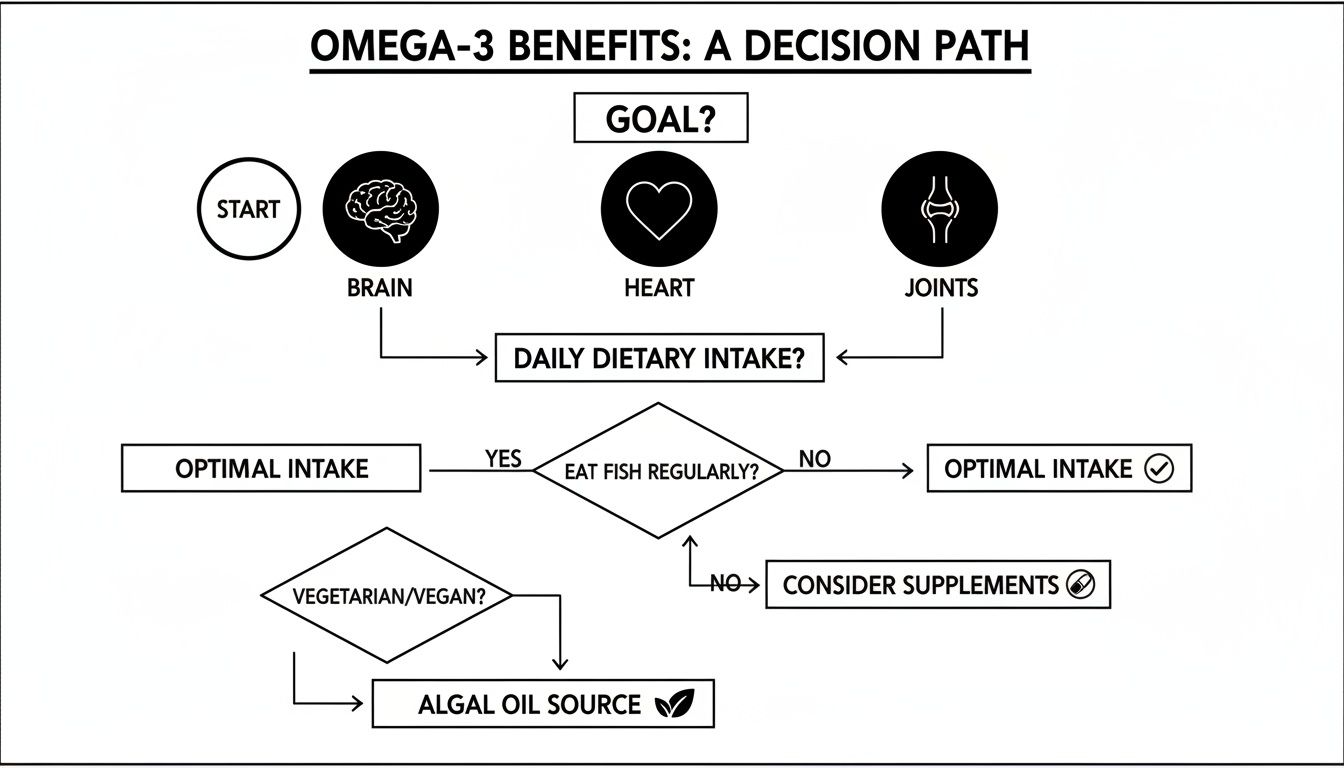
It shows a clear path from figuring out your main health goal—whether it's for your brain, heart, or joints—to making an informed decision about supplementation.
Concentration of EPA and DHA
Next up is concentration. This is where many brands get a bit sneaky. You might see a big number like 1200 mg on the front of the bottle, but that’s often just the total amount of fish oil, not the good stuff.
What truly matters is the combined amount of EPA and DHA per serving. A cheaper supplement might only give you 300 mg of combined EPA and DHA in a 1000 mg capsule. That means 70% of what you’re swallowing is just fish fat. In contrast, a premium product will be highly concentrated, packing 700 mg or more of these crucial fatty acids into the same size capsule.
Pro Tip: Always ignore the big number on the front. Flip the bottle over and read the "Supplement Facts" panel to find the specific amounts of EPA and DHA. This is the true measure of a supplement’s potency.
Bioavailability: The Triglyceride Advantage
Not all fish oil is created equal when it comes to how well your body can actually use it. The chemical form of the omega-3s is a huge factor in their bioavailability, or how easily they’re absorbed. You’ll usually find two main forms:
- Triglyceride (TG) Form: This is the natural structure of fats found in fish. Your body is designed to digest and absorb it easily. It's more stable and research suggests it's up to 70% more bioavailable than the alternative.
- Ethyl Ester (EE) Form: This is a semi-synthetic form created during the concentration process. It's cheaper to produce, but it's much harder for your body to break down and absorb. That means you get less bang for your buck with each dose.
To put it plainly, the form of your fish oil directly impacts how much benefit you get. The triglyceride (TG) form is the natural state of fats in fish, making it easier for our bodies to absorb. The ethyl ester (EE) form, while common, is a result of processing and is less bioavailable. Here's a quick comparison:
Triglyceride (TG) vs Ethyl Ester (EE) Fish Oil
| Feature | Triglyceride (TG) Form | Ethyl Ester (EE) Form |
|---|---|---|
| Structure | Natural molecular form found in fish | Synthetically modified during processing |
| Bioavailability | High – up to 70% more absorbable | Lower – requires more steps for the body to break down |
| Stability | More stable and less prone to oxidation | Less stable and can go rancid more quickly |
| Cost | Generally more expensive to produce | Cheaper to produce and concentrate |
| Takeaway | The superior choice for absorption and effectiveness | A more processed, less effective budget option |
Choosing the triglyceride form ensures you're getting a supplement that your body can efficiently put to work.
And while plant-based sources like flaxseed offer ALA, our bodies are notoriously inefficient at converting it to the essential EPA and DHA. Even algae oil, a direct source of vegan DHA, can have bioavailability challenges compared to high-quality fish oil. You can learn more about this by exploring the differences between fish oil and vegan omega-3 alternatives.
Sustainability and Sourcing
Finally, a truly great brand cares about the planet. Overfishing is a serious environmental issue, so you should always look for products sourced from sustainable, wild-caught fish. Small fish like anchovies, sardines, and mackerel are often the best choices.
Look for certifications from organisations like the Marine Stewardship Council (MSC) or Friend of the Sea. These logos provide assurance that the fish oil was sourced with minimal impact on our oceans. By choosing a sustainable product, you’re supporting your own health without harming the planet's.
Finding Your Optimal Omega 3 Dosage
Figuring out the right amount of omega-3 isn't about chasing a single magic number. The perfect dose is completely personal—it hinges on your health goals, what you eat, and your body's unique demands. A one-size-fits-all approach just doesn't cut it here.
The first rule is to ignore the big number for total fish oil splashed across the front of the bottle. What really counts is the combined total of EPA and DHA, the two active fatty acids doing all the heavy lifting. That's the number you need to find on the supplement label.
General Wellness and Maintenance
For just keeping everything ticking over nicely, most UK and European health bodies agree on a solid baseline. This is your foundational dose for supporting your heart, brain, and general wellbeing.
- Recommended Daily Intake: A combined total of 500 mg of EPA and DHA per day is a great starting point for most healthy adults.
- Purpose: This amount helps maintain healthy cells, keep low-level inflammation in check, and support your brain's day-to-day functions.
This dose is ideal if your diet doesn't regularly feature oily fish like salmon or mackerel. Think of it as your daily insurance policy, making sure your body’s essential maintenance crew is always on duty.
Consider this the non-negotiable minimum for keeping your systems running smoothly. It’s not a therapeutic dose for specific problems, but a smart, proactive step for long-term health.
Dosing for Specific Health Goals
When you're aiming for something more specific, like boosting athletic recovery or sharpening your focus, you'll likely need a higher dose to see real results. The game shifts from simple upkeep to active, targeted support.
Here are a few evidence-backed ranges for common goals:
-
Intensive Athletic Support: If you're putting your body through regular, tough workouts, a higher dose can help manage exercise-induced inflammation and ease muscle soreness. Dosages in the 2,000–3,000 mg range of combined EPA and DHA daily are often used to speed up recovery.
-
Cognitive Enhancement: To support focus and memory, especially during mentally demanding periods, a DHA-rich formula is your best bet. A daily intake of around 1,000–2,000 mg of combined EPA and DHA is frequently recommended for brain health.
-
Heart Health Support: For anyone actively looking to support their cardiovascular system, particularly to maintain healthy triglyceride levels, clinical studies often use dosages between 2,000 and 4,000 mg of combined EPA and DHA per day.
It's really important to chat with a healthcare professional before starting these higher doses, just to make sure it's the right move for you.
Signs of Taking Too Much and Why Consistency Is Everything
While omega-3 fish oil is incredibly safe, you can have too much of a good thing. Going over 5,000 mg of combined EPA and DHA per day from supplements might increase the risk of bleeding, especially if you're already on blood-thinning medication. Other clues you're overdoing it include an upset stomach or a fishy aftertaste.
But honestly, the real secret to getting results from omega-3 is consistency. These fatty acids need time to build up in your cell membranes to work their magic. Taking a supplement here and there just won't yield significant benefits—daily intake is essential.
Because every body is different, personalising your dose is the smartest way forward. A chat with a qualified health professional can help you nail down the perfect amount for your specific goals, ensuring you get all the benefits safely and effectively.
How Omega-3 Works With Your Other Supplements

The best supplements rarely fly solo. If you’re serious about your health, you need to understand how different nutrients interact. It’s all about building a smart, synergistic stack so you get the most out of every capsule, rather than just throwing random things together and hoping for the best.
Think of omega-3 fish oil as a fantastic team player. It doesn’t just add another benefit to your list; it actively enhances what other popular supplements in your routine are already doing. Instead of just another pill, it's a foundational piece that helps other key nutrients do their jobs better.
This idea of smart, strategic supplementation is really catching on. Just look at the UK omega-3 market – sales hit a massive USD 87.6 million in 2023 and are expected to soar to USD 144.3 million by 2030. This isn't just a trend; it shows a real shift towards using targeted nutrition to stay on top of long-term health. You can read more about the rising demand for omega-3 in the UK and what’s driving it.
Creating Powerful Supplement Pairings
To build a supplement stack that truly works for you, you have to look at your entire lifestyle and your specific goals. Let's explore a few powerful pairings where omega-3 can seriously amplify the benefits of other core supplements, turning a good routine into a great one.
Here are a few combinations that really deliver:
-
Omega-3 and Magnesium: This is a true powerhouse duo for beating stress and improving sleep. Omega-3s are brilliant for brain health and mood, while magnesium is known for its ability to calm the nervous system. Together, they create a beautifully complementary effect that can lead to deeper, more restful sleep and a more balanced response to daily pressures.
-
Omega-3 and Creatine: If you're focused on fitness, this pairing is a game-changer. Creatine is well-proven for boosting strength and muscle growth. Add in the anti-inflammatory clout of omega-3s, and you’ve got a combo that helps manage exercise-induced soreness and supports joint health, letting you recover faster and train more consistently.
-
Omega-3 and Vitamin D: Often called the "sunshine vitamin," Vitamin D is vital for immune function and bone health. Here’s a simple but crucial tip: both Vitamin D and omega-3s are fat-soluble. That means taking them together with a meal containing some healthy fats can dramatically improve how well your body absorbs both nutrients.
Building Your Personalised Stack
A truly effective supplement plan has to be built around your unique biology, diet, and what you’re trying to achieve. Just taking a collection of individual products without a clear strategy can lead to overlaps or, even worse, them working against each other. This is where a personalised approach makes all the difference.
The goal is to move beyond generic advice and build a cohesive system where each component supports the others. For example, if your primary goal is cognitive performance, stacking omega-3 with a nootropic like L-theanine might offer greater benefits than taking either alone.
Understanding these synergies is how you build a smarter routine that's tailored to your exact needs. It’s also crucial to know the difference between the various omega fatty acids. For a deeper dive, check out our guide on the differences between omega-3, 6, and 9. When you carefully select supplements that work well together, you’re ensuring your efforts and investment are truly dialled in to optimise your health.
Common Questions About Omega-3 Fish Oil
Navigating the world of supplements can throw up a lot of questions. When it comes to something as fundamental as omega-3 fish oil, getting clear, straightforward answers is key to feeling confident about adding it to your daily routine. Let's tackle some of the most common queries.
One of the biggest questions we hear is whether you can get enough omega-3s from food alone. While it's possible in theory, it's a real challenge for most people. To hit optimal, therapeutic levels, you'd need to consistently eat several servings of oily fish like salmon or mackerel every single week, which just doesn't fit the typical UK diet.
That's why a high-quality supplement is often a more practical and reliable way forward. It ensures you're getting a concentrated dose of EPA and DHA without having to worry about potential contaminants like mercury that can sometimes be found in fish.
How Long Until I Notice a Difference?
Patience is a virtue, especially with supplements! Omega-3s work by gradually building up in your cell membranes, a process that doesn't happen overnight. You aren't likely to feel a dramatic shift in just a day or two.
Generally, it can take anywhere from six weeks to six months of consistent daily use to really notice tangible benefits, like improved joint comfort, better focus, or healthier-looking skin. The key is to make it a non-negotiable part of your daily health habits, just like drinking enough water.
Fish Oil vs. Other Omega-3 Sources
When you start looking for an omega-3 source, you'll find a few main options out there. But they aren't all created equal when it comes to effectiveness.
- Fish Oil: This remains the gold standard. Why? Because it delivers EPA and DHA in their most bioavailable forms, meaning your body can absorb and use them with maximum efficiency.
- Krill Oil: While it also contains EPA and DHA, the concentrations are typically much lower per capsule. This often makes it a more expensive and less potent option for hitting those beneficial doses.
- Algal Oil: A brilliant vegan alternative, as it provides DHA directly from the source—algae. However, some research suggests its molecular structure might make it slightly less bioavailable than fish-derived DHA.
- Flaxseed Oil: This is a popular plant-based option, but it only provides ALA. Your body then has to convert this into EPA and DHA, and that conversion process is notoriously inefficient. This makes flaxseed a poor primary source for these two critical fatty acids.
For a more detailed breakdown, you can learn more about the key differences between popular options in our guide comparing omega-3 fish oil vs cod liver oil.
Is It Safe for Long-Term Use?
Absolutely. A high-quality, purified omega-3 fish oil is widely considered safe for daily, long-term use, provided you stick to the recommended dosages. The most common side effects are minor, like a fishy aftertaste, which you can often manage by taking your capsules with meals or choosing an enteric-coated product.
However, it's vital to be aware of potential medication interactions. Omega-3s can have a mild blood-thinning effect. If you're taking anticoagulant medications like warfarin, or if you have surgery scheduled, you absolutely must speak with your doctor first. This simple check-in ensures your supplement plan is both safe and effective for your individual needs.
Ready to bridge your nutritional gaps and support your long-term health? Discover your personalised supplement recommendations with the VitzAI quiz and build a smarter stack tailored to your unique goals.
Take the free VitzAI health quiz today!
This article is for informational purposes only and is not medical advice. Always consult a qualified health professional before starting any new supplement or major lifestyle change.